Metal Processing Technology : Die Casting

1. What is Die Casting? The Core Principle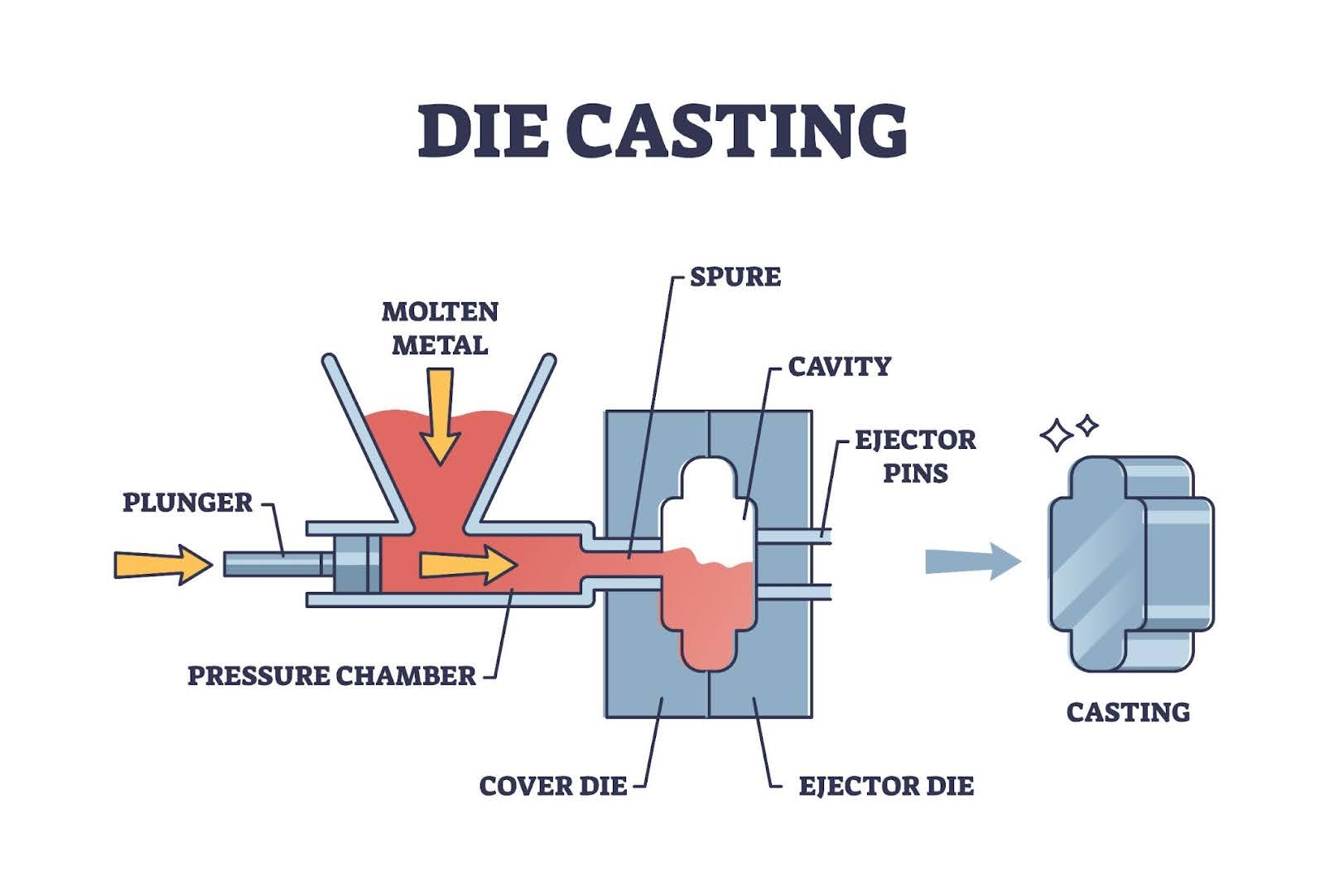
Die casting is a highly efficient, versatile metal processing technology for producing high-volume, complex, near-net-shape metal parts with
exceptional dimensional accuracy, excellent surface finish, and remarkable strength-to-weight ratios. At its heart, it involves forcing molten metal
under significant high pressure into a reusable steel mold, called a die. Once the metal solidifies rapidly within the die cavity, the mold opens, and the
casting is ejected. This cycle repeats rapidly, making die casting ideal for mass production.
2. Why Choose Die Casting? Key Advantages
Die casting offers a compelling set of benefits for manufacturers across diverse industries:
-
High Production Rates & Efficiency: Capable of producing hundreds or thousands of parts per hour once the die is operational.
-
Exceptional Dimensional Consistency & Accuracy: Parts require minimal secondary machining, reducing waste and cost.
-
Superior Surface Finish: Achieves smooth surfaces (often Ra 1-2 μm or better) directly from the die, ideal for cosmetic parts or surfaces requiring minimal finishing.
-
Complex Geometries: Creates intricate shapes, thin walls (down to ~0.5mm), and features (bosses, ribs, lettering) often impossible with other processes.
-
High Strength & Rigidity: Produces parts with excellent mechanical properties.
-
Reduced Assembly Needs: Integrates multiple features into a single casting.
-
Material Versatility: Primarily used with non-ferrous alloys like Aluminum, Zinc, Magnesium, and Copper alloys.
3. The Die Casting Process: Step-by-Step
The Cycle Explained
-
Die Preparation & Lubrication: The two die halves are cleaned and a die release agent (lubricant) is sprayed onto the cavity surfaces to facilitate part ejection and cool the die.
-
Die Closing: The two die halves are clamped together with immense force (hundreds to thousands of tons) to withstand the injection pressure.
-
Metal Injection: Molten metal is injected into the die cavity. In High-Pressure Die Casting (HPDC), this happens very rapidly (fractions of a second) under pressures typically ranging from 1,500 to over 25,000 psi.
-
Cooling & Solidification: The molten metal rapidly cools and solidifies inside the water-cooled die.
-
Die Opening & Ejection: The die halves separate, and ejector pins push the solidified casting out of the die cavity.
-
Trimming: Excess material (flash, overflows, and the sprue/runner system) is removed, often using trimming dies or robots.
-
(Optional) Finishing: Parts may undergo secondary operations like machining, deburring, polishing, plating, painting, or powder coating. (For achieving perfect surfaces, see our guide: The Ultimate Guide to Metal Finishing)
4. Materials Matter: Metals for Die Casting & Their Dominant Applications
Common Alloys
-
Aluminum Alloys (e.g., A380, A383, ADC12): By far the most popular. Offer excellent strength-to-weight ratio, good corrosion resistance, high thermal & electrical conductivity, and dimensional stability. Ideal for automotive, aerospace, electronics, and consumer goods. (Companies like YITECH specialize in high-quality aluminum die casting).
-
Zinc Alloys: Offer high ductility, impact strength, excellent surface finish for plating, and lower melting points (faster cycles). Common in hardware, automotive, and consumer electronics.
-
Magnesium Alloys: The lightest structural metal. Offers exceptional strength-to-weight ratio and good damping properties. Increasingly used in automotive and portable electronics.
-
Copper Alloys (Brass, Bronze): Used for high corrosion resistance, wear resistance, electrical/thermal conductivity, and aesthetic appeal. More challenging and expensive to cast.
Applications
| Application Sector | Representative Product Examples | Value Proposition of Die Casting |
|---|---|---|
| New Energy Vehicles | Motor housings, PCU heat sink baseplates | Integrated EMI shielding + thermal management |
| Aerospace | Drone airframes, satellite brackets | Weight reduction: 1kg = $30,000/year fuel savings |
| Consumer Electronics | MacBook Unibody, camera chassis | 0.5mm ultra-thin walls + metallic finish |
| Smart Home | Robotic vacuum bases, smart lock bodies | Complex internal structures in single shot |
| Industrial Equipment | Hydraulic valve blocks, robot joints | High rigidity + fatigue resistance |
5. Types of Die Casting: HPDC vs. LPDC
High-Pressure Die Casting (HPDC)
-
Process: Molten metal injected at very high speed and pressure.
-
Characteristics:
-
Extremely fast cycle times (seconds).
-
Produces parts with thin walls and complex shapes.
-
Fine-grained surface but potential for internal porosity.
-
Most common industrial method.
-
-
Applications: Automotive (engine blocks, transmission cases, housings), consumer electronics, power tools, appliance components.
Low-Pressure Die Casting (LPDC)
-
Process: Molten metal is pushed upward into the die cavity using low pressure (typically 0.5 - 1.0 bar) from a furnace located below the die.
-
Characteristics:
-
Slower, more controlled filling reduces turbulence.
-
Results in denser castings with less porosity and improved mechanical properties.
-
Better feeding reduces shrinkage defects.
-
Typically used for simpler, thicker-walled parts.
-
-
Applications: Automotive wheels, structural components, aerospace parts where integrity is paramount.
6. Critical Design Considerations for Die Cast Parts
Designing for manufacturability (DFM) is crucial for successful, cost-effective die casting:
-
Draft Angles: Essential walls must have draft (taper) to allow the part to eject smoothly from the die without damage (typically 1-3° per side).
-
Uniform Wall Thickness: Promotes even solidification, minimizing warpage, shrinkage porosity, and sink marks. Avoid abrupt changes.
-
Ribs & Bosses: Used for strength and stiffness without adding excessive weight. Ribs should be ~50-75% of the adjacent wall thickness.
-
Fillets & Radii: Sharp corners create stress concentrations and hinder metal flow. Use generous radii wherever possible.
-
Parting Line & Ejection: Define the parting line location early. Plan for ejector pin placement on non-cosmetic surfaces.
-
Undercuts: Generally avoided as they require complex (and expensive) sliding cores in the die. Minimize or design for post-cast machining if essential.
7. Ensuring Quality: From Tooling to Finishing
Achieving consistent, high-quality die castings requires meticulous attention throughout the process:
-
Precision Tooling: The die is the heart of the process. High-quality, well-maintained tooling made from specialty tool steels (e.g., H13) is critical for dimensional accuracy, surface finish, and longevity. (YITECH invests in state-of-the-art tool design and manufacturing to ensure casting excellence).
-
Process Control: Strict control of metal temperature, die temperature, injection speed/pressure, and cycle time is paramount for repeatability.
-
Robust Quality Systems: Implementing SPC (Statistical Process Control), regular dimensional checks, pressure testing, and X-ray inspection for internal porosity ensures parts meet specifications.
-
Effective Finishing: Utilizing appropriate deburring, machining, and surface finishing techniques (like polishing, sandblasting, or anodizing) enhances functionality and aesthetics.
8. Die Casting vs. Other Processes: When Does it Shine?
-
vs. Sand Casting: Die casting offers far superior surface finish, tighter tolerances, thinner walls, and higher production rates. Sand casting is better for very large parts, lower volumes, and ferrous metals.
-
vs. Plastic Injection Molding: Die casting produces much stronger, more heat-resistant, and durable metal parts. Plastic molding is better for extremely complex shapes (undercuts), very low costs at high volume, and electrical insulation.
-
vs. Machining (from billet): Die casting is dramatically more cost-effective for complex shapes at medium-high volumes and produces less material waste. Machining is better for very low volumes, extremely high precision requirements, or parts made from difficult-to-cast metals.
-
vs. Forging: Die casting produces more complex geometries and near-net shapes. Forging generally produces superior strength and fatigue resistance but requires more machining.
9. Expert Insights: Industry Perspectives
-
On Sustainability: "The recyclability of aluminum is a massive advantage for die casting," emphasizes Mark Johnson, a sustainable manufacturing consultant. "Closed-loop recycling systems within foundries are becoming standard, significantly reducing the environmental footprint. Energy efficiency in melting and process optimization is also a major focus area."
-
On Innovation: "We're seeing significant advancements in simulation software," notes Lisa Chen, a die casting process engineer. "Virtual die trials and mold flow analysis allow us to optimize gating, cooling, and predict defects before cutting steel, reducing development time and cost while improving first-time yield. Vacuum-assisted HPDC is also gaining traction for producing structural parts with reduced porosity."
-
On the Future: "Integration of automation and Industry 4.0 principles is transforming die casting plants," says David Miller, an industrial automation specialist. "Robotic part handling, real-time process monitoring with AI, and predictive maintenance are increasing efficiency, consistency, and traceability, making high-precision die casting even more competitive."
10. Die Casting FAQs: Your Questions Answered
-
Q: How strong are die cast parts compared to other metals?
-
A: Die cast parts, especially aluminum and magnesium, offer excellent strength-to-weight ratios. While not as strong as forged steel, they are significantly stronger than most plastics and many sand castings. Strength depends heavily on the specific alloy, part design, and process quality (minimizing porosity).
-
-
Q: What is the typical tolerance achievable in die casting?
-
A: High-Pressure Die Casting typically achieves dimensional tolerances in the range of ±0.001 to ±0.003 inches per inch (±0.025 to ±0.075 mm per 25mm) for the first inch, with an additional allowance per subsequent inch. Tighter tolerances are possible but increase cost. Critical dimensions often require secondary machining.
-
-
Q: What causes porosity in die castings and how is it managed?
-
A: Porosity (air/gas bubbles) is common in HPDC due to trapped air during high-speed injection and shrinkage during solidification. It's managed through:
-
Optimized Die Design: Proper gating, venting, and overflow design.
-
Process Control: Vacuum systems, controlled injection profiles, proper metal temperature.
-
Post-Casting Treatments: Hot Isostatic Pressing (HIP) can close internal porosity in critical parts.
-
-
-
Q: How long does a die casting mold (die) last?
-
A: Die life varies enormously based on material cast, part complexity, die steel quality, maintenance, and process conditions. Aluminum dies can last 80,000 to 150,000+ shots or more before major refurbishment is needed. Zinc dies last significantly longer. Proper die maintenance and thermal management are critical for longevity.
-
-
Q: Is die casting cost-effective for low-volume production?
-
A: Generally, no. The high cost of die design and manufacturing makes die casting economical primarily for medium to high-volume production (typically thousands to millions of parts). For prototypes or low volumes, sand casting, investment casting, or machining are usually more cost-effective options.
-
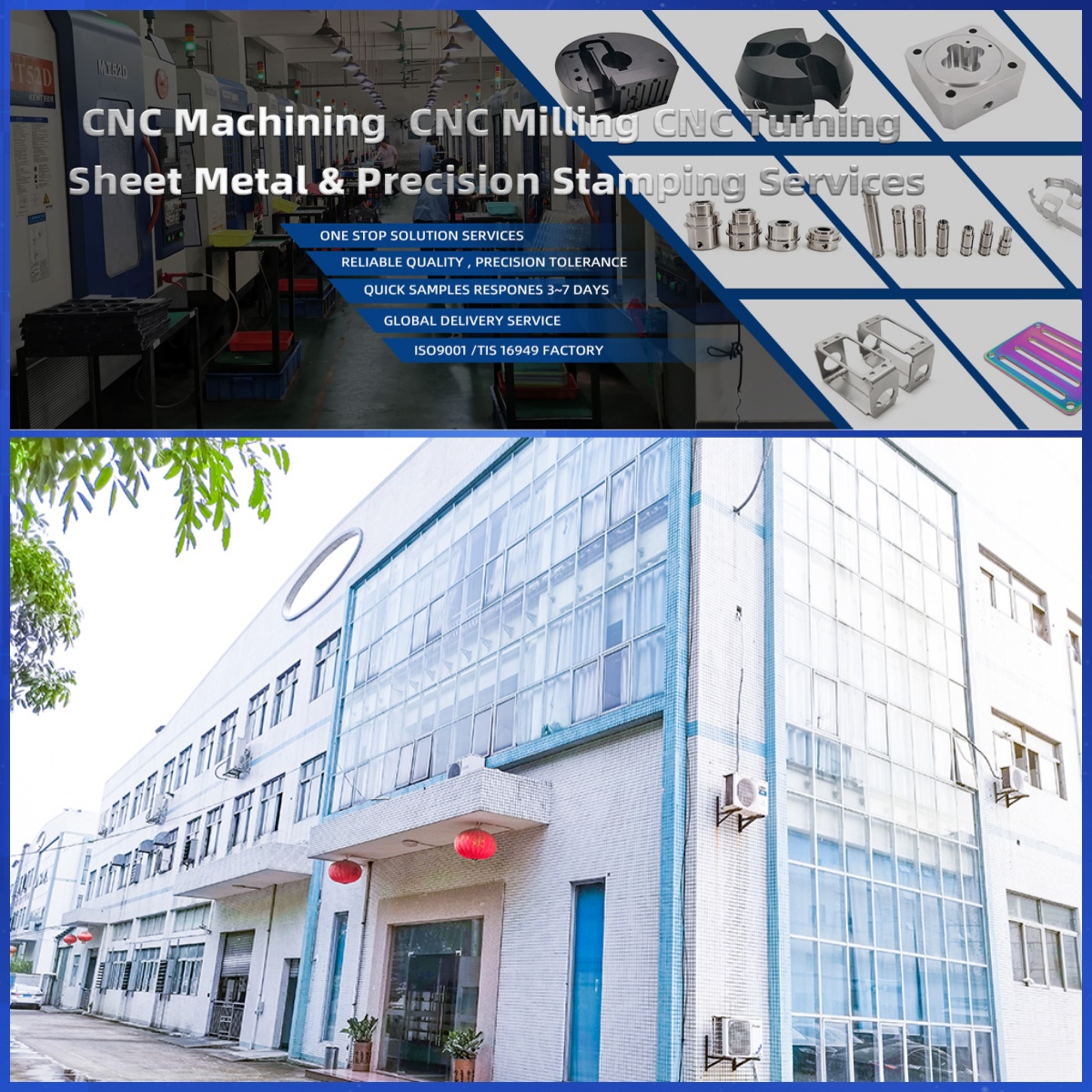
DongGuan YiTai Electronic Technologies Co.,Ltd
DongGuan YiTai Electronic Technologies Co.,Ltd is a manufacturing service provider located in Dongguan, China.
YiTai specialized in CNC turning machining and sheet metal fabrication mainly. As a member of Hung Mou Group, we focus on the overseas marketing development. And based on our parent company’s manufacturing capability and resources, YiTai also expended machining services such as die casting, injection molding, aluminum profile extrusion, 3D printing, which are committed to providing customers with one-stop purchasing services and experience.
CNC MACHINING , CNC MILLING , CNC TURNING , SHEETMETAL , FASTENER , OTHERS




Comprehensive Guide to Machining Accuracy
The Ultimate Guide to Metal Finishing: Essential Knowledge of Polishing, Deburring, Sandblasting & Shot Blasting!
Related Article