The Revolution of Die-Cast Parts in the Automotive Industry
1. Introduction
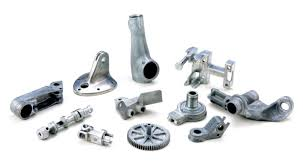
The automotive industry is constantly evolving, driven by the dual engines of innovation and efficiency. One technology that has significantly accelerated this progress, particularly in the era of electric vehicles (EVs), is die-casting. This manufacturing process is fundamentally changing how cars are designed and built, offering unparalleled advantages in lightweight construction, cost-effectiveness, and production efficiency. This article explores the critical role of die-cast parts in modern automobiles, highlighting the technology behind them and their transformative impact.
2. What is Die-Casting Technology?

Die-casting is a precision metal forming process that involves injecting molten metal under high pressure into reusable steel molds, known as dies, to create complex-shaped components with tight tolerances . This method is renowned for its high repeatability and ability to produce parts with excellent surface finishes and structural integrity.
The process typically uses non-ferrous metals, with aluminum alloys being the predominant choice in the automotive sector due to their ideal blend of lightness and strength. A key advancement is the use of high-vacuum die-casting (maintaining a vacuum level ≤5 mbar) to minimize air entrapment and reduce porosity, resulting in stronger, more reliable parts .
For a more detailed look at the fundamentals of this process, you can refer to our previous blog, "Metal Processing Technology : Die Casting".
3. Why Die-Casting is Ideal for Automotive Parts
Die-casting offers a compelling set of advantages for auto manufacturers:
-
Lightweighting: This is the most crucial benefit. Replacing steel with aluminum alloys can reduce component weight by up to 40% . For EVs, reducing weight is paramount for extending driving range without adding expensive battery capacity.
-
Cost Reduction: Die-casting significantly simplifies production. Tesla famously reported a 40% reduction in manufacturing costs for the rear body structure of the Model Y using mega-casting compared to traditional methods . This comes from consolidating parts, reducing assembly time, and lowering labor costs.
-
Production Efficiency: Large-scale die-casting machines can produce parts at astonishing speeds. What traditionally took 1-2 hours to fabricate via stamping and welding can now be achieved in 120-180 seconds with a single press . This drastically increases output.
-
Part Consolidation: The technology enables the integration of multiple separate components into a single, complex part. Tesla's rear underbody, for instance, consolidated 79 parts into one . This reduces assembly error, improves structural integrity, and simplifies supply chains.
-
High Strength and Precision: Modern die-casting alloys offer excellent mechanical properties. Parts can achieve high dimensional accuracy (e.g., ±0.05mm), ensuring perfect fit and finish while maintaining strength and durability.
4. Key Automotive Applications of Die-Cast Parts
Die-cast components are found throughout modern vehicles:
-
Power train and Chassis: Engine blocks, cylinder heads, and transmission housings are classic applications where the heat dissipation and strength of die-cast aluminum are beneficial. Wheel hubs are also commonly die-cast for strength and lightness.
-
Structural Components: This is the most revolutionary application. Mega-casting or giga-casting involves creating enormous single pieces like front and rear subframes or even entire underbody platforms. This is a cornerstone of new EV manufacturing strategies.
-
Electronics and Enclosures: The casings for electric motors, battery housings, and power electronics benefit from die-casting's ability to provide shielding, thermal management, and structural protection.
-
Interior and Exterior Trim: Components like bracket components, door handles, and various mounting structures are often die-cast for their combination of low weight, strength, and ability to achieve a high-quality surface finish.
5. Die-Casting vs. Other Manufacturing Technologies
| Feature | Die-Casting | Stamping & Welding | Forging | Traditional Casting |
|---|---|---|---|---|
| Process | Molten metal injected under high pressure into a die. | Sheet metal pressed (stamped) into shape and joined. | Solid metal shaped by compressive force. | Molten metal poured into a mold (often sand). |
| Part Complexity | Very High. Intricate shapes with fine details. | Medium. Limited to forms from sheet metal; welding assembles parts. | Low to Medium. Simpler geometries. | Medium. Limited by mold material. |
| Production Speed | Very High. Suitable for mass production (e.g., 30-40 wheels/hour 7). | High for stamping, slower when adding assembly. | Medium. | Low. |
| Cost-Effectiveness | High for high volumes. Tooling cost is high, but per-unit cost is low. | High for large series. Assembly costs can add up. | Medium to High. | Lower for prototypes/low vol. |
| Material Efficiency | High. Minimal waste, scrap often recycled. | Medium. Generate scrap from sheet metal blanks. | High. | Low. Can require significant finishing. |
| Strength/Properties | Good strength, can have porosity issues if not controlled. | Good strength from work-hardening, but joints can be weak points. | Very High. Excellent grain structure. | Variable. Can have lower density. |
| Weight | Low (Using Al, Mg alloys) | Medium (Typically steel) | Medium to High | Medium to High |
6. The Future and Expert Insights
The future of automotive die-casting is focused on larger components, new materials, and smarter processes.
The trend toward mega-casting entire vehicle structures continues. This demands even larger presses and advanced mold steels capable of handling the immense pressures and thermal cycles without cracking. Companies like Japan's Daido Steel are developing new alloys like DHA-GIGA, designed specifically for these massive molds, offering quadruple the hardenability of traditional steels to ensure consistency and longevity.
Material science is key. Tesla developed its own proprietary die-cast aluminum alloy that promises high yield strength and ductility in the as-cast state, eliminating the need for costly and time-consuming heat treatment. The development of non-heat-treatable alloys is critical for maximizing the benefits of integrated casting.
Experts in the field highlight the transformative impact. The shift is from a manufacturing model based on assembling hundreds of parts to one focused on producing a few large, highly integrated modules. This not only changes factory footprint requirements—Elon Musk stated mega-casting can reduce factory space by 30% 1—but also forces a re-evaluation of vehicle design principles and supply chains.
Furthermore, the application of real-time monitoring and intelligent temperature control systems in molds is becoming standard. These systems maintain temperature fluctuations within ±5°C, ensuring consistency and quality in every part.
7. Frequently Asked Questions (FAQ)
1. Why is aluminum the most common material for automotive die-casting?
Aluminum offers an optimal balance of low density (about 1/3 that of steel), good strength, corrosion resistance, and recyclability. Its cost is also favorable compared to other lightweight options like magnesium or carbon fiber composites.
2. What is the main difference between traditional die-casting and "mega-casting"?
The key difference is scale and integration. Mega-casting uses presses with thousands of tons of clamping force to produce extremely large single parts (e.g., entire vehicle underbodies) that consolidate dozens, even hundreds, of individual components traditionally stamped and welded together.
3. Are die-cast parts strong and durable enough for critical safety structures?
Yes, absolutely. With advanced high-strength alloys, precise process control (like high-vacuum die-casting), and intelligent design, die-cast parts can meet or exceed the stringent safety and durability requirements for critical structural applications in modern vehicles.
4. Is the high cost of the molds (dies) justified?
While the initial investment in a large, precision mold is very high, the cost is amortized over a very high volume of parts. For mass production, the per-unit cost becomes very low due to the incredible speed and efficiency of the process. Furthermore, new mold steels are extending mold life (e.g., over 100,000 cycles), improving the return on investment.
5. How does die-casting specifically benefit electric vehicles (EVs)?
The benefits are multifaceted:
-
Extended Range: Weight reduction is directly translated into longer range for a given battery size.
-
Cost Reduction: Lower manufacturing costs help offset the high cost of batteries.
-
Design Flexibility: Large integrated structures provide more rigid and versatile platforms for mounting batteries and electric motors.
-
Packaging Efficiency: Consolidating parts creates more interior space or allows for a larger battery pack within the same footprint.
DongGuan YiTai Electronic Technologies Co.,Ltd
DongGuan YiTai Electronic Technologies Co.,Ltd is a manufacturing service provider located in Dongguan, China.
YiTai specialized in CNC turning machining and sheet metal fabrication mainly. As a member of Hung Mou Group, we focus on the overseas marketing development. And based on our parent company’s manufacturing capability and resources, YiTai also expended machining services such as die casting, injection molding, aluminum profile extrusion, 3D printing, which are committed to providing customers with one-stop purchasing services and experience.
CNC MACHINING , CNC MILLING , CNC TURNING , SHEETMETAL , FASTENER , OTHERS




Mastering the Art of CNC Drilling: A Comprehensive Guide
Application of aluminum alloy in motorcycle components
Related Article