Optimizing Die Casting Mold: A Comprehensive Guide
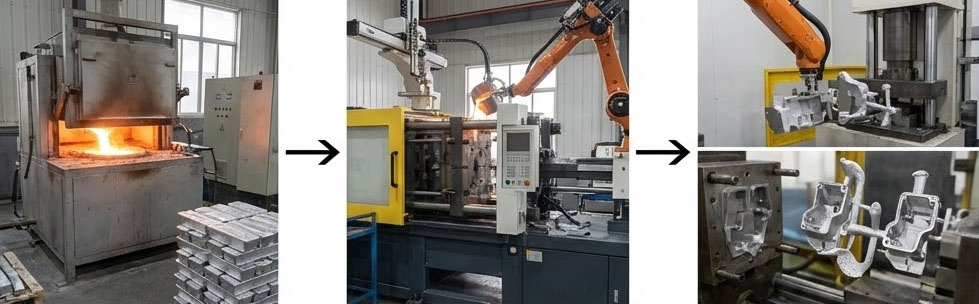
In die casting, a good mold is very important. The mold design decides the quality of the final part. The main goal of mold optimization is to reduce defects. This guide explains key strategies to improve your die casting mold design, reduce porosity, and achieve higher quality.
1. Porosity: The Top Killer of Die Casting Quality
Porosity is a common problem in die casting. It means there are small holes inside the casting. Porosity makes the part weaker. It can also cause problems in later processing, like machining or painting. There are two main types: entrapped gas porosity and shrinkage porosity.
1.1 The Difference Between Entrapped Air and Shrinkage Porosity
It is important to know the difference between these two types. You need different solutions for each one.
-
Entrapped Air Porosity: This happens when the molten metal traps air inside the mold during filling. The holes are usually round or oval and have a smooth, shiny surface. The main cause is a bad filling pattern. If the metal flows too fast or in a turbulent way, it captures air bubbles.
-
Shrinkage Porosity: This happens when the metal cools and becomes solid. Metal gets smaller when it cools. If there is not enough molten metal to feed this shrinkage, holes form. These holes are often irregular in shape and have a rough, jagged surface. They usually appear in thick sections of the part that cool last.
Comparison: Entrapped Air vs. Shrinkage Porosity
| Feature | Entrapped Air Porosity | Shrinkage Porosity |
|---|---|---|
| Shape | Usually round or oval | Irregular, dendritic |
| Surface | Smooth, shiny | Rough, jagged |
| Location | Anywhere, often near gates or where flow merges | Usually in thick sections, hot spots, last-to-freeze areas |
| Main Cause | Turbulent metal flow, poor venting | Insufficient feeding during solidification |
| Solution Focus | Improve flow, add vents/overflows | Improve cooling, modify part geometry, add feeders |
2. Gating System Optimization Strategy
The gating system is the path the molten metal takes to enter the mold cavity. Its design is the most important factor for a good fill. A good gating system controls the speed and direction of the metal.
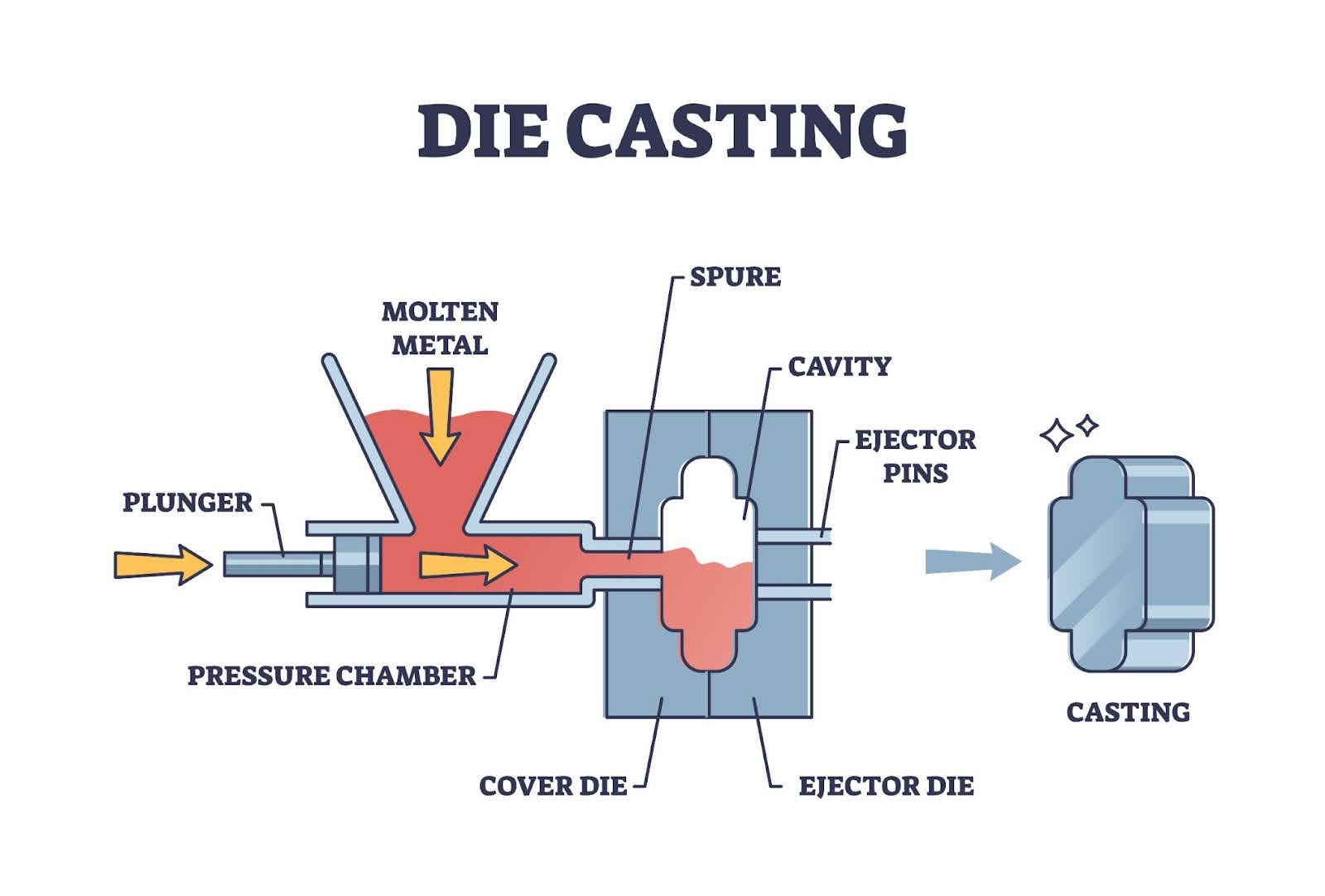
2.1 Gate Velocity Calculation: Preventing Metal Atomization
Gate velocity is the speed of the molten metal as it passes through the gate into the cavity. This speed is very important.
-
Too slow: The metal cools too much before the cavity is full. This causes cold shuts or incomplete filling.
-
Too fast: The metal flow becomes turbulent. It sprays like a mist (atomization) and traps air and gases. This causes severe entrapped air porosity and surface defects.
The ideal gate velocity depends on the alloy and wall thickness. For common aluminum alloys, a typical target range is between 25 m/s and 50 m/s. The gate area is calculated to achieve this velocity based on the shot volume and fill time.
Recommended Gate Velocity Ranges
| Alloy Type | Thin Walls (<2.5mm) | Medium Walls (2.5-4mm) | Thick Walls (>4mm) |
|---|---|---|---|
| Aluminum | 40 - 50 m/s | 30 - 40 m/s | 25 - 35 m/s |
| Zinc | 35 - 45 m/s | 25 - 35 m/s | 20 - 30 m/s |
2.2 Overflow Layout Tips: Guiding Cold Material and Gas Out
Overflows are small cavities connected to the main part cavity. They are placed at the end of the metal flow path. Their job is to collect the "bad" material.
-
Function 1: They collect the cold, oxidized metal from the front of the flow. This cold metal has poor quality.
-
Function 2: They give trapped air and gases a place to go. The gases are pushed into the overflow by the incoming metal.
-
Layout Tips: Place overflows at the last areas to fill. They should be opposite the gate. Also, put them where flows meet or at corners where air gets trapped. Design them with a good volume (usually 10-25% of part volume) and proper runner connections.
3. The Importance of Mold Flow Analysis
Today, we do not need to guess how the metal will flow. Mold Flow Analysis (MFA) software lets us simulate the entire process on a computer before making the mold.
3.1 Predicting Fill Patterns with Simulation Software Before Cutting Steel
Software like Magmasoft, Flow-3D, or ProCAST is very powerful. You give the software your 3D mold design, material type, and process parameters (like injection speed and temperature). The software then shows a video of how the cavity will fill.
-
Predict Problems: You can see where air might get trapped, where cold shuts may form, and how the temperature changes. This helps you find problems early.
-
Test Changes: You can change the gate location, size, or overflow design in the software. Then you run the simulation again to see if it is better. This is much faster and cheaper than changing the real mold.
-
Optimize Parameters: The simulation helps find the best injection speed, temperature, and other machine settings for a good part.
An industry expert from a leading simulation software company says: "Mold flow analysis is no longer just an advanced tool. It is a basic requirement for a reliable mold design. It reduces the risk of costly mold rework by over 70%."
4. How Yitai Electronics Improves Yield to 98%

At Yitai Electronics, we use a strict process for mold optimization. Our goal is to achieve a first-pass yield rate of 98% or higher for our precision die cast parts. Here is our method:
-
Early Design Review: We work with your team from the start. We check the part design for potential die casting problems. We suggest small changes to make it easier to cast.
-
Advanced Simulation: We run detailed mold flow and thermal analysis on every new mold design. We do not start machining the mold until the simulation shows a perfect fill and solidification pattern.
-
Scientific Gating Design: We use proven calculations and software to design the gating system. We ensure the right gate velocity and a laminar flow front.
-
Precision Mold Making & Trial: We use high-quality mold steel and precise machining. During the first trial, we use data from our simulations to set the machine parameters. This gives us good sample parts much faster.
5. Frequently Asked Questions (FAQs)
Q1: Can we completely eliminate porosity in die casting?
It is very hard to eliminate all porosity. But with good mold design, process control, and proper use of vacuum systems, you can reduce it to very low levels. This makes the part good enough for most applications.
Q2: How much does mold flow analysis software cost? Is it worth it for a small project?
Good software is expensive. But many mold shops offer simulation as a service. For any project where the mold cost is high, or the part quality is critical, simulation is worth it. It saves money by avoiding mold rework and production scrap.
Q3: Besides the gating system, what else in the mold affects porosity?
Venting is very important. Small vents at the end of the flow path let air escape. Also, cooling lines affect porosity. If a thick area cools too slowly, it can cause shrinkage porosity. Good cooling line layout helps the part cool evenly.
Q4: What is a vacuum-assisted die casting system? How does it help?
This system uses a pump to remove most of the air from the mold cavity before and during injection. With less air inside, there is much less chance for entrapped air porosity. It is excellent for making strong, dense parts.
Q5: Can we fix a mold that produces porous parts?
Sometimes, yes. Common fixes include adding or enlarging overflows, improving venting, or adjusting the gate. For shrinkage problems, you might change the cooling lines. However, these fixes cost time and money. This is why good upfront design and simulation are better.
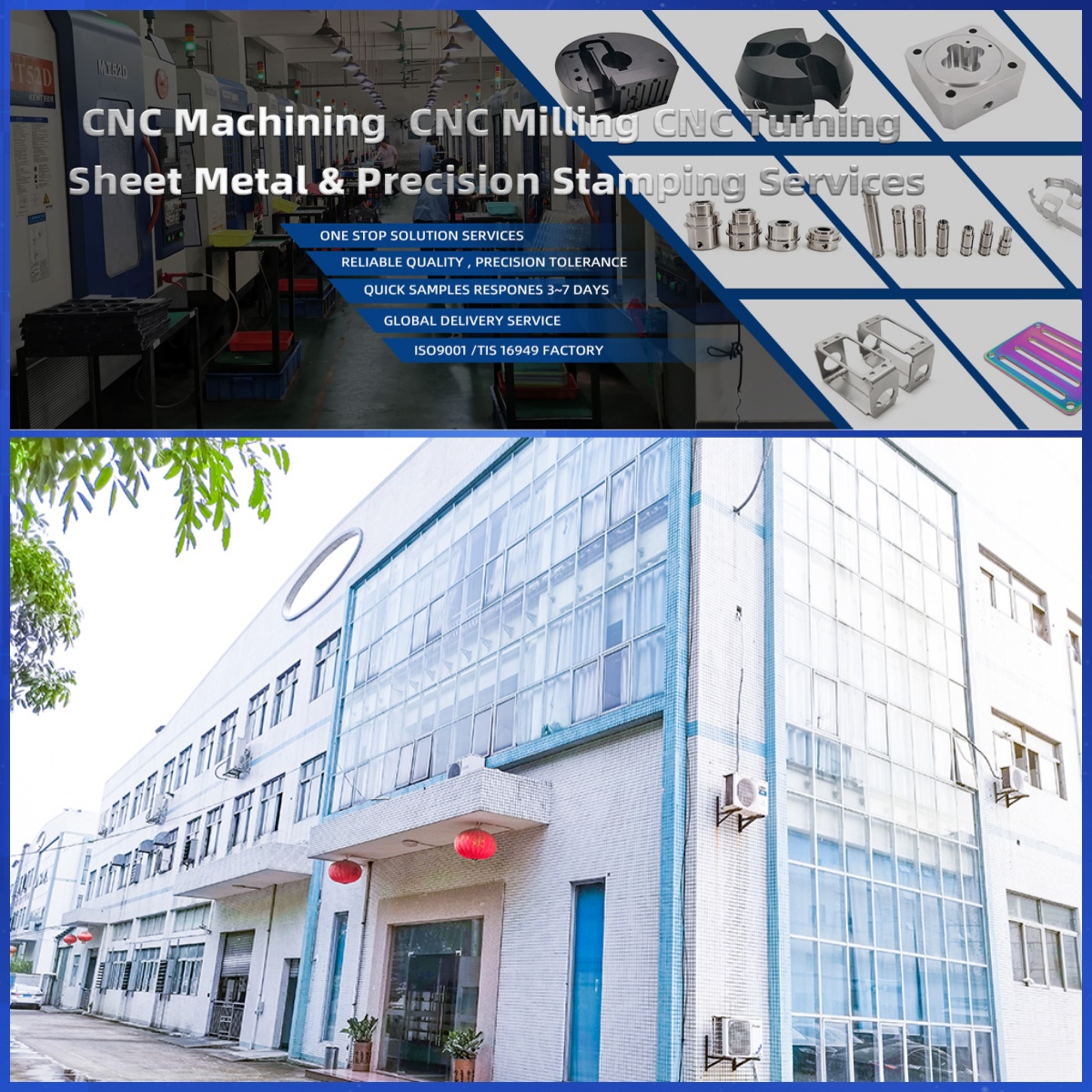
DongGuan YiTai Electronic Technologies Co.,Ltd
DongGuan YiTai Electronic Technologies Co.,Ltd is a manufacturing service provider located in Dongguan, China.
YiTai specialized in CNC turning machining and sheet metal fabrication mainly. As a member of Hung Mou Group, we focus on the overseas marketing development. And based on our parent company’s manufacturing capability and resources, YiTai also expended machining services such as die casting, injection molding, aluminum profile extrusion, 3D printing, which are committed to providing customers with one-stop purchasing services and experience.
CNC MACHINING , CNC MILLING , CNC TURNING , SHEETMETAL , FASTENER , OTHERS




CNC Machining Magnesium: How Cutting Parameters Affect Chip Density
From PCB to Enclosure: The Ultimate Guide to CNC Prototyping for Electronics R&D
Related Article