Building the Precision Shell for Computing Power: The Complete Manufacturing Process of Metal Enclosures for Data Center Servers, Switches, and Power Supply Modules
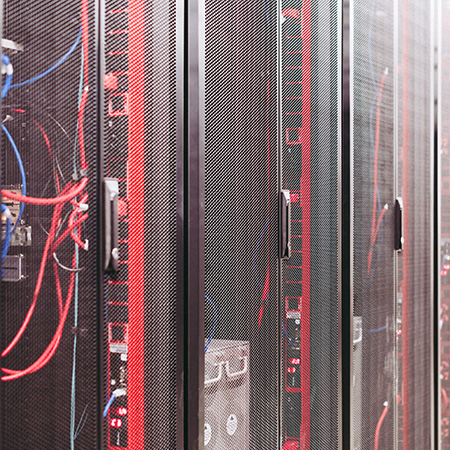
Every server, switch, and power supply in a data center sits inside a precision metal enclosure. These shells do more than hold components. They shield electromagnetic interference (EMI), manage heat, protect sensitive electronics, and survive years of 24/7 operation.
This article walks you through the full manufacturing process. From raw sheet metal to finished, shielded enclosures. No fluff. Just process, specs, and data.
1. The Product Family and Functional Requirements of Data Center Metal Enclosures
Data center enclosures come in three main types. Each has its own design rules, tolerance demands, and manufacturing challenges.
1.1 Server Chassis (1U/2U/4U) and Blade-Style Modular Enclosures
A server chassis must be strong, light, and EMI-tight. Standard rack heights are 1U (44.45mm), 2U (88.9mm), and 4U (177.8mm). The chassis is usually made from SECC electro-galvanized steel or 5052 aluminum alloy. Wall thickness ranges from 1.0mm to 1.5mm.
Key requirements include: flatness within 0.3mm across the entire base (motherboard mounting requires this), EMI gasket grooves machined to ±0.05mm tolerance, and threaded standoff holes that stay straight after PEM® fastener insertion.
1.2 Switch and Router Front Panels and Housings
Switch front panels look simple. They are not. A 48-port switch panel has 48 RJ45 cutouts plus status LED holes, console port openings, and brand logo engraving. Every port opening must align with the PCB connector within 0.1mm.
The panel also needs light pipe channels for LED indicators and a surface finish that resists fingerprints and scratches. Most panels use aluminum with anodizing or stainless steel with brushing.

Precision sheet metal fabrication for server chassis requires tight tolerances.
1.3 Redundant PSU Module Enclosures
Power supply enclosures are compact, dense, and hot. A 1U redundant PSU module (typically 40mm tall) must include ventilation grilles, safety finger guards, riveted mounting brackets, and a hot-swap handle mechanism — all within a space smaller than a shoebox.
Material choice matters here. Stainless steel (SUS304) handles the heat better. The ventilation pattern must achieve at least 60% open area ratio for proper airflow while maintaining structural stiffness.
Data Center Enclosure Types at a Glance
| Enclosure Type | Common Material | Key Tolerance | Primary Challenge |
|---|---|---|---|
| 1U/2U Server Chassis | SECC Steel / 5052 Al | Base flatness 0.3mm | EMI shielding & PEM® alignment |
| Switch Front Panel | Anodized Al / Brushed SS | Port cutout ±0.1mm | Dense port openings & cosmetics |
| PSU Module Shell | SUS304 Stainless | Grille spacing ±0.15mm | Vent area ratio & hot-swap fit |
| Blade Enclosure | Aluminum 5052/6061 | Slot pitch ±0.05mm | Modular interchangeability |
2. Core Manufacturing Process Chain: Sheet Metal + CNC Precision Machining
The path from flat sheet to finished enclosure runs through four core processes. Each one builds on the last. Skip quality at any step, and the final product fails.
2.1 Fiber Laser Cutting and CNC Punching for High-Volume Vents
Modern data center enclosures start on a fiber laser cutting machine. A 3kW-6kW fiber laser cuts steel up to 20mm and aluminum up to 12mm with positioning accuracy of ±0.03mm. For high-volume production of identical vent patterns, a CNC turret punch press often runs in parallel — punching hundreds of identical vent slots per minute.
The choice between laser and punch depends on the feature. Laser handles complex contours, curved cutouts, and low-volume runs. Punching wins for repetitive straight-line vents and I/O port cutouts where speed matters more than flexibility.
Laser Cutting vs CNC Punching: When to Use Which
| Factor | Fiber Laser Cutting | CNC Turret Punching |
|---|---|---|
| Accuracy | ±0.03mm | ±0.10mm |
| Best for | Complex shapes, low-medium volume | Standard vents, high volume |
| Edge quality | Clean, minimal burr | Slight roll-over, may need deburring |
| Tooling cost | Zero (no physical tools) | $200-$800 per punch die set |
| Speed (vent patterns) | Moderate | Very fast (200-600 hits/min) |
| Material thickness limit | Steel 20mm / Al 12mm | Steel 6mm / Al 4mm |

"The trend is hybrid. Run the laser for outer profiles and custom cutouts. Use the punch for repetitive vent grids. One machine alone cannot beat a twin-line setup for data center volumes."
— Thomas Richter, Senior Production Engineer, TRUMPF Sheet Metal Systems
2.2 High-Precision CNC Bending: Perpendicularity and Interchangeability
After cutting comes bending. A CNC press brake forms the flat sheet into a 3D enclosure. The two numbers that matter most: angle accuracy and bend-to-bend consistency.
A modern 6-axis CNC press brake with active crowning holds bend angle tolerance of ±0.5° and dimensional repeatability of ±0.05mm. Without active crowning, the center of a long bend deflects differently than the edges — the part comes out bowed, and the cover will not fit.
The real test is interchangeability. Take any top cover from a batch of 500 and snap it onto any chassis base from the same batch. It should fit without force. This demands consistent bend radii, straight edges, and square corners on every single part.

2.3 CNC Milling of Critical Features: Standoffs, Rail Slots, and Connector Positioning Holes
Some features cannot be stamped or punched. Motherboard mounting standoffs, guide rail slots, and precision connector alignment holes need CNC milling. These features determine whether the PCB seats correctly and whether the connectors mate without damage.
A typical server chassis needs 8-12 threaded standoffs machined to ±0.03mm position tolerance. Guide rail slots for hot-swap drive trays need parallelism within 0.05mm over 300mm length. Connector cutouts on the rear I/O panel require position tolerance of ±0.05mm.
CNC milling also handles counterbores and spot-facing for screw heads — making sure fasteners sit flush so adjacent modules can slide in without interference.
"We see more shops combining sheet metal fabrication with CNC machining under one roof. It cuts lead time and removes the finger-pointing between suppliers. When the same team cuts, bends, and mills, the tolerance chain is shorter."
— Dr. Lin Wei, Manufacturing Process R&D, Foxconn Industrial Internet
2.4 Welding and Fastening: TIG Welding for Stainless/Aluminum and PEM® Fastener Integration
Two joining methods dominate data center enclosures: TIG welding and PEM® self-clinching fasteners.
TIG welding joins aluminum or stainless steel corners where screws and rivets would leak EMI or weaken the structure. A clean TIG weld on 1.2mm 5052 aluminum needs skilled operators and AC pulse control — too much heat and the thin sheet warps.
PEM® fasteners are pressed into pre-punched holes to create strong, permanent threads in thin sheet metal. A single chassis can have 20-50 PEM® nuts and studs. The press-in force, hole diameter, and material hardness must all match the fastener spec exactly. A loose PEM® nut means a motherboard that cannot be secured.
Joining Method Comparison
| Method | Material | Strength | Best Use Case |
|---|---|---|---|
| TIG Welding | Al / SS | High (near base metal) | Structural corners, EMI-sealed seams |
| PEM® Clinching | Steel / Al (≤2.5mm) | Push-out: 500-2000N | Threaded mount points, standoffs |
| Riveting | Steel / Al | Moderate | PSU brackets, non-structural attachments |
| Spot Welding | Steel only | Moderate | Tack welds before TIG, low-cost seams |
3. Surface Finishing and EMI Shielding
The enclosure is not done after welding and fastening. Surface finishing delivers two things: corrosion protection and EMI shielding conductivity. These are not optional in a data center.
3.1 Conductive Conversion Coating, Electroless Nickel, and Chromate Passivation
Each material gets a different finish:
Aluminum enclosures get chemical conversion coating (Alodine/Iridite) or bright anodizing. The conversion coating provides a conductive surface for EMI grounding while protecting against oxidation. Anodizing adds a harder, more decorative finish but is less conductive.
Steel enclosures get electroless nickel plating for uniform coverage — even inside deep corners and blind holes. Nickel provides excellent conductivity (surface resistance below 1 mΩ/sq) and corrosion resistance. For outdoor-rated data center equipment, a top coat of powder coating adds UV and scratch protection on external surfaces only.
Stainless steel needs less treatment. A passivation process removes free iron from the surface and forms a chromium oxide layer. This is enough for most indoor data center environments.

Surface Finish Selection by Material and Requirement
| Material | Finish | Conductivity | Corrosion Resistance | Typical Use |
|---|---|---|---|---|
| Aluminum 5052/6061 | Chem Film (Alodine) | Excellent (≤0.1 mΩ/sq) | Good | Server chassis, blade enclosures |
| Aluminum 5052 | Anodizing (clear/black) | Poor (anodize is insulator) | Excellent | Switch front panels, visible surfaces |
| SECC Steel | Electroless Nickel | Excellent (≤1 mΩ/sq) | Very good | Internal chassis parts, PSU shells |
| SECC Steel | Powder Coat (after Ni) | N/A (masked areas only) | Excellent | External panels, outdoor enclosures |
| SUS304 Stainless | Passivation | Good (≤50 mΩ/sq) | Excellent | PSU modules, high-temp zones |
3.2 Conductive Gasket and Fingerstock Mounting Surface Machining
EMI gaskets do not work on rough surfaces. The gasket mounting groove must be machined flat and clean — typically to surface roughness Ra ≤ 1.6μm. Any bump, scratch, or coating irregularity creates a gap. EMI leaks through gaps.
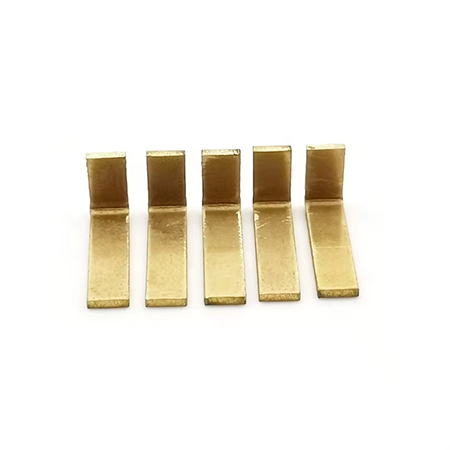
Two common gasket types in data center enclosures: conductive fabric-over-foam gaskets (compressed between the chassis and cover) and beryllium copper fingerstock (clipped onto I/O panel edges). Both need a clean, conductive mounting surface with no paint or anodize in the contact zone.
The mounting groove is usually machined in the same CNC milling step as the standoff holes — same setup, same fixture, zero tolerance stack-up.
"EMI gasket design fails most often at the interface — not the gasket. If the mounting surface is not flat to 0.1mm and free of coating in the contact zone, you are building a leak. Period."
— Rachel Park, EMI/EMC Design Specialist, Laird Performance Materials
4. DongGuan YiTai: One-Stop Sheet Metal + CNC Integrated Delivery — From Flat Pattern Design to Finished Assembly
DongGuan YiTai does not just cut and bend metal. We deliver complete enclosures — from your 3D model to assembled, tested, and packaged products ready for your data center deployment.
Our integrated approach covers the full chain:
- DFM review and flat pattern development — we optimize your design for manufacturability before the first cut
- Fiber laser cutting + CNC punching — hybrid processing for speed and precision
- 6-axis CNC press brake forming — active crowning for consistent bends
- CNC 3-axis/4-axis milling — precision standoffs, slots, and gasket grooves
- TIG welding + PEM® fastener integration — over 100,000 PEM® installations per month
- Surface finishing — chem film, electroless nickel, anodizing, powder coat
- In-line EMI gasket installation and conductivity testing
- Final assembly, QC inspection, and custom packaging
5. Frequently Asked Questions
Q: What is the typical lead time for a custom data center enclosure?
For a new design, 4-6 weeks from approved drawing to first article. This includes DFM review, flat pattern development, tooling (if needed), prototyping, and first-article inspection. Repeat orders ship in 2-3 weeks. Complex enclosures with multiple finishes may add 1-2 weeks.
Q: Can you match a specific brand color and texture for switch front panels?
Yes. We offer custom anodizing colors (black, blue, red, gold) and Pantone-matched powder coating. Surface textures include brushed, sandblasted, and fine-grain matte. We can match existing product lines or create a new finish from your reference sample.
Q: How do you verify EMI shielding effectiveness?
We perform surface conductivity testing on all shielding surfaces (target: ≤1 mΩ/sq after finishing). For full-system shielding, we work with your test lab or can arrange third-party MIL-STD-285/IEEE 299 testing at accredited facilities in Shenzhen and Shanghai.
Q: What is the minimum order quantity?
Prototype and low-volume: 1-50 units — we handle small runs for R&D and pilot builds. Production volume: 500+ units per order for optimal pricing. We regularly produce batches from 100 to 10,000+ units. No maximum limit.
Q: Do you handle the flat pattern (unfolding) design, or do we need to provide it?
We handle it. Send us your 3D model (STEP, IGES, or SolidWorks) and we do the rest — flat pattern development, bend allowance calculation, and grain direction optimization. We also provide a DFM report with suggestions before production starts. This service is included at no extra charge.
DongGuan YiTai Electronic Technologies Co.,Ltd
DongGuan YiTai Electronic Technologies Co.,Ltd is a manufacturing service provider located in Dongguan, China.
YiTai specialized in CNC turning machining and sheet metal fabrication mainly. As a member of Hung Mou Group, we focus on the overseas marketing development. And based on our parent company’s manufacturing capability and resources, YiTai also expended machining services such as die casting, injection molding, aluminum profile extrusion, 3D printing, which are committed to providing customers with one-stop purchasing services and experience.
CNC MACHINING , CNC MILLING , CNC TURNING , SHEETMETAL , FASTENER , OTHERS




Custom CNC Machining Services for Progressive Stamping: What to Look for in a Precision Partner
Sustainable = Cheaper? Uncovering How Green CNC Machining Cuts Your Project Costs Through Waste Reduction, Lower Energy, and Material Recycling
Related Article