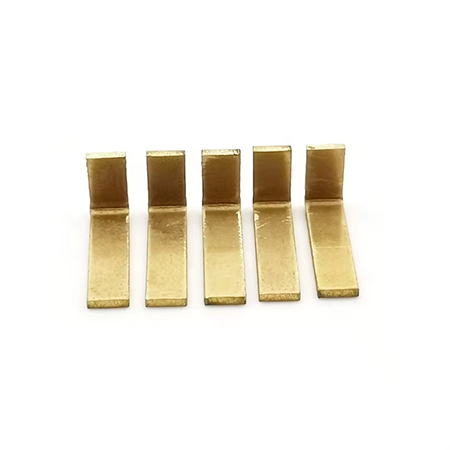
Custom Laser Cutting Engraving Service

Custom laser cut metal is a process that uses a high-powered laser to cut and engrave metal to create unique designs. It is widely used in various industries and applications, including architecture, automotive, jewelry, signage, and more. Laser cut metal offers precise cuts and intricate designs that are difficult to achieve through traditional cutting methods...
As early as the 1970s, lasers were first used for cutting. When the focused laser beam shines on the workpiece, the illuminated area will heat up sharply to melt or vaporize the material. Once the laser beam penetrates the workpiece, the cutting process begins: the laser beam moves along the contours while melting the material. And this is laser cutting!
Laser cutting technology process parameters
Laser cutting technology must be no stranger to everyone, laser cutting technology is a high energy density of laser beam precision cutting of materials processing methods, widely used in the processing of metal and non-metallic materials, the most common laser cutting equipment such as laser cutting machine.
The main process parameters of laser cutting are cutting laser power, cutting speed, cutting thickness and gas flow. Other factors, such as laser beam quality, lens focal length, defocus and nozzle, also have a great impact on laser cutting.
1. Laser power
Laser power is one of the most important parameters of laser cutting machine, the higher the power, the faster the cutting speed, the cutting thickness can also be larger. Generally speaking, laser power is laser power.
For material properties, if the surface reflectivity of the material is high, then when the laser illuminates the surface of the material, more energy will be reflected back, rather than being absorbed by the material for cutting. Therefore, in order to ensure sufficient energy for cutting, it is necessary to increase the power of the laser. Similarly, if the material has good thermal conductivity, then the heat generated by the laser irradiation will quickly conduct inside the material, resulting in the temperature of the cutting area is difficult to rise enough to cut. At this time, it is also necessary to increase the power of the laser to improve the cutting efficiency. In addition, cutting materials with high melting points also requires greater laser power and power density. Because a material with a high melting point requires more energy to melt or vaporize it, so as to achieve the purpose of cutting.
2. Cutting speed
Under certain power conditions, when the plate thickness increases, the laser beam needs to penetrate deeper layers of material to complete the cutting. The results show that the relationship between cutting speed and cutting surface roughness is not a simple linear relationship, but shows a U-shaped trend. This means that there is an optimal cutting speed point for different plate thickness materials and different cutting gas pressure conditions. When cutting at this speed, the roughness value of the incision surface can reach the minimum, that is, the most smooth incision. In general, the faster the cutting speed, the greater the power required.
Cutting speed refers to the length that the laser cutting machine can cut per minute, the faster the speed, the higher the efficiency. The cutting speed of the laser cutting machine is related to the type, thickness and hardness of the material, and is also affected by the laser power and spot diameter.
Cutting thickness refers to the thickness of the material that the laser cutting machine can cut. Factors affecting cutting thickness include:
4. Gas pressure
In the fusion cutting process, the laser beam heats the material to the melting temperature, at which time the gas plays the role of blowing away the liquid metal, thus forming the incision. The gas pressure must be high enough to effectively remove the molten metal, ensuring continuity of the cut and clarity of the incision. The gas flow rate is also related to the nozzle form, and different nozzle forms have different effects on the distribution and flow characteristics of the gas, so the applicable gas flow rate will be different. When selecting the nozzle and setting the gas flow, it is necessary to match and optimize according to the specific cutting needs and material characteristics.
5. Light beam
The beam pattern of the laser output is very important to the cutting effect. The experimental results show that the incision width is almost equal to the laser spot diameter in non-oxygen-assisted cutting. The size of the spot is proportional to the focal length of the focusing lens, that is, the longer the focal length, the larger the spot; The shorter the focal length, the smaller the spot. However, although a short focal length lens can obtain a smaller spot, its focal depth is correspondingly reduced. The smaller the focal depth, the more stringent the distance from the workpiece surface to the lens. The defocus quantity has a great influence on the cutting speed and cutting depth, and must remain unchanged during the cutting process. Generally, the defocus quantity is negative, that is, the focus position is placed at a certain point below the cutting surface.
6. Rozzle
Nozzle is an important component that affects the quality and efficiency of laser cutting. Laser cutting generally uses coaxial (air flow and optical axis concentric) nozzle, nozzle outlet diameter should be selected according to the thickness of the cutting material. In addition, the distance from the nozzle to the workpiece surface also has a greater impact on the cutting quality, in order to ensure the stability of the cutting process, this distance must remain unchanged.
Laser cutting quality evaluation criteria
The cutting application of laser in metal materials has been widely known, but many people in the use of laser cutting machine, but know how to judge the quality of processing. In fact, the cutting quality is usually judged from the Angle of end roughness, bottom burr, slit width and so on.
1. End roughness
When the laser cuts the material, affected by the air flow and feed speed, the end face will form a vertical (or inclined) grain, the deeper the grain means the rougher the end face, the shallower the grain means the smoother the end face. Roughness not only affects the edge appearance, but also the friction characteristics, so the lower the roughness, the higher the cutting quality. The end roughness can be optimized by adjusting the laser power, feed speed, focal length, auxiliary gas type and air pressure.
2. The bottom burr
The principle of laser cutting metal is to vaporize the metal instantaneously through the high energy of the laser, and blow away the slag on the surface of the workpiece through the auxiliary gas. However, in the actual processing process, factors such as material thickness, insufficient air pressure, and mismatch of feed speed will cause some slag to form burrs after cooling and hang at the bottom of the workpiece. At this time, additional deburring work is required, costing extra hours, and the burr and hanging slag at the bottom of the workpiece are very important criteria for cutting quality.
3. Slit width
Slit width is the embodiment of processing accuracy, usually does not affect the quality of cutting, only in the workpiece needs to form a particularly precise outline, pattern, slit width will become an important indicator. Slit width determines the minimum inner diameter of the profile, the smaller the slit width, the more precise profile can be processed, the smaller the aperture of the hole, which is also one of the important advantages of laser cutting instead of plasma cutting.
Laser cutting technology application improvement strategy
In the actual application of laser cutting technology, improving cutting efficiency, improving cutting quality, and reducing cutting costs are one of the things we often need to consider. To improve laser cutting technology to improve production efficiency, cutting quality and reduce costs, you can start from the following aspects:
(1). With the advancement of laser technology, the use of higher power lasers can significantly improve the cutting speed, while reducing the heat affected zone and material deformation, making the cutting more efficient and better quality, especially for the cutting of thicker materials.
(2). Reasonable adjustment of laser power, cutting speed, auxiliary gas type and pressure, nozzle and material distance and other parameters, according to the specific material and cutting needs for fine Settings, through multiple tests to find the best combination of parameters, can improve cutting efficiency and quality.
(3). Through the automatic focus system, according to the thickness and type of material automatically adjust the laser focus position to ensure cutting accuracy.
(4). Reduce the non-cutting time, by quickly moving the cutting head to the next cutting starting point, improve the overall working efficiency.
(5). Automatic detection of material edge and tilt Angle, automatic adjustment of cutting path, reduce material waste and pretreatment time.
(6). The use of nesting software to simulate cutting, planning the most concise cutting path, reduce empty travel, improve material utilization and cutting speed.
(7). Regular maintenance and maintenance of the laser cutting machine, such as replacing wearing parts, cleaning optical components, calibration equipment, etc., can ensure the long-term stable operation of the equipment and maintain the best cutting performance.
(8). Keep the working environment of the laser cutting machine clean, suitable temperature, moderate humidity, to avoid the impact of dust and humidity on the equipment and cutting effect.
(9). The use of more advanced control systems and software, improve the control accuracy and response speed, support more complex cutting tasks.
(10). Continue to pay attention to the new progress of laser technology, such as more efficient laser sources, more advanced optical systems, intelligent software algorithms, etc., in order to continuously improve the cutting ability.
Do you want to get more information about laser cutting? Please keep paying attention to us, or just contact us for what you need!
Laser Cutting Service Near Me
Do You Really Know the Five Major Characteristics of Industrial Aluminum Profiles?
Related Article