Why Does Copper Corrode? A Complete Analysis of Corrosion Types and Mechanisms for CNC Machined Copper Parts
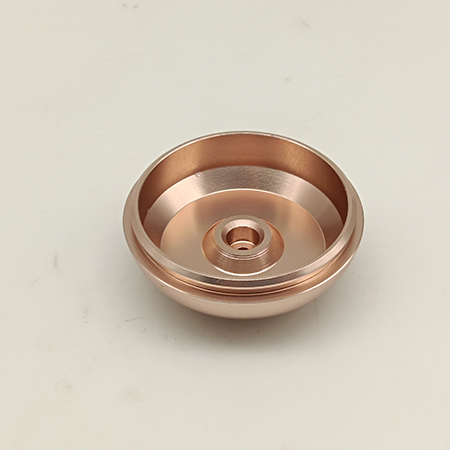
1. Does Copper Rust? The Basics of Copper Corrosion
Copper does not rust. Rust is iron oxide. It is red, flaky, and weak. Copper makes a different product. It is called patina.
The Chemistry of Copper Corrosion
Copper reacts with oxygen, water, and carbon dioxide in the air. The reaction is slow. It forms a green layer on the surface. The main compound is basic copper carbonate (Cu₂(OH)₂CO₃) . This is the green patina you see on old statues and roofs.
Patina Is Protective, Not Destructive
Iron rust flakes off. It exposes fresh metal. More rust forms. The part gets thinner. Copper patina does the opposite. It sticks to the surface. It seals the metal underneath. This slows down further corrosion. That is why copper roofs last for hundreds of years.
Copper Corrosion Is Not the Same as Iron Rust
The table below shows the key differences.
| Property | Iron Rust | Copper Patina |
|---|---|---|
| Color | Red-brown | Green or blue-green |
| Structure | Flaky, loose | Dense, adherent |
| Protection | None (exposes fresh metal) | Good (seals the surface) |
| Effect on strength | Severe thinning | Very minor |
2. Nine Types of Copper and Copper Alloy Corrosion
Pure copper is quite resistant. But copper alloys (brass, bronze) can suffer from other corrosion types. Here are nine forms of copper corrosion.

1. Uniform Corrosion
This is the slow, even color change on the whole surface. The part turns brown, then dark brown, then green over many years. It is the least dangerous type. It does not weaken the part much.
-
Common in: Outdoor copper, architectural parts.
-
Prevention: None needed for most uses. Accept the patina.
2. Galvanic Corrosion
When copper touches a more active metal (like aluminum, steel, or zinc), the active metal corrodes. Copper is noble. It drives the corrosion of the other metal.
-
Example: A copper fitting bolted to a steel plate. The steel around the bolt will rust fast.
-
Prevention: Use an insulating gasket or coating between the metals.
3. Pitting Corrosion
Small holes form on the surface. The holes can go deep. They may go through the wall of a pipe or fitting.
-
Common in: Low-flow seawater systems. Thin-wall copper tubes.
-
Prevention: Keep flow velocity above 1 m/s. Use clean water with good chemistry.
4. Selective Leaching (Dealloying) – Dezincification of Brass
This is a big problem for brass. Brass is copper with zinc. In some environments, the zinc dissolves out. Only a porous, weak copper sponge remains. The part looks unchanged but loses strength.
-
Common in: Brass fittings in stagnant or acidic water.
-
Prevention: Use dezincification-resistant (DZR) brass. Add arsenic or tin to the alloy.
5. Stress Corrosion Cracking (SCC)
Cracks form under combined stress and a corrosive environment. For copper alloys, the main trigger is ammonia or ammonium compounds. This includes some cleaners and fertilizers.
-
Common in: Brass parts under high stress (tight bends, pressed fittings) in ammonia-rich air.
-
Prevention: Avoid ammonia. Use stress-relieved alloys. Choose ammonia-resistant grades.
6. Erosion Corrosion
Fast-moving fluid wears away the protective patina. The bare metal corrodes fast. It creates horseshoe-shaped pits.
-
Common in: Copper pipes with high water velocity. Turbulent flow near fittings.
-
Prevention: Keep velocity under 2 m/s. Use larger pipes. Avoid sharp bends.
7. Crevice Corrosion
Corrosion happens in tight gaps (under gaskets, threads, or deposits). Copper alloys are fairly resistant to crevice corrosion. But it can happen in chloride-rich environments.
-
Common in: Marine fasteners. Threaded connections.
-
Prevention: Use sealants. Keep crevices clean.
8. Fretting Corrosion
Small vibrations cause micro-movement between two surfaces. The protective film wears off. Fresh metal corrodes.
-
Common in: Press-fit connections. Vibration-prone assemblies.
-
Prevention: Use lubricants or anti-fretting coatings.
9. Corrosion Fatigue
Cyclic stress plus a corrosive environment causes cracks at lower stress than normal.
-
Common in: Rotating copper parts in seawater.
-
Prevention: Reduce stress. Use a more resistant alloy.
3. Corrosion Sensitivity of Different Copper Alloys
Not all copper alloys behave the same. Pick the right one for your environment.
| Alloy | Uniform Corrosion | Dezincification | Stress Corrosion | Best Use |
|---|---|---|---|---|
| Pure copper (C101/C110) | Excellent | Not applicable | Good | Electrical, roofing, water pipes |
| Brass (C260, C360, C377) | Good | High risk (if Zn >15%) | High (in ammonia) | Decorative, low-cost fittings |
| DZR Brass (C465, C477) | Good | Low (resistant) | Medium | Plumbing, hot water systems |
| Tin bronze (C52100) | Very good | None | Low | Marine hardware, pumps |
| Aluminum bronze (C954) | Excellent | None | Low | Seawater valves, heavy-duty parts |
Pure Copper
Pure copper is very resistant to uniform corrosion. It turns green slowly. But it does not pit or crack easily. It is safe for most environments. Avoid high-sulfur air (it turns black).
Brass – Watch for Dezincification
Brass with more than 15% zinc is at risk. In acidic or stagnant water, the zinc leaves. The part becomes weak. DZR brass (with a small amount of arsenic or tin) stops this. For water applications, always ask for DZR brass.
Bronze – The Best for Marine Use
Tin bronze and aluminum bronze resist seawater very well. They do not dealloy. They do not crack easily. For boat parts, pumps, and underwater fittings, bronze is the top choice.
4. Expert Insight: Patina Is Not Always Bad
“Many clients see green on their copper parts and panic. They think it is rust. I tell them: that green layer is your friend. It protects the metal. Do not polish it off unless you need a shiny look. For outdoor electrical grounds or architectural parts, let the patina grow. It will last for decades. The real problem is not green patina. It is white or pink powdery spots. That means dezincification. That is when you need to change the alloy.”
— Materials Engineer, DongGuan YiTai Electronic Technologies
How We Help You Avoid Copper Corrosion Risks
At 'DongGuan YiTai Electronic Technologies' , we machine copper, brass, and bronze parts. We also help you pick the right alloy for your environment.
-
Alloy recommendation: Tell us the use (water, air, chemical, marine). We choose the best grade.
-
Surface finish: A smooth CNC machined surface has fewer places for corrosion to start. We hold low Ra values.
-
Post-processing: We can apply clear lacquer or passivation for extra protection.
Send us your drawing and application details. We will give you a corrosion-resistant copper part and a full quote.
5. Frequently Asked Questions (FAQ)
Q: Does copper rust in water?
A: Copper does not rust. It forms a green or blue-green patina. In clean water, the patina is protective. In aggressive water (low pH or high chlorine), it can cause pitting or erosion corrosion.
Q: What is the green stuff on my copper pipe?
A: That is patina – mostly basic copper carbonate. It is not harmful. It protects the pipe. Only remove it if you want a shiny look. For drinking water pipes, the green layer is safe.
Q: How do I stop brass from dezincifying?
A: Use DZR brass (dezincification-resistant brass) . Look for grades like C465 (arsenic brass) or C477. Do not use standard C360 or C377 brass in hot or acidic water.
Q: Is bronze better than brass for seawater?
A: Yes. Tin bronze (C52100) and aluminum bronze (C954) resist seawater very well. They do not dealloy. Brass will corrode in seawater, especially the zinc part. For marine use, choose bronze.
Q: Can copper and aluminum touch each other safely?
A: No. Copper and aluminum form a galvanic couple. The aluminum will corrode fast. Use an insulating gasket, washer, or coating between them. Or use a different metal.
Q: Does DongGuan YiTai Electronic Technologies offer corrosion-resistant copper parts?
A: Yes. We machine pure copper, DZR brass, and bronze. We also help you select the right material. Send us your application details. We will recommend the best alloy for long life.
DongGuan YiTai Electronic Technologies Co.,Ltd
DongGuan YiTai Electronic Technologies Co.,Ltd is a manufacturing service provider located in Dongguan, China.
YiTai specialized in CNC turning machining and sheet metal fabrication mainly. As a member of Hung Mou Group, we focus on the overseas marketing development. And based on our parent company’s manufacturing capability and resources, YiTai also expended machining services such as die casting, injection molding, aluminum profile extrusion, 3D printing, which are committed to providing customers with one-stop purchasing services and experience.
CNC MACHINING , CNC MILLING , CNC TURNING , SHEETMETAL , FASTENER , OTHERS




5-Axis CNC Milling Breakthrough Applications in Aerospace and Medical Industries
What Is Polishing? A Complete Guide to Surface Finishing for CNC Machined Parts
Related Article