CNC Transmission Shafts in Automotive & Industrial Machinery: How to Ensure High Torque and Long Life

1. Failure Modes of Transmission Shafts
To make a shaft last long, you must know why shafts break. There are four common failure modes.
Torsional Fatigue Fracture
This is the most common failure. The shaft twists back and forth many times. Small cracks start at stress points like sharp corners or holes. The cracks grow. Finally, the shaft snaps. Poor material quality and bad design cause this.
Spline Wear
Many shafts have splines. These are teeth that fit into a mating part. The splines slide a little during use. If the surface is not hard enough, the teeth wear down. Bad lubrication makes it worse. Once the spline is loose, the shaft fails.
Bending Deformation
A shaft can bend. This happens when the load is too high. It also happens when heat treatment leaves stress inside the metal. A bent shaft vibrates. It wears out bearings fast. It may also break.
Keyway Damage
A keyway is a slot for a key that locks the shaft to a gear. If the keyway is not cut to the right size, the key moves. It pounds the sides of the keyway. The metal deforms. The fit becomes loose. Then the key falls out.
2. Improving Strength with Material and Heat Treatment
Good material is the base. The right heat treatment makes it better.
Choose the Right Alloy Steel
Not all steel is the same. For high-torque shafts, use alloy steels.
-
42CrMo (AISI 4140): Good for medium to large shafts. It is strong. It handles impact well.
-
20CrMnTi (AISI 8620): Good for carburizing. It gets a hard surface and a tough core.
-
40Cr (AISI 5140): A cost-effective choice for moderate loads.
Carburizing and Quenching for Hard Surface + Tough Core
For parts with splines or high wear areas, carburizing is the best. The shaft goes into a carbon-rich furnace. Carbon goes into the surface. Then it is quenched. The surface becomes hard (58–62 HRC). The core stays tough (30–40 HRC). This gives wear resistance and impact strength.
Induction Hardening for Local Strengthening
Sometimes you only need a hard area. The spline. The bearing journal. Induction hardening heats just that area with a coil. Then a quench follows. The rest of the shaft stays soft. This saves cost. It also keeps the shaft straight.
3. How CNC Precision Machining Boosts Fatigue Life
A strong material still needs good machining. Small details make a big difference.
Finishing the Transition Radius
A shaft has steps. A small radius at the step reduces stress. A sharp corner concentrates stress. Cracks start there. CNC machining lets you put a smooth, precise radius at every step. The rule: the larger the radius, the longer the life.
Surface Rolling (Burnishing)
This is a special process. A hard roller presses on the shaft surface. It compresses the metal. This puts compressive stress into the surface. Cracks do not like compressive stress. They stay closed. Surface rolling can double or triple the fatigue life. It works well on fillets and journal surfaces.
High-Precision Concentricity
A shaft must spin true. The centerline must be straight. The bearing journals must be concentric (sharing the same center line). If they are off by even 0.02mm, the shaft bends when it spins. This adds extra force. CNC turning between centers gives the best concentricity. We hold it to ±0.005mm.
4. Quality Control Methods to Verify Reliability
Machining is not done until the part is checked. We use three main tests for transmission shafts.
Magnetic Particle Inspection (MPI)
This finds surface cracks. The shaft is magnetized. Then fine iron particles go on the surface. If there is a crack, the particles gather at the crack. You see a line. MPI catches cracks before they grow.
Ultrasonic Testing
This looks inside the shaft. A sound wave goes through the metal. It bounces back from any void or crack inside. This finds internal defects from the raw bar stock. For critical shafts, 100% ultrasonic testing is a must.
Static Torsion Test and Fatigue Test
We do not guess. We test a sample shaft to failure.
-
Static torsion test: Twist the shaft until it breaks. Check if it reaches the design torque.
-
Fatigue test: Twist the shaft back and forth many times. See how many cycles it lasts. This matches real use.
5. Comparison Table: Materials for High-Torque Shafts
| Material | Hardening Method | Surface Hardness | Core Hardness | Best For |
|---|---|---|---|---|
| 42CrMo (4140) | Induction or Q+T | 50–55 HRC | 30–35 HRC | Medium shafts, high torque |
| 20CrMnTi (8620) | Carburize + Quench | 58–62 HRC | 35–40 HRC | Splines, gears, high wear |
| 40Cr (5140) | Induction | 50–55 HRC | 25–30 HRC | Cost-sensitive shafts |
6. Application Case: Output Shaft for a Heavy-Duty Truck Gearbox
A client needed an output shaft for a 16-speed truck gearbox. The torque was 2,000 Nm. The shaft had long splines at both ends. The middle had two bearing journals.
Our solution:
-
Material: 20CrMnTi (AISI 8620)
-
Process: CNC turning between centers. Cut all diameters and radii. Cut splines with a CNC spline hobbing attachment.
-
Heat treatment: Carburize to 0.8mm case depth. Quench and temper. Final hardness 60 HRC on splines.
-
Finish grind: Grind bearing journals to ±0.005mm.
-
Surface rolling: Roll the fillets at the step changes.
Result: The client tested the shaft to 1.5 million cycles. No cracks. No wear. The shaft is now in production. It runs in over 10,000 trucks.
7. Expert Insight: The Weakest Link is Often a Radius
“I have seen many shaft failures. Most of them start at a sharp corner. The designer puts a small radius because it is easy to draw. But that small radius is a crack starter. We always tell clients: make the radius as big as possible. Use a CNC machine to cut it smoothly. Then roll it with a burnishing tool. That one step can double the shaft life. It costs very little. It saves a lot.”
— Senior Design Engineer, DongGuan YiTai Electronic Technologies
8. How We Build High-Reliability Transmission Shafts for You
At ‘DongGuan YiTai Electronic Technologies’ , we make transmission shafts for automotive and industrial customers. We use CNC lathes, spline hobbing machines, and CNC grinders. We have in-house heat treatment and surface rolling. We inspect with MPI, ultrasonic, and torsion test machines.
We do not just machine your shaft. We help you design it for long life. Send us your drawing. Tell us the torque and speed. We will recommend the material, heat treatment, and finishing steps. We will give you a full quote with testing included.
9. Frequently Asked Questions (FAQ)
Q: What is the best material for a high-torque transmission shaft?
A: For most heavy-duty shafts, 42CrMo (4140) or 20CrMnTi (8620) is the best. 42CrMo gives high strength through the whole part. 20CrMnTi gives a very hard surface for wear. Pick based on whether wear or impact is the bigger risk.
Q: How does surface rolling improve fatigue life?
A: Surface rolling puts compressive stress into the metal surface. Cracks need tensile stress to open and grow. Compressive stress keeps them closed. Rolling can increase fatigue life by 200% to 300% . It is a low-cost step with big benefits.
Q: What is the difference between MPI and ultrasonic testing?
A: MPI finds cracks on the surface and just below. It is fast and cheap. Ultrasonic testing finds voids and cracks deep inside the metal. It is slower and more expensive. For critical shafts, we use both.
Q: Why is concentricity so important for a shaft?
A: If the bearing journals are not on the same center line, the shaft wobbles. This adds bending stress each time it turns. The bending stress adds to the torsion stress. The total stress goes up. The shaft fails sooner. Good CNC turning holds concentricity to ±0.005mm.
Q: Can you make a splined shaft without a special spline machine?
A: Yes, but it is not as good. You can mill splines with a CNC mill and a rotary table. But a dedicated spline hobbing machine or a CNC lathe with live tooling gives better accuracy and faster cycle times. We use spline hobbing for production shafts.
Q: Does DongGuan YiTai Electronic Technologies offer prototyping for transmission shafts?
A: Yes. We make single prototypes and high-volume runs. For a prototype, we can machine a shaft in 2 weeks including heat treatment. For production, we run batches of 500 to 50,000 pieces. Send us your drawing for a quote.
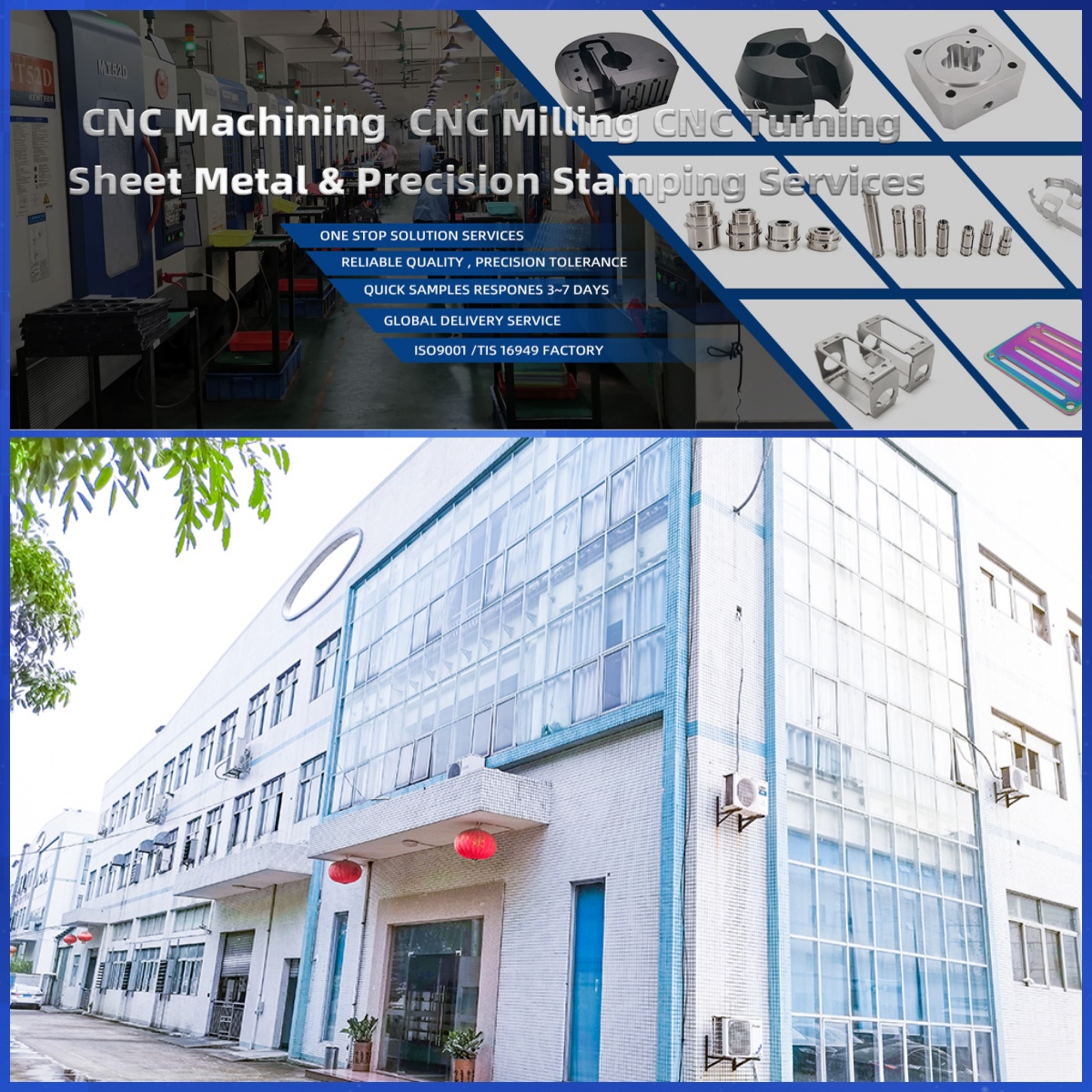
DongGuan YiTai Electronic Technologies Co.,Ltd
DongGuan YiTai Electronic Technologies Co.,Ltd is a manufacturing service provider located in Dongguan, China.
YiTai specialized in CNC turning machining and sheet metal fabrication mainly. As a member of Hung Mou Group, we focus on the overseas marketing development. And based on our parent company’s manufacturing capability and resources, YiTai also expended machining services such as die casting, injection molding, aluminum profile extrusion, 3D printing, which are committed to providing customers with one-stop purchasing services and experience.
CNC MACHINING , CNC MILLING , CNC TURNING , SHEETMETAL , FASTENER , OTHERS




What Is the Function of a Heat Sink? The Core of Electronics Thermal Management and the Role of CNC Precision Machining
What Is the Melting Point of Lead? Complete Guide for Engineers and CNC Professionals
Related Article