Supplier Evaluation Guide: How to Identify Top CNC Partners Through Their "Precision-Cost" Management Skills

-
Introduction: A Supplier That Can Discuss "Precision-Cost" Trade-offs
-
Penetrating Questions: Insight into Real Technical and Management Level
1. Introduction: A Supplier That Can Discuss "Precision-Cost" Trade-offs
Finding a good CNC machining supplier is hard. Many shops can make a part. But a true partner is different. A true partner understands the balance between precision and cost. They do not just say "yes" to every tight tolerance on a drawing. Instead, they ask "why?" They help you find the best solution within your budget. A supplier who can have this discussion is valuable. They are worth a deeper partnership. This guide shows you how to find them.
2. Penetrating Questions: Insight into Real Technical and Management Level
Ask these questions. The answers will show you the supplier's real capability.

2.1 Question Area 1: Equipment and Calibration
This checks their basic ability to be precise.
-
"What are the positioning accuracy and repeatability of your key CNC machines?" (Good answers mention specific numbers like ±0.002mm).
-
"How often do you perform laser interferometer calibration on your machines?" (This is a high-level calibration tool. Good suppliers do it regularly, perhaps every 6-12 months).
2.2 Question Area 2: Process Methodology
This checks their planning and problem-solving skills.
-
"For a high-precision part, what is your process design flow?" Listen for steps like: review drawing, select machine, design fixtures, plan tool paths, determine inspection points.
-
"How do you perform risk prevention?" They should talk about identifying difficult features early and planning solutions.
2.3 Question Area 3: Quality Control and Data
This checks if they measure properly and use data.
-
"What is included in your First Article Inspection (FAI) report?" It should have a complete dimensional report, not just a pass/fail stamp.
-
"Can you provide Cpk data for key dimensions on production runs?" Cpk shows process stability. A supplier who tracks this is serious about quality control.
2.4 Question Area 4: Engineering Collaboration Attitude
This is the most important test of partnership.
-
"If we ask to loosen some tolerances to reduce cost, how do you respond?" A top partner will analyze the drawing. They will identify tolerances that are unnecessarily tight for the part's function. They will give you a clear, professional suggestion on where to relax specs safely. A low-level supplier might just say "okay" and give a lower price without analysis.
Michael Thorne, a veteran procurement manager, advises: "Ask them to walk you through a drawing and point out which tolerances are driving cost. Their ability to do this—and explain why—separates technicians from true manufacturing engineers."
3. Site or Case Validation: Observe Their Actions
Do not just listen to their words. See their work.
3.1 Ask to Visit the Measurement Room
Ask to see their quality lab.
-
Look at their inspection equipment (CMM, optical comparator, surface tester). Are they modern and well-maintained?
-
Ask to see historical inspection records for a similar job. This proves they actually perform the checks they talk about.
3.2 Study Their Past Cases
Ask for specific examples.
-
"Can you show us a part you made with similar precision requirements to ours?" Discuss the challenges and solutions.
-
"Share a cost optimization case study." How did they work with a client to redesign or adjust tolerances to save money without hurting performance?
4. The "Precision-Cost" Comprehensive Value Assessment Table
Use this simple framework to score potential suppliers (1=Poor, 5=Excellent).
| Evaluation Area | Key Question for Scoring | Score (1-5) |
|---|---|---|
| Technical Capability | Do their machine specs, calibration, and process answers show they can achieve the precision? | |
| Quality Management | Do their FAI reports, Cpk data, and measurement room prove they can measure and guarantee the precision? | |
| Engineering Response | Do they proactively discuss tolerance optimization and show problem-solving skills? | |
| Commercial Partnership | Is their pricing transparent? Do they explain cost drivers related to precision? | |
| Total Score |
A true top partner will score high in all four areas. A shop with only a high technical score may be expensive and rigid. A shop with only a low commercial score may lack critical capabilities.
5. Industry Expert FAQ
Q1: What is a reasonable positioning accuracy for a modern CNC mill doing precision work?
For high-precision machining of metals like aluminum or steel, look for machines with a positioning accuracy of ±0.005 mm (0.0002") or better. Repeatability should be even tighter, around ±0.0025 mm (0.0001").
Q2: What is Cpk data, and why is it important?
Cpk is a statistical measure. It shows how well a machining process stays within the tolerance limits. A Cpk of 1.33 is good. A Cpk of 1.67 or higher is excellent. It means the process is very stable and centered. Asking for Cpk data moves the conversation from "we checked 3 parts" to "we have proven our process is under control."
Q3: We have a tight budget. Should we avoid high-precision suppliers?
No. You should engage them. Explain your budget and functional goals. A high-precision supplier with good "Engineering Response" skills is often the best choice for a tight budget. They can tell you exactly which precision features are costing money and where you can save without risk.
Q4: Is a cheaper quote always a sign of better "cost management"?
Not always. Often, a cheaper quote means the supplier did not understand the critical tolerances. They may plan to use a less accurate machine or skip important inspections. This leads to failed parts and higher total cost. A transparent quote that explains cost drivers is more valuable.
Q5: What if a supplier refuses to share Cpk data or inspection records?
This is a major red flag. It likely means they do not collect this data. Without data, they cannot truly manage quality or precision. You should consider other suppliers.
Q6: How do we start the "precision-cost" discussion with a new supplier?
Send your drawing and say: "This is our target part. Some tolerances are critical for function, others may be standard. Can you review this and highlight the top 3 tolerances that most impact the cost? We are open to discussion on non-critical dimensions." Their response to this request will tell you almost everything you need to know.
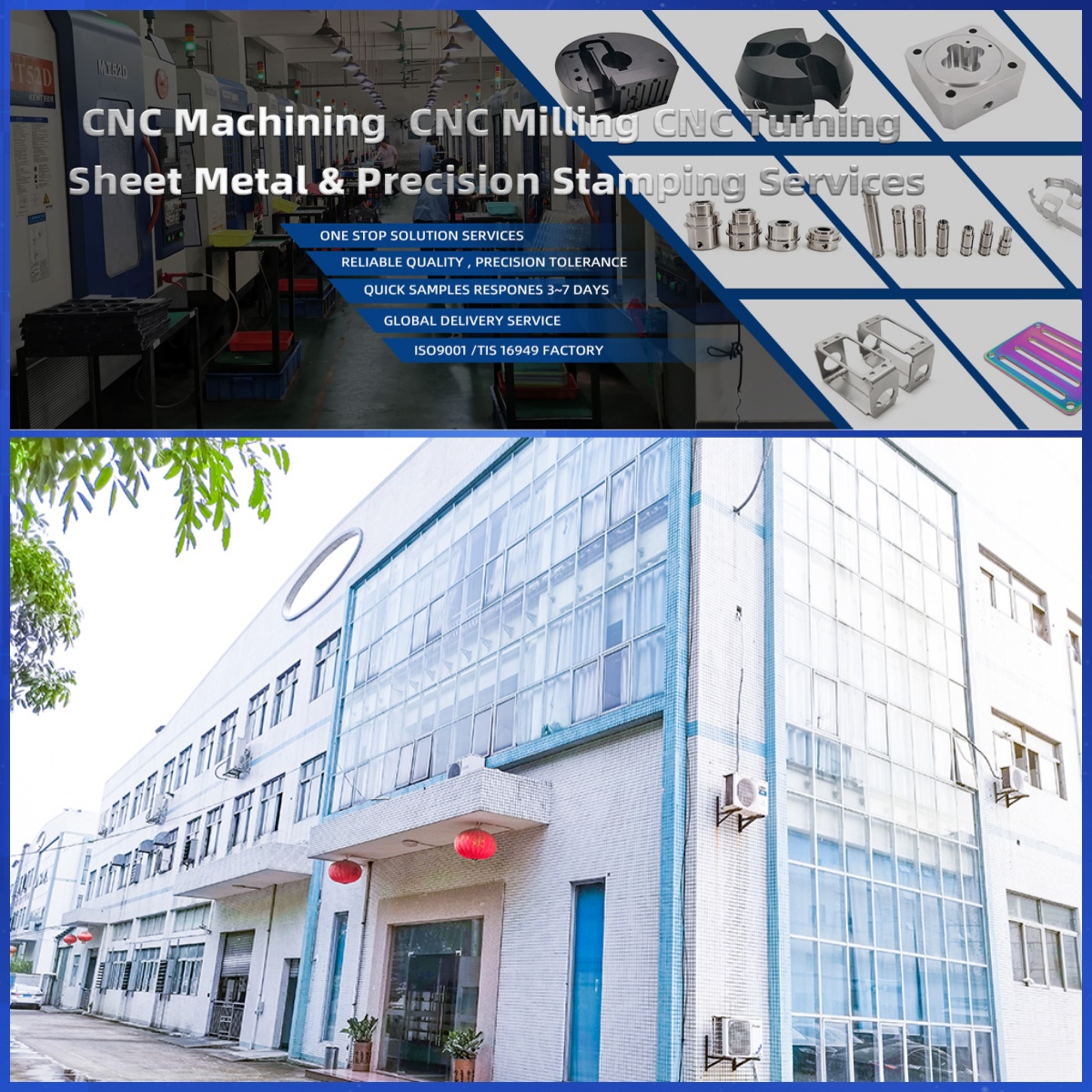
DongGuan YiTai Electronic Technologies Co.,Ltd
DongGuan YiTai Electronic Technologies Co.,Ltd is a manufacturing service provider located in Dongguan, China.
YiTai specialized in CNC turning machining and sheet metal fabrication mainly. As a member of Hung Mou Group, we focus on the overseas marketing development. And based on our parent company’s manufacturing capability and resources, YiTai also expended machining services such as die casting, injection molding, aluminum profile extrusion, 3D printing, which are committed to providing customers with one-stop purchasing services and experience.
CNC MACHINING , CNC MILLING , CNC TURNING , SHEETMETAL , FASTENER , OTHERS




Accelerating Innovation: CNC Machining Solutions for Electric Vehicles (EV) & Automotive
Zero-Error Installation: The Golden Rules of Control Panel Sheet Metal Design (DFM)
Related Article