When Robots Paint the Perfect White Lines at the 2026 World Cup: How Precision Racks, Shafts, and Nozzles Are Made Possible by CNC Machining

-
2026 World Cup Field Marking – How Robots Deliver Millimeter Precision
-
Where the Walking and Positioning Accuracy of Robotic Line Markers Comes From
-
Unsung Heroes of 2026 World Cup Turf Care – Non‑Standard Wear Parts on Large Mowers and Aerators
1. 2026 World Cup Field Marking – How Robots Deliver Millimeter Precision
FIFA has strict rules. All lines must be the same width, no wider than 12cm (5 inches). For 4K broadcasts, even a slightly wobbly line looks terrible. Traditional manual marking needs three workers, measuring tapes, and many hours. Robots change this. A single operator with a tablet can now mark an entire pitch with centimeter‑level accuracy. The robots use multi‑constellation GPS (BDS, GPS, GLONASS, GALILEO) for precise positioning.
Robots also solve a practical problem. Natural grass grows, rain washes paint away, and matches wear down the lines. Professional stadiums often need re‑painting before every match. For the 2026 World Cup, with 48 teams playing across 16 venues, the demand for fast, reliable, and repeatable marking is huge. In China alone, there are about 148,700 football fields; if 40% are natural grass, that creates about 3.09 million line‑refreshing needs per year.
2. Where the Walking and Positioning Accuracy of Robotic Line Markers Comes From
A robotic line marker is not a toy. It is a precision machine. Its accuracy depends on three sets of CNC‑machined parts.
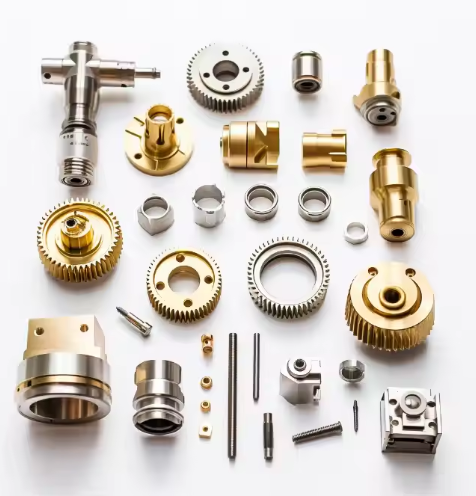
High‑Precision Rack and Pinion – The Core of Straight Walking
The robot must drive in a perfectly straight line. It must also turn smoothly. This requires a rack and pinion gear system. The rack is a long metal bar with teeth. The pinion is a gear that engages with it. CNC machining ensures that the teeth are cut to high accuracy, typically within 0.1mm. This is the foundation of the robot’s linear motion control.
Wheel Shafts, Bearing Housings, and Encoder Mounting Brackets
The robot’s wheels must stay aligned. The wheel shaft must be straight, and the bearing housing must hold it perfectly centered. We use mill‑turn CNC machines to machine these parts in one setup. This guarantees the concentricity (perfect alignment) of the shaft and the housing. For the 2026 World Cup, the tournament spans different climates: from the high altitude of Mexico City to the humid grass of Seattle. The robots must work reliably in all conditions. Well‑machined shafts and bearings reduce friction and wear, ensuring consistent performance.
Cam and Linkage of the Spray Head Oscillation Mechanism
The spray head must move smoothly to paint a sharp line. This is done by a cam and linkage mechanism. The cam is a specially shaped part that converts rotary motion into the oscillating motion of the spray nozzle. We machine the cam from solid metal on a CNC mill to ensure its profile is accurate to the design. A precision‑machined cam delivers a consistent spray pattern, resulting in white lines with razor‑sharp edges.
3. Unsung Heroes of 2026 World Cup Turf Care – Non‑Standard Wear Parts on Large Mowers and Aerators
The line markers are visible. But behind the scenes, a fleet of machines keeps the grass perfect. They need CNC parts too.
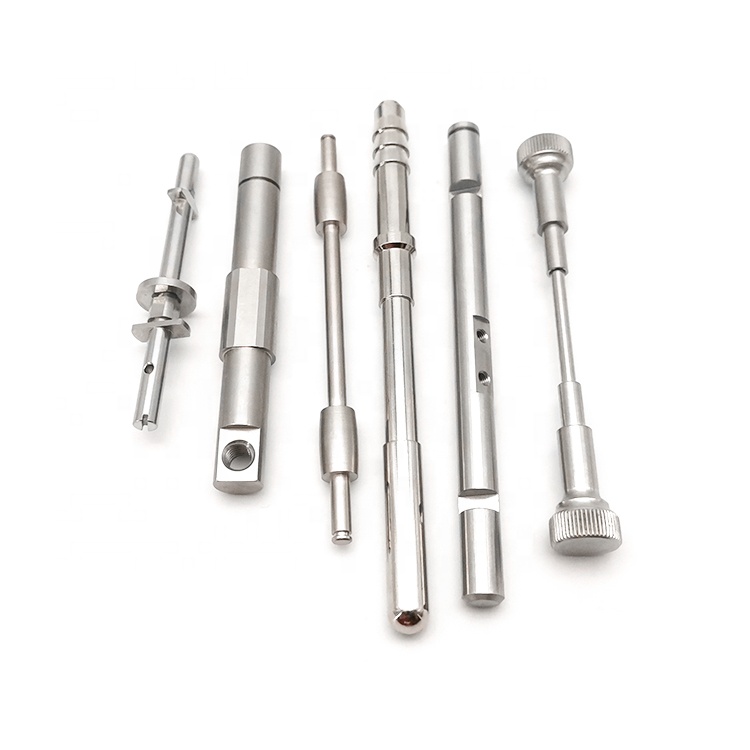
Blade Bearing Housings and Eccentric Vibration Shafts
Professional mowers cut grass at very high speeds. The blades are mounted on shafts that rotate in bearing housings. The blade bearing housing must be strong and precise. If it is not, the blade wobbles, and the cut is uneven. The eccentric vibration shaft is used in aerators. It creates a vibrating motion to punch holes in the soil. These parts endure high impact and fatigue. We machine them from hardened steel or stainless steel to give them a long life.
Aeration Tine Holders and Quick‑Change Couplers
Aeration is critical for pitch health. Aeration tines are small metal spikes that punch holes in the soil. They are held by tine holders. These holders must grip the tines firmly but also allow quick changes. CNC machining allows us to produce stainless steel tine holders with precise slots and locking features. After machining, we harden them and finish‑grind the critical surfaces. The result is a holder that lasts.
4. Comparison: Why CNC Beats Casting for Sports Equipment OEMs
For the 2026 World Cup, equipment needs are diverse and urgent. Why do sports equipment OEMs choose CNC machining over casting for these parts? The table below shows the comparison.
| Feature | CNC Machining | Casting |
|---|---|---|
| Setup Cost | Low (no mold needed) | High (expensive mold/tooling) |
| Lead Time for New Part | Days to weeks | Weeks to months (mold making) |
| Batch Size Flexibility | Excellent (1 to 10,000+) | Poor (only economical for large volumes) |
| Material Options | Wide (steel, stainless, aluminum, brass) | Limited (depends on castability) |
| Geometric Complexity | High (complex 3D shapes) | Medium (draft angles needed) |
| Tolerance | ±0.01mm or better | ±0.1mm or worse |
| Post‑Processing | Minimal (often ready to use) | Extensive (machining required) |
For a tournament that spans three countries and 16 cities, OEMs must be able to respond fast. CNC machining offers the agility needed to produce small batches of many different parts. This reduces the need for large, expensive spare parts inventories.
5. Expert Insight: CNC Is the Enabler of Robotic Consistency
“Robots are only as good as their parts. If the rack has a 0.1mm error, the robot’s path will be off by that same amount. Over a 100‑meter line, that tiny error can become a visible wobble. At YiTai, we use CNC machining to hold tolerances on racks and shafts to ±0.02mm. That is what gives the robot its repeatable, centimeter‑level accuracy. You cannot achieve that with cast or poorly machined parts.”
— Senior Applications Engineer, DongGuan YiTai Electronic Technologies
Does Your Equipment Also Have Small‑Batch Critical Drive Components?
Whether you are building robots for the World Cup or automated machines for your factory, you need precision parts. DongGuan YiTai Electronic Technologies provides flexible CNC machining services. We handle everything from single prototype samples to large production runs. We machine racks, pinions, shafts, bearing housings, cams, and complex brackets from a wide range of materials.
Send us your drawing and tell us your quantity. We will provide a free DFM review and a transparent quote. Let us help you build reliable machines.
6. Frequently Asked Questions (FAQ)
Q: What is the typical accuracy of a GPS‑guided line‑marking robot?
A: Most professional robots achieve centimeter‑level accuracy (about 1‑2cm). This is sufficient for sports field marking. The accuracy depends on both the GPS signal and the precision of the robot’s mechanical drive system.
Q: Why is CNC machining better than 3D printing for these parts?
A: For metal parts that must withstand high loads, wear, and friction, CNC machining is superior. It produces parts with better material properties (no porosity), higher strength, and much tighter tolerances (up to ±0.005mm vs ±0.1mm for most 3D printers). 3D printing is good for prototypes, but not for production of high‑stress components.
Q: What materials are best for robotic mower blade shafts?
A: For high‑strength and fatigue resistance, alloy steel like 4140 or 4340 is commonly used. For corrosion resistance in humid environments, stainless steel (like 17‑4PH) is a better choice. The material choice depends on the operating environment and cost.
Q: How do you ensure the concentricity of a wheel shaft and its bearing housing?
A: We use mill‑turn CNC machines. The shaft and the housing are machined in a single setup. This means they are cut from the same reference point, guaranteeing that the shaft’s centerline and the housing’s centerline are perfectly aligned.
Q: Can you make a custom rack for a robot or a machine?
A: Yes. We can machine custom racks from various materials. We can cut them to your required length and with your specified gear module (tooth size). This allows you to create a drive system with the exact travel distance and precision you need.
Q: Does DongGuan YiTai Electronic Technologies support prototyping for new robot designs?
A: Absolutely. We are set up for rapid prototyping. We can machine a single set of custom parts (like a rack, pinion, and shafts) within 5‑7 working days. This allows you to test and validate your robot design quickly.
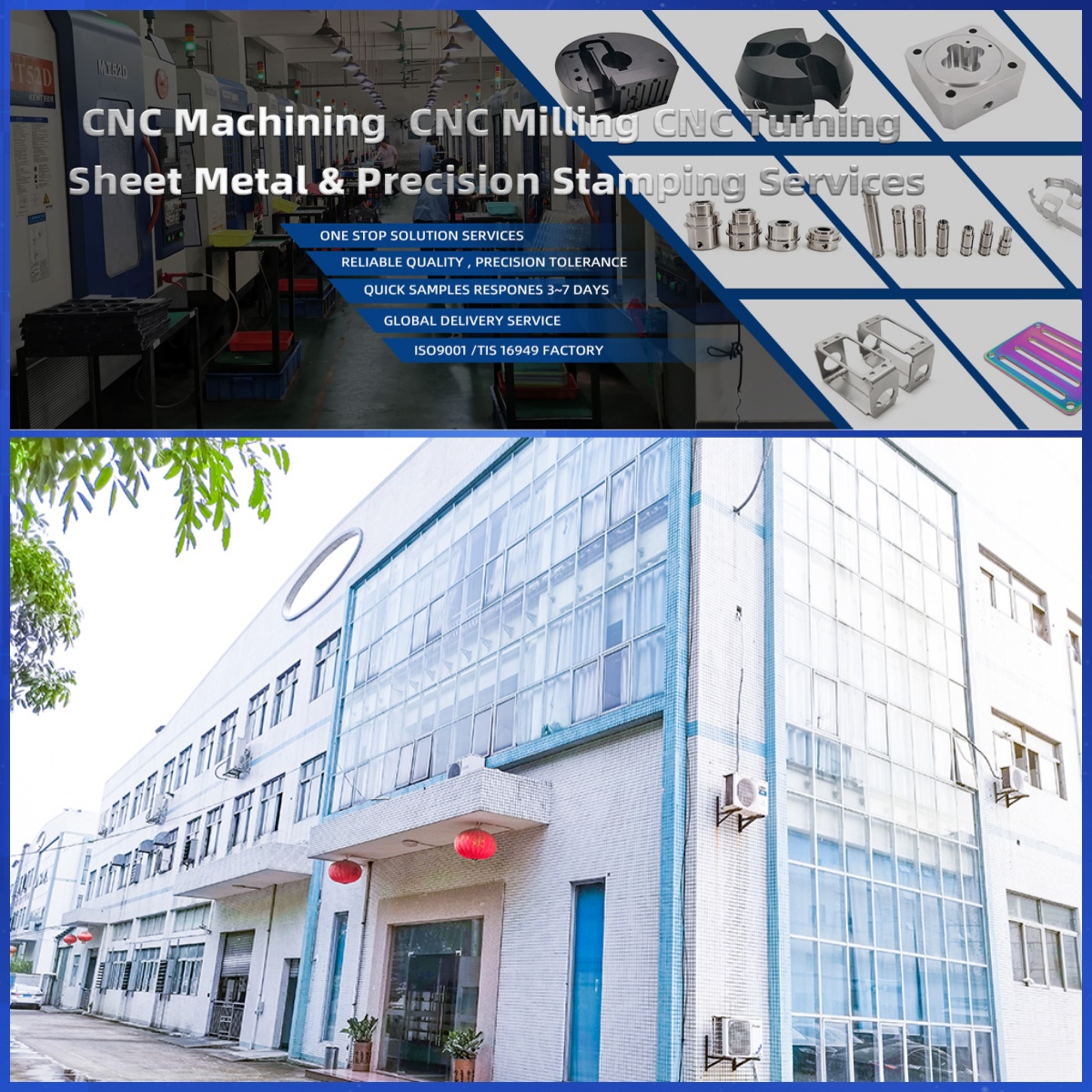
DongGuan YiTai Electronic Technologies Co.,Ltd
DongGuan YiTai Electronic Technologies Co.,Ltd is a manufacturing service provider located in Dongguan, China.
YiTai specialized in CNC turning machining and sheet metal fabrication mainly. As a member of Hung Mou Group, we focus on the overseas marketing development. And based on our parent company’s manufacturing capability and resources, YiTai also expended machining services such as die casting, injection molding, aluminum profile extrusion, 3D printing, which are committed to providing customers with one-stop purchasing services and experience.
CNC MACHINING , CNC MILLING , CNC TURNING , SHEETMETAL , FASTENER , OTHERS




Sustainable = Cheaper? Uncovering How Green CNC Machining Cuts Your Project Costs Through Waste Reduction, Lower Energy, and Material Recycling
Understanding the Role of 100% Inspection in CNC Precision Manufacturing: From Inspection Tools to a Complete Quality Assurance System
Related Article