Ensuring Zero Defects: The Complete Quality Control System for Smart Electronics Metal Parts

1. Introduction: In the Smart Electronics Field, "Quality" is the Foundation of Brand Reputation
For smart electronics brands, product quality is everything. It builds customer trust and protects your brand name. A single failure in a metal part—like a weak bracket or a poorly shielded enclosure—can cause a whole device to fail.
The Chain of Loss from a Batch Quality Incident
One batch of defective parts can cause big problems. First, it leads to production line shutdowns, stopping assembly. Next, it causes massive rework or recall costs. Worse, it can result in product failures for end-users, damaging your brand's reputation. Fixing this reputation is very hard and very expensive. Because of this, preventing defects is much better than finding them later. A strong Quality Control (QC) system is not a cost; it is a vital investment.
2. The YiTai Complete Quality Control System Analysis
We use a complete process control system. This system checks quality at every step, from material arrival to final shipment.
2.1 Stage One: Incoming Quality Control (IQC) – Stop Risk at the Material Source
Quality starts with the raw material. Our IQC process checks all incoming metal sheets, blocks, and special coatings. We verify the material grade certificates from suppliers. We also perform spot checks. We might measure material thickness or check hardness. This step makes sure every production job starts with approved and correct materials.
2.2 Stage Two: In-Process Quality Control (IPQC) – Real-Time Monitoring of Machining Precision
Constant checks during manufacturing catch errors early. Our IPQC includes scheduled inspections and machine monitoring.
-
CNC Machining Online Inspection and First-Article Inspection: For CNC jobs, the first produced part is fully inspected. We measure all its critical dimensions before mass production continues. During the run, operators perform regular checks using calibrated tools like calipers and micrometers.
-
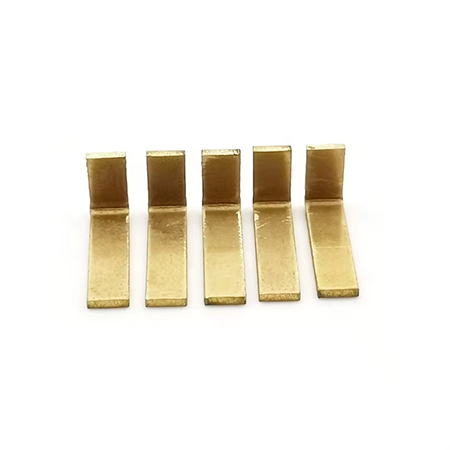
Angle and Dimension Sampling After Sheet Metal Bending: After bending, we do not assume everything is correct. We use angle gauges and height gauges to sample check bend angles and key dimensions. This ensures consistency across all parts in the batch.
2.3 Stage Three: Final Quality Control (FQC/OQC) – Comprehensive Check Before Shipping
Before any part leaves our facility, it must pass a final, rigorous inspection.
-
CMM (Coordinate Measuring Machine) Reports for Key Dimensions: For critical features, we use a CMM. This machine provides a precise 3D measurement report. It proves the part matches your design exactly.
-
Surface Treatment Testing: We test all finishes. This includes measuring coating thickness with gauges, checking paint adhesion with cross-cut tests, and verifying anodizing color against your sample.
-
Functional Check (Trial Assembly): Whenever possible, we perform a real trial assembly. We fit the metal parts with other components (like screws or inserts). This finds any hidden fit or alignment issues before they reach your assembly line.
3. Special Quality Tests for Smart Electronics Products
Smart electronics have special needs. Our QC system includes tests for these specific risks.
3.1 ESD (Electrostatic Discharge) Protection Capability Evaluation
Static electricity can destroy sensitive circuits. For parts that protect internal electronics (like enclosures), we can test their ESD shielding effectiveness. We ensure conductive coatings or materials provide a safe path for static discharge, protecting the device.
3.2 EMI/RFI Shielding Effectiveness Test (If Applicable)
Electronic devices must not interfere with each other. Metal enclosures often provide shielding. We can perform tests to measure how well a part blocks electromagnetic (EMI) and radio frequency (RFI) interference. This is key for products like routers, medical devices, and communication tools.
3.3 Overview of Long-Term Environmental Reliability Tests
Will the part last? We simulate years of use through accelerated testing.
| Test Type | Simulates | Why It Matters for Smart Electronics |
|---|---|---|
| Salt Spray Test | Corrosive, humid environments (coastal, hands, pockets). | Checks if coatings prevent rust on brackets, enclosures, or external screws. |
| Thermal Cycling Test | Repeated heating/cooling from device use and environment. | Reveals if parts crack, warp, or if finishes peel due to material expansion/contraction. |
"These reliability tests are not just 'extra'," says a YiTai Quality Engineer. "They give you data that your product can survive real-world use. This data is powerful for your own brand quality claims."
4. Quality Documents: You Will Receive More Than Just Parts
With every order, you get proof of quality. This documentation is vital for your records and audits.
4.1 Understanding the Inspection Reports (FAI, CPK) Delivered With Your Shipment
-
First Article Inspection (FAI) Report: This is a detailed record of the first part's full inspection. It shows every measured dimension against your drawing's specifications. It proves the manufacturing process is set up correctly.
-
Process Capability (CPK) Report: For high-volume orders, CPK measures how stable and capable our production process is. A high CPK value means the process consistently produces parts well within your tolerance limits, ensuring batch-to-batch consistency.
4.2 The Traceability System: From Your Order Number to Production Batch
Every part can be traced. We use a system that links your order number to the specific production batch, machine used, and inspection records. If any question arises, we can quickly find the exact history of your parts. This provides full transparency and accountability.
4.3 Conclusion: Investing in Strict Quality Control is Investing in Your Project's Final Success
Choosing a manufacturer with a robust, documented QC system directly protects your project. It minimizes production delays, avoids costly surprises, and safeguards your brand reputation. Quality control is the unseen backbone that supports the success of your smart electronic device.
5. Frequently Asked Questions (FAQs)
1. What is the difference between QA and QC?
Quality Assurance (QA) is process-focused. It is the system of activities to ensure quality will be built in (like training, process design). Quality Control (QC) is product-focused. It is the set of activities to find defects in the finished output (like inspection and testing).
2. How do you ensure consistency for large batch orders?
We use statistical process control (SPC). This means taking regular samples during production and measuring key dimensions. By tracking this data on charts, we can see if the process is starting to drift and fix it before it makes bad parts. This, plus a high CPK value, ensures consistency.
3. Are your measurement tools calibrated?
Yes. All our critical measurement tools (like CMMs, calipers, micrometers) are on a strict calibration schedule. They are calibrated by certified external labs. This guarantees that our measurements are always accurate and trusted.
4. Can you perform all these tests in-house?
We perform the core mechanical, dimensional, and surface finish tests in-house for speed and control. For some specialized tests (like detailed EMI chamber testing), we partner with certified third-party laboratories. We manage the entire process and provide you with the full report.
5. What happens if a part fails inspection during production?
Our system has clear Non-Conforming Material procedures. The failed parts are immediately quarantined. The production team and quality engineers then investigate the root cause. We correct the issue in the process. Then, we re-inspect. We do not ship any parts from the affected batch until the problem is fully resolved and quality is confirmed.
DongGuan YiTai Electronic Technologies Co.,Ltd
DongGuan YiTai Electronic Technologies Co.,Ltd is a manufacturing service provider located in Dongguan, China.
YiTai specialized in CNC turning machining and sheet metal fabrication mainly. As a member of Hung Mou Group, we focus on the overseas marketing development. And based on our parent company’s manufacturing capability and resources, YiTai also expended machining services such as die casting, injection molding, aluminum profile extrusion, 3D printing, which are committed to providing customers with one-stop purchasing services and experience.
CNC MACHINING , CNC MILLING , CNC TURNING , SHEETMETAL , FASTENER , OTHERS




1006 Carbon Steel Explained: Why Is It the King of Value in Sheet Metal and CNC Machining?
CNC Machining vs. 3D Printing: Choosing the Right Process for Your Metal Prototypes and Final Parts
Related Article