Metal surface treatment process, why to remove oil and grease?
author: YITECH
2024-12-19

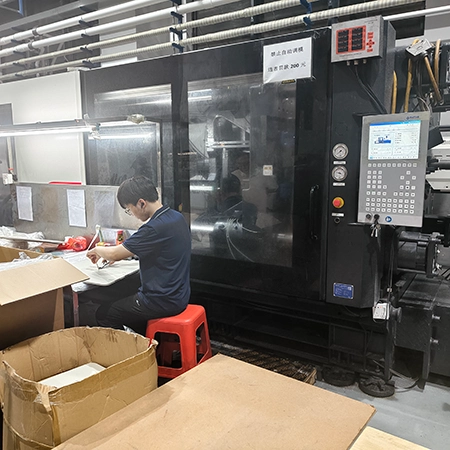
Our state-of-the-art machinery ensures precise and efficient production through CNC processing, delivering high-quality products every time.
There are several main reasons for the degreasing step in the metal surface treatment process:
1. Improve the coating quality: If there is grease or other dirt on the metal surface, it will affect the combination of the coating and the metal, which may lead to delamination, holes, rough surface and other problems between the coating and the substrate.
2. Improve adhesion: grease and other dirt will form a layer of isolation film, affecting the direct contact between coating or other treatment materials and the metal surface, thereby reducing the adhesion.
3. Prevent interference from chemical reactions: In some metal surface treatment processes, such as phosphating, anodizing, etc., chemical reactions are required. If there is oil on the surface of the metal, it will affect the progress of these chemical reactions.
4. Improve the subsequent treatment effect: oil removal and grease removal is a basic preparation of the metal surface treatment process, which can enhance the effect of subsequent processes such as spraying, coating, heat treatment and so on.

Common degreasing method
(1) Lye degreasing method:
Chemical lye is composed of a certain proportion of alkali and alkaline salts and some surface active substances dissolved in water. When degreasing with alkaline cleaning agent, the pH value of alkaline cleaning agent should be controlled according to the different metal materials. Use cleaning agents with different pH values to clean different metal materials to avoid corrosion caused by lye.
(2) emulsion degreasing method:
Solvent emulsification cleaning is the use of organic solvents to dissolve oil and the dispersion of emulsifiers to remove oil. Solvent emulsification cleaning removes a variety of different oil stains on metal products, including lubricating oil, cutting oil, polishing and grinding residue, magnetic powder and other inorganic dust.
Solvent emulsification cleaning is especially suitable for cleaning parts that require the surface to be quickly cleaned of oil and require a slight film to be used as temporary rust prevention. The solvent concentration used in emulsification cleaning is relatively low, the water content is high, and the cleaning cost is lower than that used in hydrochloric acid cleaning. If the temperature used is not greater than the specified value of the emulsion, the fire risk is not large.
When the pH value of the solvent emulsion solution is between 7 and 10, it can be used for various metal workpieces. If the pH of the starting solution is >10 or exceeds this value due to alkali contamination, the emulsion solution is not suitable for aluminum, zinc and other light metal products. The solvent emulsion solution can be formulated to be compatible with the maximum water content conditions, and the size of the workpiece to be cleaned is limited only by the equipment conditions, so it is easy to use.
A thin oil film remaining in the emulsion solution on the surface of the workpiece to be cleaned has an anti-rust effect, but when the workpiece is stored for a long time under high humidity conditions, anti-rust should be specially considered. Some oils, especially alkane-type oils, have better protection and can be enhanced with polymer emulsifiers to form a continuous oil film.

When selecting the workpiece cleaning degreasing method and cleaning agent, the following principles should be followed.
(1) Choose the cleaning method according to the shape of the workpiece and the weight of the oil pollution
In the industrial coating, there are three cleaning methods: spray, dip and spray combination, of which the spray cleaning method is widely used. In the case of spray cleaning, the mechanical effect of cleaning liquid washing is strong, so the cleaning effect is better, and the concentration of cleaning liquid can also be appropriately reduced, which is suitable for parts with light oil and simple shape, and can not be used for parts with complex shape and smaller parts. In the case of spray cleaning, the cleaning solution is easy to foam, so a low-foaming cleaning agent must be used.
(2) Select cleaning agent according to the material of the part
Usually metal parts are based on steel materials, in the alkaline medium, especially in the strong alkaline medium, the properties of steel are relatively stable, and even passivation. Therefore, for steel parts, the choice of strong alkali or weak alkali cleaning agent has no damage to the parts themselves. However, some metals such as zinc, aluminum, galvanized steel plate, etc., will have strong corrosion in strong alkaline media, so for these metal components, alkaline cleaning agents should be selected when using alkaline cleaning agents.
(3) The type of dirt material on the workpiece
Because the oil of mineral oil can not saponify, its removal effect mainly depends on emulsification and mechanical action, so it is necessary to use a cleaning agent with a better emulsification effect, such as a cleaning agent composed of sodium silicate, phosphate and surfactant with more alkaline substances, and take a cleaning method of spraying or spraying combined. Animal and vegetable oils and acidic fats, oil can be saponified, so the use of strong alkaline substances, such as sodium hydroxide composed of cleaning agents is more effective. In fact, the best cleaning agents sold on the market are alkaline cleaning agents containing surfactants, and the removal ability of mineral, animal and plant oil is better.
(4) Treatment after degreasing
Just to remove grease, use any kind of suitable cleaning agent will do. Nowadays, degreasing is usually combined with phosphating to form a pre-treatment process before coating, so it is also necessary to consider whether there is an impact on phosphating. Phosphating begins with corrosion and then produces a phosphating film. The strong alkali cleaning agent has the passivation function on the surface of ferrous metal, which makes it difficult to carry out the corrosion reaction in the phosphating process. Therefore, after using a strong alkaline cleaning agent to remove oil, it must be treated with a surface adjustment agent with surface activation. The use of weak alkali type cleaning agent can be without surface adjustment agent. However, in order to make the phosphating quality better, a weakly alkaline cleaning agent with surface adjustment can also be used. Because the pH of the surface conditioner ranges from 8.0 to 9.5, parts can be treated in the same tank with a weakly alkaline cleaning agent and a surface conditioner.
If you are looking for cnc machining parts with free oil service or other specific surface requirement, please feel free to contact us for a free quote!
Why is it easy to produce tolerances in parts machining?
The difference between carbon and stainless steel
Related Article
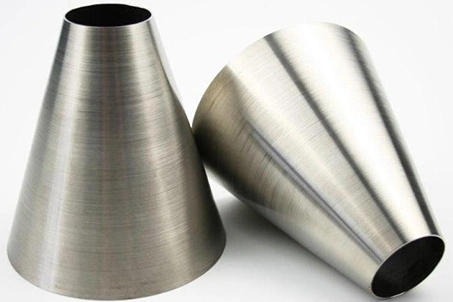
Learn how metal spinning forms rotationally symmetric parts, compare process options, and review materials, applications, cost factors, and RFQ requirements.
Metal Spinning: How the Process Works and When to Use It
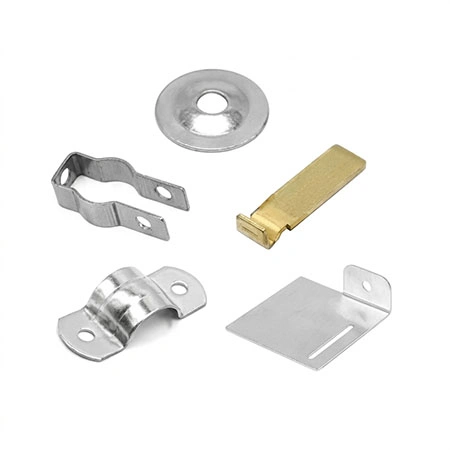
Explore precision metal fabrication processes, tolerance control, inspection, cost factors, and what to include in a custom-part RFQ.
Precision Metal Fabrication: From Drawing Review to Inspection