5-Axis CNC Milling Breakthrough Applications in Aerospace and Medical Industries

1. Aerospace: From Blisks to Complex Structural Parts
Aerospace parts need high strength and low weight. They also have very tight tolerances. 5-axis machining is often the only way to make them.
Case 1: Blisk (Integrated Blade Rotor)
A blisk is a single piece. It has a disk and blades. No separate blades to attach. The blades are twisted. They are curved. They are also very thin.
-
Challenge: 3-axis machining cannot reach between the blades. You need many setups.
-
5-axis solution: The machine tilts the part or the tool. It cuts the full blade surface in one pass. Material removal rate is up to 95% . You start with a solid block. You end with a blisk.
-
Result: No assembly errors. Lighter weight. Better airflow.
Case 2: Engine Casing (Large Diameter, Thin Wall)
An engine casing is a big ring. It has thin walls. It has many radial holes, bosses, and mounting pads.
-
Challenge: The part is large. Thin walls can vibrate. Holes at different angles need multiple setups.
-
5-axis solution: 5-axis positioning (3+2) locks the angle. The machine drills all radial holes without moving the part. The thin wall is supported by the tool path.
-
Result: No misalignment between holes. Less vibration. Faster cycle time.
Case 3: Landing Gear Complex Connector
Landing gear parts have deep pockets, angled holes, and undercuts.
-
Challenge: A 3-axis machine cannot reach undercuts. You must flip the part many times.
-
5-axis solution: The tool tilts to reach the undercut. The part stays in one vise. All features are machined in one setup.
-
Result: Perfect alignment. No stack-up errors. Shorter lead time.
Key Control Points for Aerospace 5-Axis Machining
Aerospace has strict rules.
-
Material traceability: Every bar has a heat number. We track it from receipt to shipment.
-
Cutting parameter validation: We test the tool path on a plastic block first. Then we cut the real metal.
-
In-process measurement: The machine probes the part while it cuts. It adjusts for any tool wear or temperature change.
2. Medical: Orthopedic Implants and Surgical Tools
Medical parts touch the human body. They must be smooth, clean, and biocompatible. 5-axis machining gives the needed surface finish and accuracy.
Case 1: Acetabular Cup (Titanium)
This is a hip implant. It has a porous outer surface (like bone) and a smooth inner ball socket.
-
Challenge: The porous structure is complex. The inner sphere must be very smooth (Ra < 0.1µm).
-
5-axis solution: A 5-axis machine uses a small ball end mill. It follows a spiral path to cut the porous lattice. Then it tilts to finish the inner sphere with a single continuous cut.
-
Result: Bone grows into the porous surface. The ball moves smoothly. The implant lasts longer.
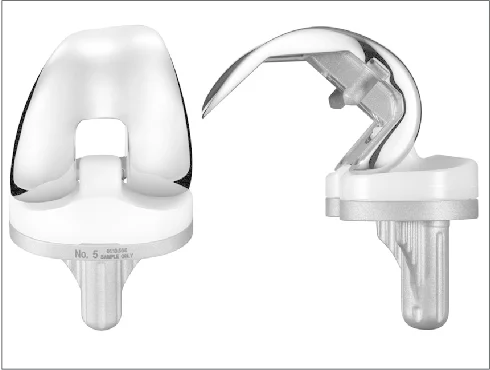
Case 2: Knee Joint Femoral Component
This part has many curved surfaces. It rolls against a plastic bearing.
-
Challenge: The surface needs a mirror finish. Any tool mark will wear the plastic bearing fast.
-
5-axis solution: The machine uses a small step-over (0.05mm) and a high spindle speed. The tool stays normal to the surface (tilted) to avoid rubbing.
-
Result: Ra 0.05–0.1µm surface. No polishing needed. The joint works smoothly.
Case 3: Spinal Fusion Cage (PEEK or Titanium)
This is a small cage. It goes between two vertebrae. It has a honeycomb structure for bone growth. It also has screw holes and positioning features.
-
Challenge: The part is small (10–15mm). The features are tiny (0.3mm holes, 0.2mm walls).
-
5-axis solution: A 5-axis machine with a high-speed spindle (40,000 RPM) and small tools (0.5mm end mill) cuts the cage in one setup.
-
Result: No burrs. Smooth edges. No damage to the tiny walls.
Special Requirements for Medical 5-Axis Machining
Medical parts need a clean environment.
-
Clean room (ISO Class 7 or 8): No dust or contamination.
-
ISO 13485 certification: Quality system for medical devices.
-
Biocompatible surface finish: No sharp edges. No residual cutting fluid. Passivation or electropolishing after machining.
3. How 5-Axis Machining Lowers Total Cost for Both Industries
5-axis machines cost more per hour. But they lower the total cost of a project. Here is how.
| Cost Factor | 3-Axis + Multiple Setups | 5-Axis (One Setup) |
|---|---|---|
| Number of setups | 3–6 | 1 |
| Fixtures needed | Many (one per setup) | One |
| Risk of human error | High (repositioning) | Low |
| Material waste (titanium) | 80–90% | 85–95% (higher yield) |
| Lead time (prototype to first part) | 4–6 weeks | 2–3 weeks |
| Surface finish quality | May need hand polishing | Good as-machined |
Fewer Setups, Less Error
Every time you move a part to a new machine, you lose accuracy. The new vise is not in the same spot. The operator may misalign the part. 5-axis machining removes these steps. One setup. One reference. No errors.
Higher Material Yield
Titanium and Inconel are expensive. A 3-axis machine may leave a lot of waste. 5-axis can tilt the tool to follow the shape. This leaves more material in the final part. For a $500/kg titanium block, saving 10% of material pays for the machine time.
Faster Time to Market
Medical and aerospace companies need parts fast. A 5-axis machine cuts the first part in days, not weeks. No waiting for multiple fixtures. No shipping parts between machines. Faster prototypes mean faster product launches.
4. Expert Insight: One Setup Changes Everything
*“I used to make aerospace brackets on a 3-axis mill. I had three setups. The first setup for the front. The second for the back. The third for the angled holes. Every time I moved the part, I lost 0.02–0.05mm. By the final feature, the holes did not line up. Now I use 5-axis. One setup. All features cut from one reference. The holes line up perfectly. The part is done in one day instead of three. That is the power of 5-axis.”*
— Senior Applications Engineer, DongGuan YiTai Electronic Technologies
Our 5-Axis Machine Cluster and Certifications
At 'DongGuan YiTai Electronic Technologies' , we run a fleet of 5-axis CNC mills. Our machines have trunnion tables (tilting and rotating). They handle parts up to 800mm diameter. We machine titanium, Inconel, stainless, aluminum, PEEK, and other medical-grade plastics.
We hold:
-
ISO 9001:2015 (quality management)
-
ISO 13485:2016 (medical devices)
-
AS9100D (aerospace)
-
In-house CMM and probing for in-process inspection
Send us your 3D model. Tell us the industry (aerospace or medical). We will give you a 5-axis machining quote and a free DFM review.
5. Frequently Asked Questions (FAQ)
Q: What is the difference between 5-axis simultaneous and 3+2 machining?
A: 5-axis simultaneous moves all five axes at the same time while cutting. This is for complex curved surfaces (blades, impellers). 3+2 (positional) locks the tilt angle, then cuts with 3 axes. This is for drilling angled holes or machining angled faces. Both are 5-axis. Choose based on your part shape.
Q: Is 5-axis machining more expensive than 3-axis?
A: The hourly rate is higher. But the total project cost is often lower because you need fewer setups, less fixturing, and less rework. For complex parts, 5-axis is cheaper per good part.
Q: Can 5-axis machines cut very hard materials like Inconel?
A: Yes. But you need the right tooling and speeds. Use carbide tools with AlTiN coating. Take shallow cuts (0.5–1mm). Use high-pressure coolant. 5-axis helps by keeping the tool at a good angle, not rubbing.
Q: What surface finish can I expect on a 5-axis machined medical implant?
A: With a ball end mill and small step-over (0.05–0.1mm), you get Ra 0.1–0.2µm. That is near mirror. For a true mirror finish, you add electropolishing after machining. We do both.
Q: Does DongGuan YiTai Electronic Technologies offer 5-axis machining for prototype medical parts?
A: Yes. We do small batches (1–50 pieces) for medical prototypes. No tooling cost. We also have a clean room for post-machining cleaning and packaging. Lead time is 7–10 days for simple parts, 2–3 weeks for complex implants.
Q: How do you ensure traceability for aerospace parts?
A: Every bar of material has a unique heat number. We record it in our system. Each part gets a serial number. We track it through machining, inspection, and shipping. You get a full traceability report with your order.
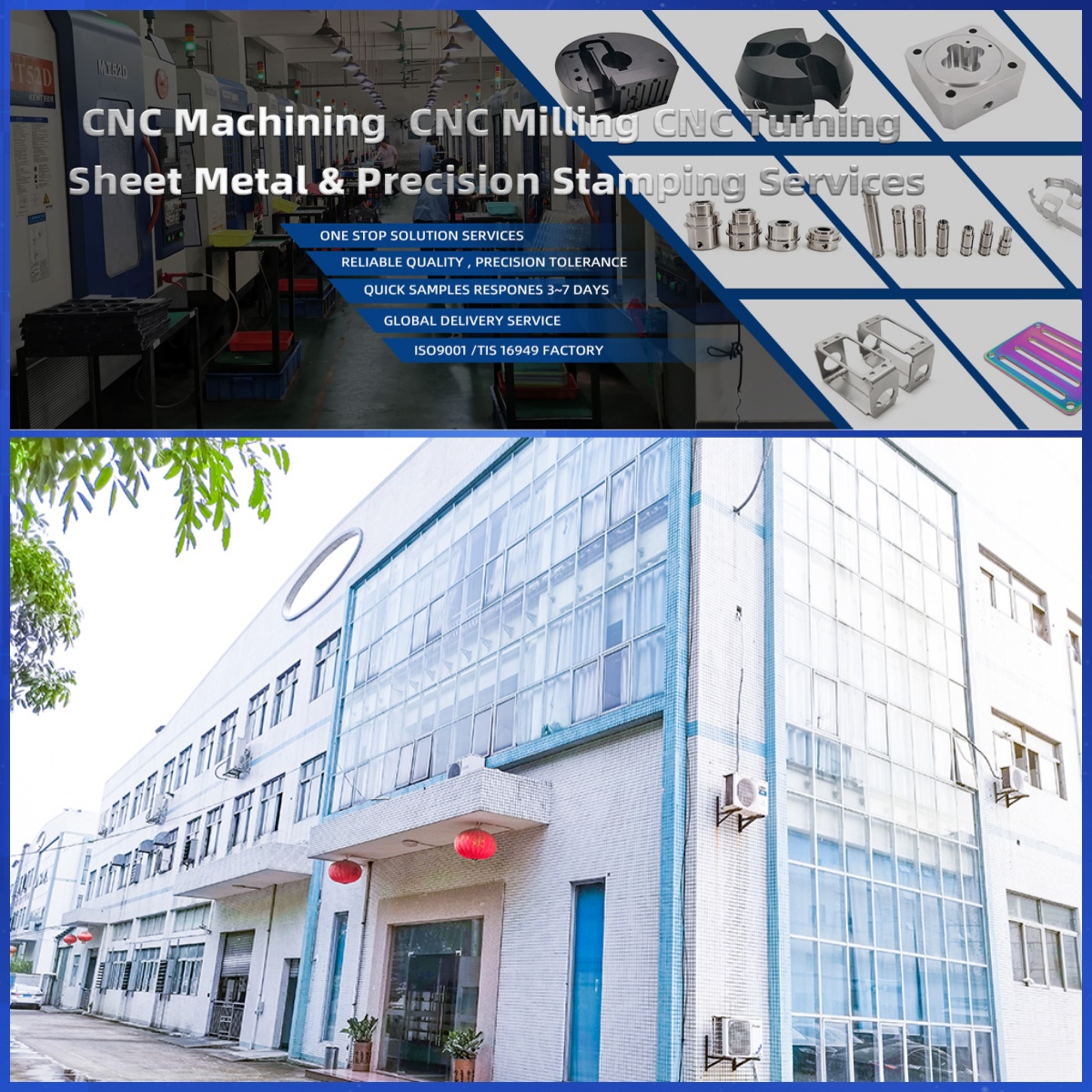
DongGuan YiTai Electronic Technologies Co.,Ltd
DongGuan YiTai Electronic Technologies Co.,Ltd is a manufacturing service provider located in Dongguan, China.
YiTai specialized in CNC turning machining and sheet metal fabrication mainly. As a member of Hung Mou Group, we focus on the overseas marketing development. And based on our parent company’s manufacturing capability and resources, YiTai also expended machining services such as die casting, injection molding, aluminum profile extrusion, 3D printing, which are committed to providing customers with one-stop purchasing services and experience.
CNC MACHINING , CNC MILLING , CNC TURNING , SHEETMETAL , FASTENER , OTHERS




Powder Coating Color Durability Comparison: Which Colors Last Longest for Outdoor CNC Parts?
Why Does Copper Corrode? A Complete Analysis of Corrosion Types and Mechanisms for CNC Machined Copper Parts
Related Article