The Highest Machining Accuracy Of Machine Tools
author: YITECH
2024-10-24

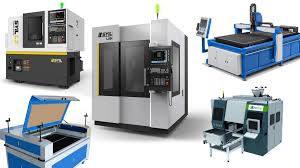
A CNC metal milling machine is a cutting-edge piece of equipment used to mill and shape metal into desired shapes and sizes. If you're looking for a high-quality and efficient solution for your metal milling needs, a CNC metal milling machine is an excellent investment.
Achieving the highest levels of machining accuracy is critical for various machining processes, including turning, milling, planing, grinding, drilling, and boring. Each method has its own specific machining accuracy and tolerance levels.
1. Turning involves a cutting process where the turning tool moves in a straight or curved line within a plane. It can process inner and outer cylindrical surfaces, end faces, conical surfaces, forming surfaces, and threads of workpieces. The machining accuracy for turning ranges from IT8-IT7, while the surface roughness is 1.6-0.8 μ M. Finely polished diamond turning tools on high-precision lathes can achieve machining accuracy of IT7~IT5.
2. Milling uses rotating multi-blade cutting tools to cut workpieces. It is suitable for processing flat surfaces, grooves, special shaped surfaces of molds, gears and threads, among others. The machining accuracy for milling ranges from IT8~IT7, while the surface roughness is 6.3~1.6 μ M.
3. Planing uses a planer that performs horizontal relative linear reciprocating motion on the workpiece, mainly used for machining the shape of parts. The machining accuracy for planing ranges from IT9~IT7, while the surface roughness is Ra6.3~1.6 μ M.
4. Grinding uses abrasives and grinding tools to remove excess material from workpieces and is usually used for semi precision and precision machining. The machining accuracy for grinding can reach up to IT8~IT5 or even higher, with the surface roughness generally between 1.25~0.16 μ M.
5. Drilling is a basic method of hole machining, while boring is an inner diameter cutting process that enlarges a hole or other circular contour. Drilling's machining accuracy is relatively low, generally reaching IT10, while the surface roughness is 12.5~6.3 μ m. On the other hand, the accuracy of precision boring can reach IT7~IT6, with the surface roughness at 0.63~0.08 μ M.
In conclusion, different machining methods have different machining accuracy and tolerance levels, with each best suited for various applications. Achieving the highest level of precision and tolerance requires the use of advanced and specialized machining equipment.
Dongguan Yi Tai Electronic Technologies Co.,Ltd has high-precision CNC machining machines, which can manufacture customized high-precision metal parts in large quantities. If you have any needs, please contact us.
CNC machining aluminum alloy proofing custom
Stainless Steel: A Versatile and Durable Material
Related Article
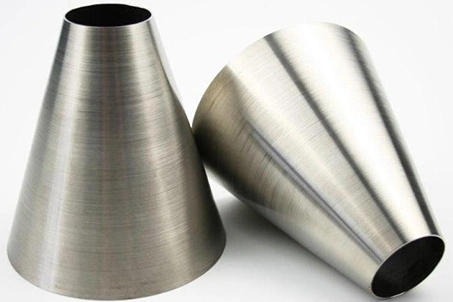
Learn how metal spinning forms rotationally symmetric parts, compare process options, and review materials, applications, cost factors, and RFQ requirements.
Metal Spinning: How the Process Works and When to Use It
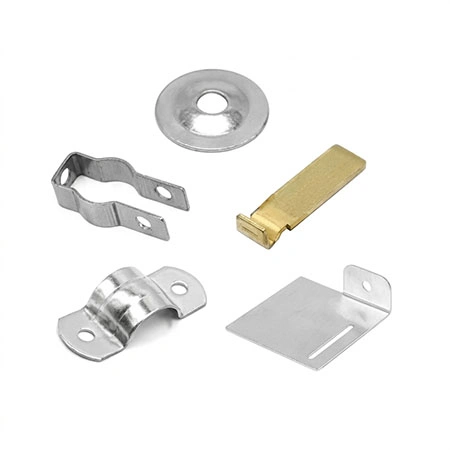
Explore precision metal fabrication processes, tolerance control, inspection, cost factors, and what to include in a custom-part RFQ.
Precision Metal Fabrication: From Drawing Review to Inspection