How to Choose the Right Knurling Process for Precision Components: Cut Knurling vs Form Knurling – A Complete Showdown

This guide explains the differences. You will learn how each method works. You will see which one is better for thin walls, hard materials, and tight tolerances. And you will know how to pick the right process for your part.
-
Key Performance Showdown – Which Is Better for Your Application?
-
Expert Insight: Cut Knurling Saved a Thin‑Wall Titanium Part
1. Different Principles, Different Results
The two knurling methods work in opposite ways.

Form Knurling (Plastic Deformation)
Two hardened wheels press into the workpiece. The metal is squeezed. It flows sideways. It fills the gaps between the wheel teeth. The pattern is formed by material displacement.
-
Result: The diameter of the part grows (typically 0.2–0.5mm larger). Small burrs and raised edges appear at the ends of the knurl.
-
Best for: Soft metals (aluminum, brass, low‑carbon steel). Thick walls.
Cut Knurling (Shear Removal)
A single‑tooth or multi‑tooth cutter moves along the part. It removes material in a true cutting action. The teeth have a negative rake. They shear off chips, just like a threading tool.
-
Result: The part diameter stays the same (or shrinks very slightly). The pattern has sharp, clean edges. No raised burrs.
-
Best for: Hard materials (stainless, titanium, tool steel). Thin walls. Precision parts.
2. Key Performance Showdown – Which Is Better for Your Application?
The table below compares the two methods on three critical points.
| Performance Factor | Form Knurling | Cut Knurling |
|---|---|---|
| Pattern sharpness | Rounded, slightly smeared | Sharp, crisp, defined |
| Diameter change | Increases (must compensate) | Nearly no change |
| Burrs / raised edges | Yes – needs a secondary deburr | Minimal to none |
| Suitability for thin walls | Risky – can collapse the wall | Safe – low radial force |
| Suitability for hard materials | Poor (wheels wear fast) | Good (use carbide cutter) |
| Surface finish after knurling | Rough, may have torn metal | Smooth, consistent |
Profile Accuracy and Consistency
Cut knurling gives much better shape control. The pattern depth is exactly what you program. Form knurling varies with material hardness and feed pressure. For a part that must fit a mating knurled surface (like a press‑fit bushing), cut knurling is the only safe choice.
Friendly to Thin Walls and Hard/Brittle Materials
Form knurling pushes the material outward. A thin wall (under 1.5mm) can bend or collapse. Hard stainless steel (like 316) can crack from the stress. Cut knurling uses a shearing force. The radial force is low. It works on titanium, 17‑4PH, and even hardened steel.
Internal Stress and Roundness
Form knurling leaves residual stress in the part. The part may go out of round. You can measure a lobed shape (three high spots) after forming. Cut knurling removes material. It does not add stress. The roundness stays as good as your lathe.
3. Economic and Efficiency Trade‑offs
The two methods also differ in tool life and setup time.
| Economic Factor | Form Knurling | Cut Knurling |
|---|---|---|
| Tool cost (initial) | Lower (simple knurl wheels) | Higher (precision cutter) |
| Tool life on soft materials | Very long (50,000+ parts) | Moderate (10,000–20,000 parts) |
| Tool life on hard materials | Short (wheels wear fast) | Good (carbide cutters) |
| Setup / changeover time | Fast (wheels are easy to swap) | Slower (needs tool alignment) |
| Cycle time per part | Very fast (one pass) | Slightly slower (needs coolant and careful feed) |
When Form Knurling Wins on Cost
You make 100,000 brass thumbscrews. The wall is thick (3mm). The pattern is just for grip. Form knurling is much cheaper per part. The wheels last for days. The cycle time is short.
When Cut Knurling Wins on Cost
You make 500 stainless steel bushings. The wall is 1mm thin. The pattern must be clean for a press fit. Form knurling would scrap half the parts. Cut knurling works every time. The higher tool cost is worth the zero scrap.
4. Decision Path for Your Product
Use this simple flow chart to choose.
Start
 │
 ▼
Is the part wall thickness less than 1.5mm?
 │
 ├─ Yes ──► Use CUT knurling
 │
 └─ No
      │
      ▼
  Is the material hardness over 30 HRC (e.g., 17-4PH, Ti, hard stainless)?
      │
      ├─ Yes ──► Use CUT knurling
      │
      └─ No
           │
           ▼
       Do you need a sharp, precise pattern for a mating fit?
           │
           ├─ Yes ──► Use CUT knurling
           │
           └─ No ──► Form knurling is fine
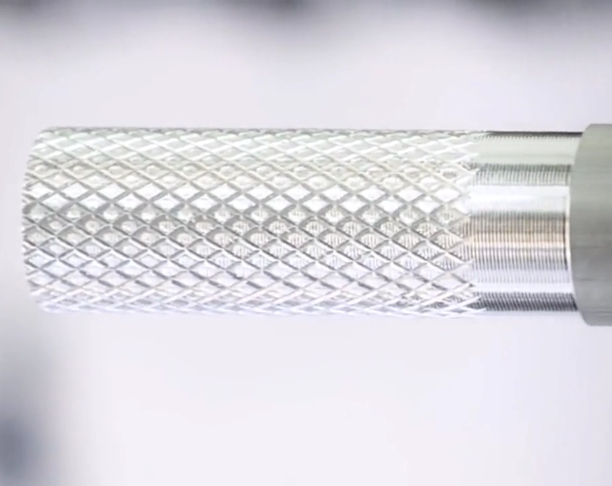
First Choice – Cut Knurling for Aerospace and Medical
For critical parts that must pass inspection, cut knurling is the standard. The pattern is predictable. No hidden stress. No risk of cracking.
Form Knurling Is Enough for High Volume, Soft Materials
For industrial handles, tool grips, and decorative knobs, form knurling works well. It is fast and cheap. Just remember to leave diameter allowance for the material swell.
5. Expert Insight: Cut Knurling Saved a Thin‑Wall Titanium Part
“A client sent us a titanium bushing for a drone motor. The wall was 0.8mm thick. They needed a diamond knurl for a press fit. The previous supplier used form knurling. Half the parts cracked. The others had poor pattern depth. We switched to cut knurling with a carbide cutter. No cracks. The pattern was perfect. The press fit worked. The client was amazed. For thin walls or hard materials, cut knurling is not optional. It is the only method that works.”
— Senior CNC Turning Specialist, DongGuan YiTai Electronic Technologies
Discuss Your Knurling Application with DongGuan YiTai
We offer both form and cut knurling on our CNC lathes. We can help you choose the right process for your material, wall thickness, and volume.
Send us your drawing. Tell us the material and the knurl type (straight, diamond, or custom). We will give you a recommendation and a firm quote.
6. Frequently Asked Questions (FAQ)
Q: Can I cut knurl on a manual lathe?
A: Yes, but it is harder. Cut knurling requires a rigid tool post and a precise feed rate. CNC lathes are better because they keep a constant feed. For manual lathes, form knurling is more common.
Q: Does cut knurling work on brass and aluminum?
A: Yes, but form knurling is faster and cheaper for soft metals. Use cut knurling only if you need a very sharp pattern or a press fit without diameter change.
Q: How much does the diameter grow with form knurling?
A: Typically, the outer diameter increases by 0.2–0.5mm . For a 10mm part, you should start with a 9.6–9.7mm blank. Always test on a sample. Cut knurling does not change the diameter.
Q: What feed rate is best for cut knurling?
A: For a 0.5mm pitch diamond pattern, use a feed of 0.5mm per revolution (exactly one pitch per rev). For a 1mm pitch, use 1.0mm/rev. The feed must match the tool spacing.
Q: Can you knurl a part that is already heat treated (45 HRC)?
A: Form knurling will not work. The wheels will wear out instantly. Cut knurling with a carbide or CBN cutter can knurl up to 55 HRC. Hard cut knurling is possible on rigid CNC lathes.
Q: Does DongGuan YiTai Electronic Technologies offer custom knurl patterns?
A: Yes. We can cut straight, diamond, left‑hand, right‑hand, and special pitch patterns. We also make custom knurling tools for odd sizes. Send us your specification. We will quote the tool and the parts.
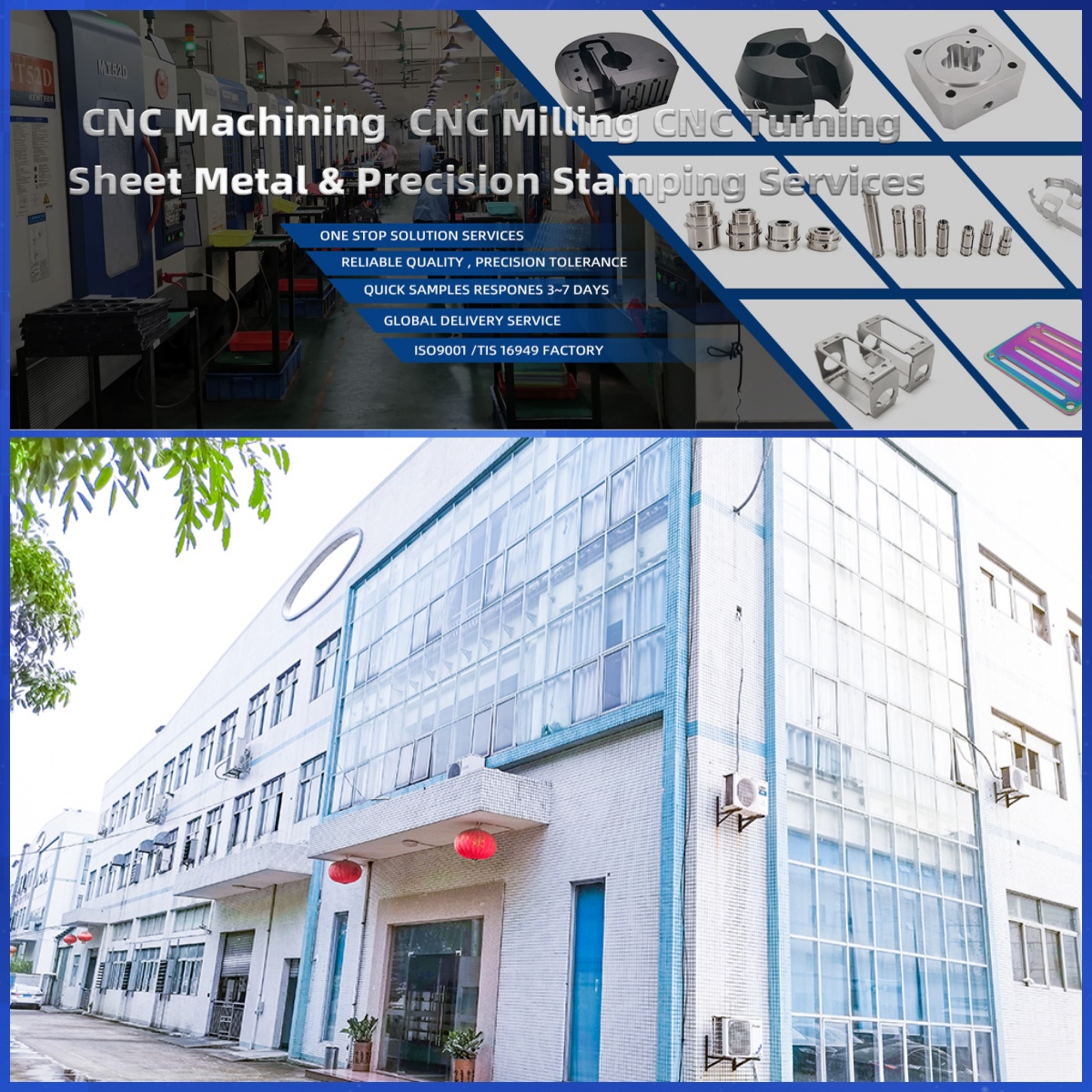
DongGuan YiTai Electronic Technologies Co.,Ltd
DongGuan YiTai Electronic Technologies Co.,Ltd is a manufacturing service provider located in Dongguan, China.
YiTai specialized in CNC turning machining and sheet metal fabrication mainly. As a member of Hung Mou Group, we focus on the overseas marketing development. And based on our parent company’s manufacturing capability and resources, YiTai also expended machining services such as die casting, injection molding, aluminum profile extrusion, 3D printing, which are committed to providing customers with one-stop purchasing services and experience.
CNC MACHINING , CNC MILLING , CNC TURNING , SHEETMETAL , FASTENER , OTHERS




Purchasing Precision A36 Steel Parts: A Complete Hands‑On Manual from Supplier Selection to Final Acceptance
Deep Dive into Brass: An Engineer's Irreplaceable Core Material for Precision Machining
Related Article