The Complete Guide to Clevis and Fork-End Fasteners: CNC Precision Manufacturing from Standard Parts to Custom Engineering

This guide explains clevis fasteners. You will see how they work. You will learn the common types. You will also learn how CNC machining makes high‑quality clevis parts for aerospace, automotive, and marine use.
-
Material Selection – Balancing Strength, Corrosion Resistance, and Machinability
-
Key CNC Processes – Pin Hole Concentricity, Fork Parallelism, and Thread Consistency
1. What Is a Clevis Fastener? – Mechanical Role and Load Path
A clevis has two parallel ears with aligned holes. A pin goes through both ears and the mating part (like a rod end). The joint can rotate. The clevis takes shear (the pin) and tension (along the rod). It does not take side bending.
Where You See Clevis Fasteners
-
Flight control linkages in airplanes
-
Hydraulic cylinder rod ends on backhoes and loaders
-
Suspension links in off‑road vehicles
-
Sailboat rigging and marine steering linkages
2. Core Structure Types – A CNC Machining Perspective
Three common clevis types appear in CNC shops.
Standard Clevis with Plain Shank
Two ears on a flat or round base. No threads. Used with a separate threaded rod or a through pin.
-
CNC method: Mill or turn from solid bar. The fork and ears are milled. The shank is turned.
-
Best for: Direct pin joint with no adjustment.
Threaded Shank Clevis
The shank has external threads (UNF or metric). You screw it into a mating female thread. Length can be adjusted by turning.
-
CNC method: Mill‑turn in one setup. Turn the shank and thread. Then mill the ears and cross hole. No second machine.
-
Best for: Linkages where length must be adjustable.
Adjustable Clevis with Lock Nut Interface
This clevis has a threaded shank plus a lock nut. The lock nut jams against the mating part to stop rotation.
-
CNC method: Turn the thread. Mill a hex or a wrench flat on the shank. Also machine the nut in the same batch.
-
Best for: Vibrating environments (aircraft, racing).
Custom Non‑Standard Fork Ends
The customer’s assembly has unusual space limits. The clevis must be shorter, narrower, or have angled ears.
-
CNC method: Reverse engineer the mating part. Machine a one‑piece custom clevis.
-
Best for: Prototypes and repair parts.
3. Material Selection – Balancing Strength, Corrosion Resistance, and Machinability
The table below helps you pick the right material for your clevis.
| Material | Strength | Corrosion Resistance | Machinability | Typical Use |
|---|---|---|---|---|
| 4130 / 4140 alloy steel | Very high | Low (needs coating) | Good | Aircraft linkages, heavy equipment |
| 304 / 316 stainless | Medium | Excellent | Fair to good | Marine rigging, chemical plants |
| 17‑4PH stainless | High (after heat treat) | Excellent | Fair (hardened) | High‑strength marine/industrial |
| 7075‑T6 aluminum | High for its weight | Good (anodized) | Good | Lightweight drones, racing cars |
| Ti6Al4V titanium | Very high (strength/weight) | Excellent | Poor (gummy) | Aerospace, high‑end marine |
Alloy Steel (4130, 4140)
Best for high load and high impact. Must be coated (zinc, cadmium, or black oxide) to prevent rust. Heat treat to 30–35 HRC for best toughness.
Stainless Steel (304, 316, 17‑4PH)
304 and 316 are easy to machine but softer. 17‑4PH is machined in the annealed (Condition A) state, then age hardened to H900 (40–48 HRC). Very strong and rust‑proof.
Aluminum and Titanium
7075‑T6 aluminum is half the weight of steel. Good for drones and racing. Ti6Al4V is strong and light but hard to machine. Use sharp tools and high pressure coolant.
4. Key CNC Processes – Pin Hole Concentricity, Fork Parallelism, and Thread Consistency
The quality of a clevis depends on three features.
One‑Setup Machining for Perfect Hole Alignment
The two ear holes must be perfectly aligned (concentric). If they are off by even 0.05mm, the pin will bind.
-
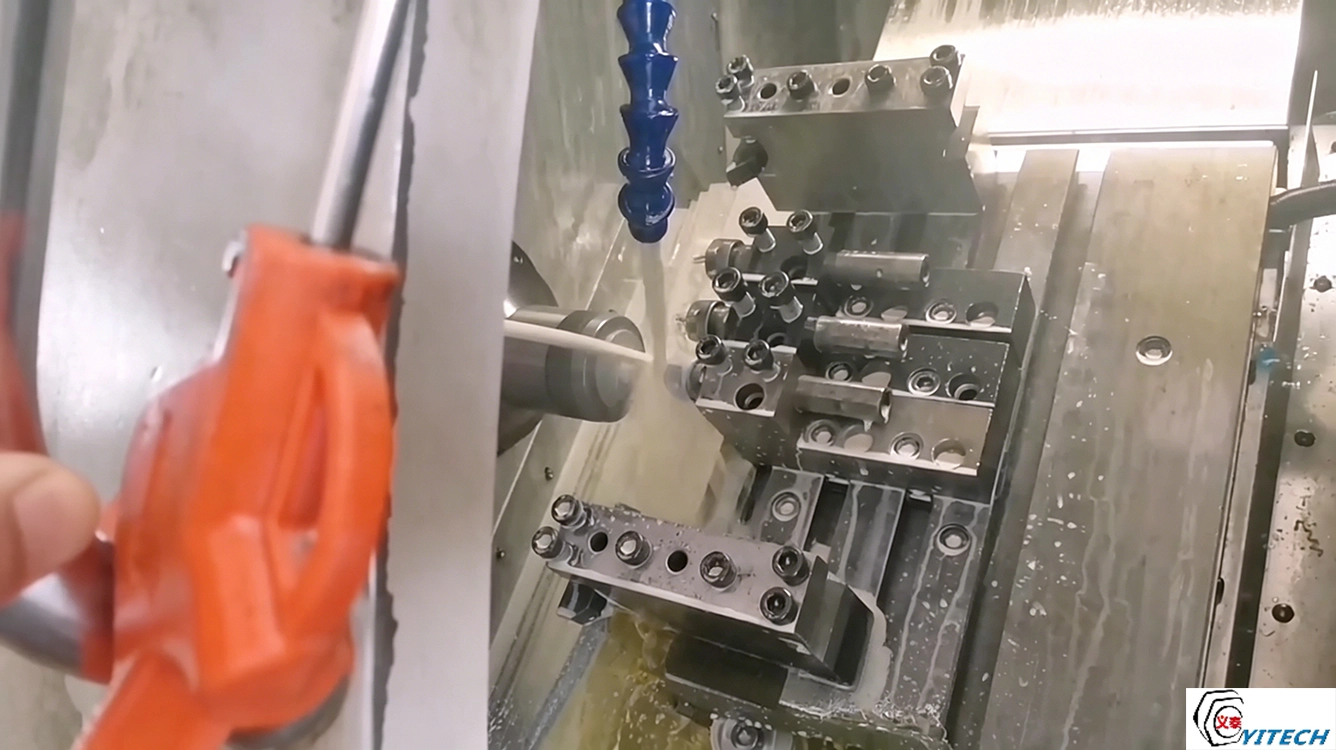
How we do it: We clamp the part in a 5‑axis or mill‑turn machine . We drill both holes in the same setup from the same reference. No repositioning error.
Fork Slot Parallelism
The inside faces of the two ears must be parallel. If they are not, the mating part will not slide in smoothly.
-
How we do it: We use a slitting saw or an end mill to cut the slot. Then we measure the distance between ears at three heights. Variation ≤0.03mm is standard.
Thread to Shank Concentricity
The thread (if present) must be coaxial with the shank centerline. A crooked thread will stress the mating part.
-
How we do it: On a CNC lathe, we single‑point turn the thread after turning the shank. The thread follows the same center line automatically. We never re‑chuck a clevis to cut the thread.
5. Expert Insight: One Setup Makes a Perfect Clevis
“I see cheap clevis parts from catalog suppliers. The holes are misaligned. You can feel the pin bind. That is because they drill each ear in a separate operation. At YiTai, we do it differently. We hold the part in one vise. We drill the first ear, then the second ear, with the same tool and the same program. The holes are perfectly lined up. The pin slides with no play. That is the difference between a commodity part and a precision component.”
— CNF Lead Engineer, DongGuan YiTai Electronic Technologies
6. Frequently Asked Questions (FAQ)
Q: What is the difference between a clevis and a yoke?
A: Clevis is usually a small part with two ears and a pin. Yoke is a larger version, often for a universal joint. The machining is the same: drill two aligned holes and cut a slot.
Q: How do you ensure the two ears are parallel?
A: We machine the slot with a precision slitting saw on a CNC mill. The saw is wider than the slot. We cut in one pass if material is soft, or two passes for hard material. Then we measure with a pin gauge or a CMM.
Q: What is the standard pin hole tolerance for a clevis?
A: For a slip‑fit pin, the hole is +0.02 to +0.05mm over the pin diameter. For a press‑fit pin, the hole is -0.01 to -0.02mm under the pin diameter. We hold both tolerances easily.
Q: Can you make a clevis with a left‑hand thread?
A: Yes. We can cut left‑hand threads on our CNC lathes. The program is mirrored. Left‑hand threads are used where the nut must not loosen due to vibration.
Q: What is the minimum order quantity for a custom clevis?
A: For a custom design, we can do 1 piece for prototype or 50–100 pieces for a small batch. No minimum for engineering samples. Tooling is standard end mills and drills. No mold cost.
Q: Does DongGuan YiTai Electronic Technologies offer material certification?
A: Yes. We provide mill certificates for all metals (steel, stainless, aluminum, titanium). For aerospace or medical use, we also provide heat treatment logs and CMM reports. Every part is traceable.
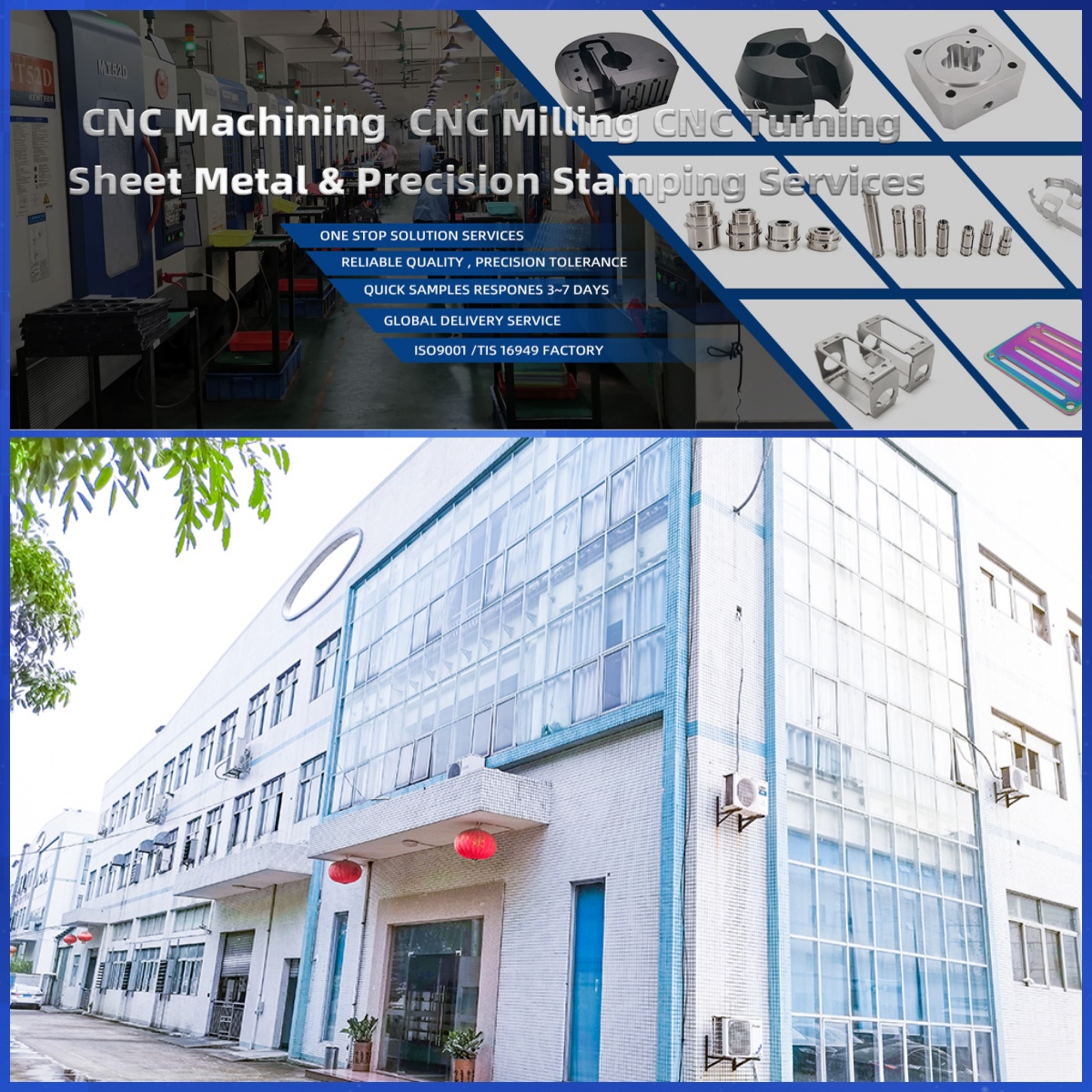
DongGuan YiTai Electronic Technologies Co.,Ltd
DongGuan YiTai Electronic Technologies Co.,Ltd is a manufacturing service provider located in Dongguan, China.
YiTai specialized in CNC turning machining and sheet metal fabrication mainly. As a member of Hung Mou Group, we focus on the overseas marketing development. And based on our parent company’s manufacturing capability and resources, YiTai also expended machining services such as die casting, injection molding, aluminum profile extrusion, 3D printing, which are committed to providing customers with one-stop purchasing services and experience.
CNC MACHINING , CNC MILLING , CNC TURNING , SHEETMETAL , FASTENER , OTHERS




How to Choose a Reliable Laser Machining Supplier | China Laser Cutting, Engraving & Welding Services
From Drawing to Heat Dissipation Tool: Deconstructing the CNC Custom Delivery, Cost Structure, and Full Service Process for a High-End LED Light Heat Sink Housing
Related Article