Case Study: How Optimizing Fillets & Chamfers Cut CNC Costs by 15% for an Auto Client

1. Project Background: The Customer Challenge
A supplier in the automotive industry came to us with a problem. They needed a prototype for a new engine mount. This part holds the engine in place. It must be strong. It must be safe.
The Initial Design Problem
The client sent us their 3D drawings. The design looked good for holding an engine. But it looked expensive to machine. The print had many non-standard radius corners. It also had very conservative chamfer sizes on screw holes.
Our estimator saw the file and knew immediately: this would cost too much. The lead time would also be long because we would need to order special tools. The client needed the parts fast for testing, but the design was slowing everything down .
2. Our DFM Analysis: Finding the Cost Drivers
At 'DongGuan YiTai Electronic Technologies', we do not just quote the price and start cutting. Our engineers perform a DFM (Design for Manufacturing) review first. We look at the part and ask: "How do we build this cheaper and faster?" .
Here is the step-by-step process we followed:
Step 1: Identifying the Cost Drivers
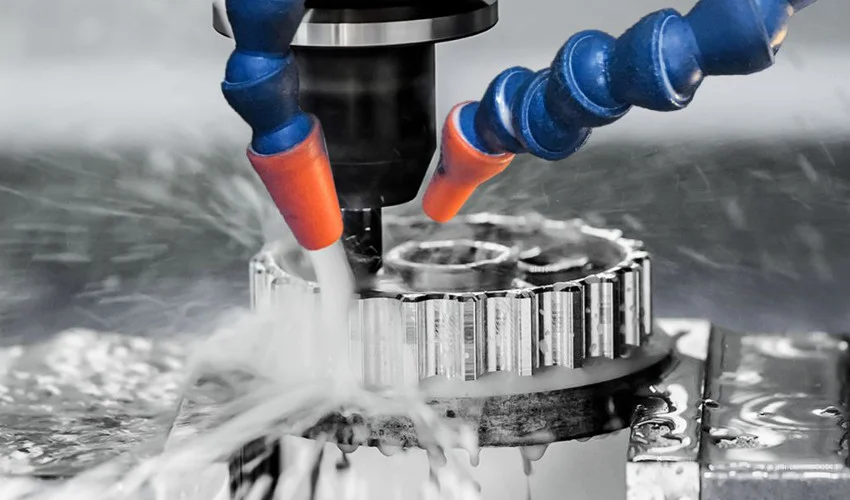
We looked at the CNC toolpaths. We found the main problem quickly.
-
The Issue: A vertical wall connected to the base with a R2.3mm fillet.
-
Why it costs more: In CNC machining, we cut fillets with ball nose end mills. Standard end mills come in sizes like R2.0mm, R2.5mm, R3.0mm. A R2.3mm tool is non-standard. We do not keep these on the shelf. Ordering a custom tool costs extra money and takes extra days .
Step 2: Consulting with the Client
We called the client's engineer. We asked a simple question: "Can we change this corner from R2.3mm to R2.5mm?" We explained that a R2.5mm tool is standard. It sits on our tool holder shelf. We can start cutting immediately.
Step 3: Reviewing Other Features
While we waited for the answer, we looked at the rest of the model. The design called for C1.5 chamfers on several M6 threaded holes. A chamfer deburrs the top of the hole. It helps the bolt slide in. A C1.5 chamfer is 1.5mm wide. A C1 chamfer (1.0mm wide) does the same job for an M6 bolt. The extra 0.5mm was just adding machining time.
3. The Optimization: Simple Changes, Big Impact
The client agreed to our suggestions. They trusted our experience. We updated the CAD model with two small changes .
-
Modified Design: We changed the vertical wall fillet from R2.3mm to R2.5mm.
-
Modified Design: We changed the thread chamfers from C1.5 to a standard C1.
How the Machining Strategy Changed
Because we used a standard R2.5mm tool, we kept the spindle running fast. We did not wait for deliveries. We also used a standard spot drill to create the C1 chamfers. This step took less time than the previous method.
4. The Results: Cost, Time, and Quality Data
We track every job. We measured the difference between the original quote (based on the old design) and the final invoice (based on the optimized design). The numbers show the power of DFM.
| Metric | Original Design | Optimized Design | Improvement |
|---|---|---|---|
| Machining Cost | $1,150.00 | $977.50 | ↓ 15% Reduction |
| Cycle Time | 48 minutes | 42.2 minutes | ↓ 12% Faster |
| Tooling Cost | $85 (Special Order) | $0 (In-House Stock) | Eliminated Delay |
| Quality Test | Passed | Passed | No Change |
-
Cost Reduction: We cut the total machining cost by 15% . This saved the client money for their next project .
-
Efficiency Gain: We cut the machining time by 12% . This got the parts to the assembly line faster.
-
Tooling: We avoided buying a non-standard tool. This saved money and removed the wait time.
-
Quality: We tested the part. The stress points and the bolt assembly were exactly the same as the original design.
"As an engineer, it is easy to pick random numbers for radii. But random numbers cost money. At YiTai, we prove that talking to the machine shop before you finalize the drawing is the secret to saving money. This 15% saving came from asking ‘why?’ about two tiny features."
— Senior Manufacturing Engineer, DongGuan YiTai Electronic Technologies
5. Key Lessons for Design Engineers
This project taught us (and our client) a valuable lesson about the details.
The Power of Standardization
Always use standard sizes for fillets and chamfers. Look at the tool catalog in your software. If you need a radius, pick .5mm, 1.0mm, 1.5mm, 2.0mm, or 2.5mm. If you pick 2.33mm, you are asking the machinist to create a custom tool path or buy a custom tool. This adds time and cost .
Talk to Your Manufacturer Early
Do not wait until the design is finished to send it to production. Send the drawing early. Ask for a DFM review. We can spot the expensive mistakes before they are locked in. Early collaboration always leads to lower costs and faster delivery .
6. Start Your Cost-Saving Journey
Do you have a drawing that might have expensive mistakes? Do you want to know if your radii are costing you time?
Contact 'DongGuan YiTai Electronic Technologies' today. We offer free DFM reviews. We will look at your part and tell you exactly how to make it cheaper and faster.
7. Frequently Asked Questions (FAQ)
Q: Why does a non-standard radius cost more money?
A: CNC machines use round tools. If you ask for a R2.3mm corner, the machinist cannot use a standard R2.5mm tool (it will leave too much material) or a R2.0mm tool (it will take too many passes to clean out). The shop usually must buy a special tool just for your job. You pay for the tool, and you wait for shipping .
Q: What is a chamfer, and why does size matter?
A: A chamfer is the angled edge on a hole. It removes the sharp burr. It helps guide a bolt into the thread. As long as the chamfer is big enough to break the edge, bigger is not better. A bigger chamfer just means the machine spends more time cutting air.
Q: Will changing a radius from R2.3 to R2.5 break my part?
A: In most cases, no. For structural parts like engine mounts, the difference of 0.2mm is usually not critical for stress. However, we always check with the client first. We verify the change using engineering judgment before we cut metal.
Q: How early should I contact a manufacturer?
A: As soon as you have a rough 3D model. You do not need a finished drawing. Send us the model. We can look at the features and tell you if the corners you designed are going to be a problem.
DongGuan YiTai Electronic Technologies Co.,Ltd
DongGuan YiTai Electronic Technologies Co.,Ltd is a manufacturing service provider located in Dongguan, China.
YiTai specialized in CNC turning machining and sheet metal fabrication mainly. As a member of Hung Mou Group, we focus on the overseas marketing development. And based on our parent company’s manufacturing capability and resources, YiTai also expended machining services such as die casting, injection molding, aluminum profile extrusion, 3D printing, which are committed to providing customers with one-stop purchasing services and experience.
CNC MACHINING , CNC MILLING , CNC TURNING , SHEETMETAL , FASTENER , OTHERS




From Function to Beauty: How Anodizing Customizes Surface Properties for CNC Brass & Copper Parts
How to Achieve Flawless Appearance in CNC Machined Audio Knobs: No Burrs, Smooth Surfaces, and Clear Patterns
Related Article