The Ultimate Guide to Camshaft Machining: How CNC Technology Redefines Precision for the Engine Heart
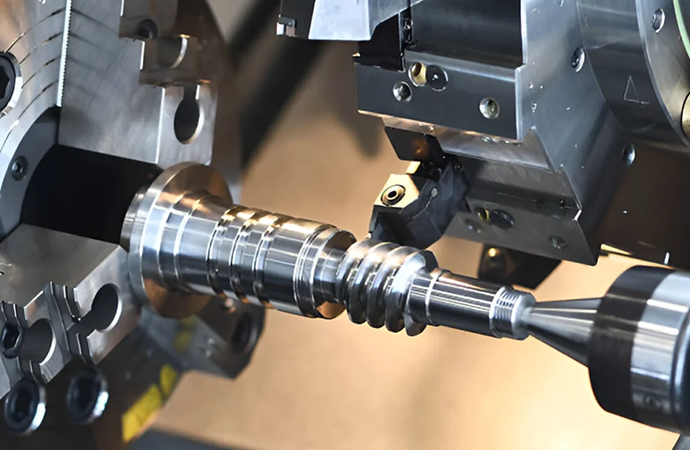
This guide shows you how CNC technology works for camshaft machining. We look at the old ways and the new ways. We also show how ‘DongGuan YiTai Electronic Technologies’ uses high-end CNC tools to make parts that last.
1. What is a Camshaft? – The Engine's Commander
The camshaft sits inside the engine block or the cylinder head. It controls the engine's breathing. The engine needs air and fuel at the right time. The camshaft makes this happen.
The Core Function: Valve Timing and Lift
The camshaft has lobes. These are called cam lobes. As the camshaft spins, these lobes push the valves open. The shape of the lobe decides when the valve opens, how long it stays open, and how far it opens. This is called valve timing and lift.
Key Performance Indicators
For a camshaft to work well, three things must be right.
-
Profile Accuracy: The shape of the lobe must match the design exactly. A small error changes the engine power.
-
Surface Finish: The cam lobe and the bearing journals need a smooth finish. This keeps friction low.
-
Wear Resistance: The camshaft must handle constant metal-to-metal contact. It needs a hard surface.
2. The Limits of Old Camshaft Machining Methods
Before CNC, shops used different machines. These old ways had clear limits.

Copy Milling and Pattern Machining
In the past, workers used a pattern to cut the cam lobe. A machine would follow a master cam. The cutter copied the shape. This method had two big problems.
-
Accuracy: The master pattern would wear out. This changed the shape over time.
-
Speed: Each part took a long time to set up.
Challenges After Heat Treatment
Camshafts need a hard surface. Shops use heat treatment to harden the metal. But after heat treatment, the part can warp. It also becomes very hard. Old machines could not cut hardened steel well. So shops had to leave extra material. Then they spent a lot of time grinding it down.
3. How CNC Machining Changes Camshaft Manufacturing
CNC machining removes the guesswork. The machine follows a digital program. It cuts exactly the same way every time.
CNC Cam Grinding: High Accuracy Through Interpolation
CNC cam grinding is a big step forward. The grinding wheel and the camshaft move together. The machine uses interpolation. This means the computer controls both axes at the same time. It creates the perfect lobe shape. There is no master pattern to wear out. The accuracy is much higher.
CNC Mill-Turn Centers: One Setup for Many Steps
A camshaft has different features. It has bearing journals. It has cam lobes. It has end faces. With a CNC mill-turn machine, we put the raw material in once. The machine does the rough turning. Then it mills the cam profile. It does all this without moving the part to a new machine. This keeps the features lined up right.
5-Axis Machining for Complex Designs
New engines use variable valve timing. This means the camshaft has more complex parts. Some camshafts are not one solid piece. They are assembled. 5-axis machining centers let us cut complex shapes. We can reach undercuts and angled oil holes in one setup.
4. Key Steps for Precision Camshaft CNC Machining
At 'DongGuan YiTai Electronic Technologies' , we follow a clear process. Each step builds on the last one.
Step 1: Raw Material
We start with good material. Most camshafts use steel bar stock, forgings, or cast iron. Steel is strong. It handles heat treatment well.
Step 2: Center Hole – The Master Reference
We drill center holes at both ends first. Every other step uses these holes as the reference. If the center hole is off, the whole part is off.
Step 3: Precision Turning for Journals and Ends
We turn the bearing journals and the end faces. We keep the diameter tight. This ensures the camshaft sits straight in the engine block.
Step 4: Rough and Finish Machining for Cam Lobes
We machine the cam lobes in two steps. First, we remove the bulk material with a rough cut. Then we come back with a finish cut. This final pass gives us the right profile and a smooth surface.
Step 5: Drilling Oil Holes and Pin Holes
The camshaft needs oil to stay cool. We drill small oil holes along the shaft. We also drill pin holes for timing gears. CNC machines let us drill these holes at exact angles.
Step 6: Heat Treatment and Finish Grinding
After machining, we send the part for heat treatment. This hardens the lobes and journals. The part may change shape a little. So we do a final finish grinding step. We remove only a small amount of material. This fixes any warping and gives us the final size.
5. Expert Insight: Why Machine Stability Matters
“People think the CNC program is the only thing that matters. But the machine itself is just as important. For camshafts, you need a stable machine with high spindle rigidity. If the machine shakes during grinding, the lobe profile will have waves. The engine will not run smooth. At YiTai, we use heavy-duty CNC grinders. This stability gives us consistent results part after part.”
— Senior Machinist, DongGuan YiTai Electronic Technologies
6. Comparison: Old Methods vs. CNC Machining for Camshafts
| Feature | Traditional Copy Milling | CNC Machining |
|---|---|---|
| Profile Accuracy | Depends on master pattern. Can vary. | Consistent. Within ±0.01mm . |
| Setup Time | Long. Pattern changes take hours. | Short. Change program in minutes. |
| Heat Treatment Prep | Needs extra stock for post-heat grinding. | Near-net shape. Less stock left. |
| Complexity | Hard to do variable valve timing designs. | Easy with 5-axis and mill-turn. |
| Scrap Rate | Higher. Human error in setup. | Low. Machine follows the program exactly. |
7. Frequently Asked Questions (FAQ)
Q: What material is best for a camshaft?
A: Most performance camshafts use steel like 8620 or 52100. These steels handle heat treatment well. They give a hard surface and a tough core. For older or simple engines, chilled cast iron is also common. It is cheaper but not as strong for high-load engines.
Q: Why is the center hole so important?
A: The center hole is the reference point for every step. When we turn the journals, we hold the part between centers. When we grind the lobes, we use the same centers. If the center hole is off, every feature will be off in the same way. We use center lapping to make sure the hole is clean and straight.
Q: Can you machine a heat-treated camshaft?
A: Yes, but only with the right tools. Hardened steel needs CBN (cubic boron nitride) grinding wheels or ceramic inserts for turning. Standard carbide tools will wear out fast. At YiTai, we do most of the rough machining before heat treatment. We leave 0.2mm to 0.3mm of stock. Then we do a final grind after heat treatment. This gives us the best surface finish and the longest tool life.
Q: How do you check cam lobe accuracy?
A: We use a camshaft measuring machine. It has a probe that touches the lobe as it spins. The machine maps the profile and compares it to the CAD model. We check lift, duration, and timing for every lobe. This ensures the engine will run as designed.
Q: What is the lead time for a custom CNC camshaft?
A: It depends on the design. For a single prototype, we usually finish in 2 to 3 weeks. This includes programming, machining, heat treatment, and grinding. For production runs, we can make 50 to 200 pieces per week depending on the machine setup.
Aluminum vs Cast Aluminum in CNC Machining: A Full Guide on Definitions, Properties, and Key Differences
Material Selection Guide for Custom Hardware CNC Machining: In-Depth Analysis of 6 Cost-Effective Metals – Properties, Applications & Practical Insights
Related Article