
Aluminum Profile Surface Treatment - Brushed Finish
author: YIECH
2024-12-07
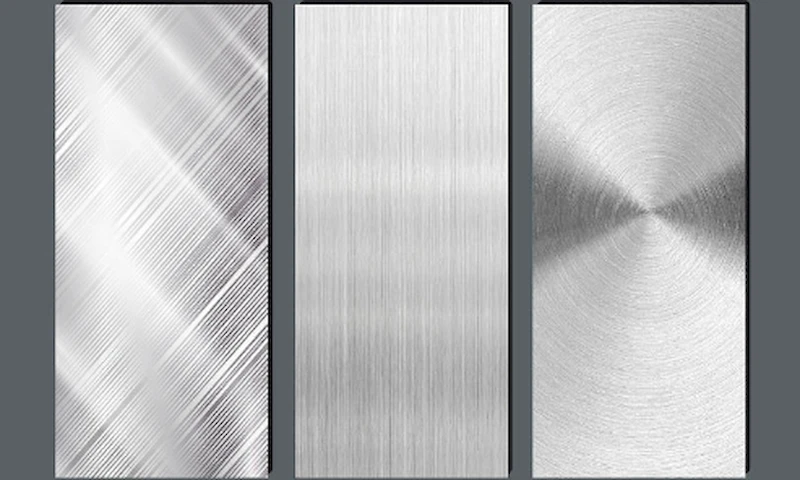
Elevate the aesthetics of your products with our premium-quality aluminum profiles featuring a sleek and modern brushed finish...
Aluminum Profile Surface Treatment - Brushed Finish
Brushed finish is a widely used metal surface treatment process that provides metal products with unique texture and appearance. This article will detail the principles, effects, and advantages of the metal surface treatment brushed finish.

Principles of Brushed Finish
Brushed finish is a processing technology that operates on the metal surface through mechanical equipment to create a certain texture and feel. The principle is mainly to use the high-speed operation of the polishing machine and utilize abrasive materials such as abrasive paper or diamond sand to polish the metal surface, forming a brushed surface with different textures. Depending on the processing method, brushed finish can be divided into mechanical brushed finish and chemical brushed finish.
Mechanical Brushed Finish: This process mainly utilizes the friction between abrasive material and metal, continuously changing the size and pressure of the abrasive to gradually create the desired texture.
Chemical Brushed Finish: This method involves applying a layer of chemical solution to the metal surface, undergoing chemical reactions and corrosion, and forming a thin film on the metal surface to achieve the same brushed effect.
Brushed Finishing Effects
Depending on the decorative needs of aluminum alloy parts, surfaces can be processed in several brushed finishes that present straight, random, spiral, wave, and spin patterns.
1. Straight Brushed Finish
Straight brushed finish refers to the method of creating linear textures on the aluminum surface by mechanical friction. Its effect is to remove scratches on the aluminum surface and decorate the surface of aluminum sheet products. Straight brushed finish can be continuous or discontinuous. Continuous brushed finish can be obtained on aluminum sheet surfaces by continuously horizontally polishing the surface with stainless-steel brush or scouring pad. The fiber diameter of the stainless-steel brush can be changed to obtain different textures. The discontinuous brushed finish is generally obtained by polishing on a brushing or grinding machine.
2. Random Brushed Finish
Random brushed finish is obtained by moving the aluminum sheet back and forth under high-speed copper wire brushes. This method requires that the aluminum or aluminum alloy surface meets high-quality surface requirements.
3. Spiral Brushed Finish
Spiral brushed finish involves fastening a small motor with a circular felt on an axis to a desktop edge at an angle of about 60 degrees, in addition to preparing a pull plate for fixed aluminum plate (the plate edge is aligned straight with a polyester film on one side of the pull plate to limit spiral width). Utilizing the rotational motion of the felt and linear motion of the drag plate, uniform-width spiral pattern can be created on the aluminum sheet surface.
4. Wave Brushed Finish
Wave brushed finish is typically produced on a brushing or grinding machine. Utilizing the axial movement of the upper pressure roller, a wave-like texture is created by polishing the aluminum or aluminum alloy sheet surface.
5. Spin Brushed Finish
Spin brushed finish, also known as spin polishing, is obtained by rotating the cylindrical felt or ceramic nylon wheels in polishing oil with kerosene and polishing along the surface of the aluminum or aluminum alloy sheet rotated on a drilling machine. Spin brushed finish is commonly used in decorative processing of circular signage and small decorative dials.

Advantages of Brushed Finish
Brushed finish is widely used in the surface treatment of various metal products such as stainless steel, aluminum, and copper. Through brushed finishing, metal products can demonstrate unique texture and appearance, enhance the product's added value, and market competitiveness. Specifically, brushed finish can increase the anti-slip performance and improve the aesthetics of stainless steel products. It can also enhance the decorative effect and meet the high-end market demand for aluminum products.
1. Strong Metal Style
Aluminum brushed finish with anodizing processing has high surface hardness, good scratch resistance, and retains the original metallic color of the brushed surface without paint covering, highlighting the modern metal style, and improving the level and added value of metal brushed products.

2. Good Processing Performance
The brushed finish of aluminum decoration has strong decorativeness, moderate hardness, and can be easily bent into the required shape.
3. High Climate Resistance
Brushed finish aluminum products can be used for long periods indoors without fading, corroding, oxidizing, or rusting. Brushed finish aluminum products can also be used outdoors for long periods without discoloration under long-term sunlight exposure.
Contact Yi Tai for more your need, there will be a surprise for you!
Two surface treatment--Blackening&Electrophoresis
Material Article - Baking Paint Board
Related Article

Choosing between 316 and 316L? 316L resists weld decay better, 316 holds strength at higher heat. Both food-grade, both marine-grade. Quick, no-fluff breakdown.
316 vs 316L Stainless Steel for CNC Machining
What is stamping and when do you use it? A plain guide to sheet metal stamping, dies, and progressive tools, plus the parts it makes faster than machining.
What Is Stamping in Metal Manufacturing?

