Beveled vs Chamfered in the Hardware Industry
1. Introduction

In the hardware industry, beveled and chamfered edges are common features. They are used in many metal parts. This blog will explain what they are and how they are used. We will look at their applications, functions, and how they are made. This information is useful for designers, engineers, and manufacturers. Understanding these features helps in making better products.
2. What are Beveled and Chamfered Edges?
Beveled Edges
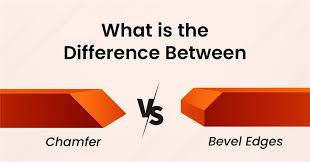
A beveled edge is a slanted surface. It is made by cutting a corner at an angle that is not a right angle (90 degrees). You can think of it as a slope on the edge of a part.
Bevels can have many different angles. For example, a common bevel angle is 45 degrees. But it can also be 30 degrees, 60 degrees, or any other angle that the design needs.
Bevels are often used for two main reasons: safety and looks.
-
Safety: A sharp, 90-degree corner can be dangerous. It can cut people's hands. A beveled edge is less sharp. This makes the part safer to handle.
-
Looks: A beveled edge gives a part a more finished and professional appearance. It looks better than a plain, sharp corner.
A good example is a metal plate used in a machine. If the plate has beveled edges, it is less likely to cause injury. Another example is a glass mirror with beveled edges. This makes the mirror look more attractive.
Chamfered Edges
A chamfered edge is actually a specific type of bevel. Most people in the hardware industry use the word "chamfer" for a small, flat bevel that is cut at a 45-degree angle.
Chamfers are usually small. They are often just a little cut to remove the sharp corner. They are not for creating a large sloped surface.
Chamfers are very useful for assembly and strength.
-
Assembly: A chamfer acts like a guide. For example, the end of a shaft or a bolt is often chamfered. This helps the shaft slide into a hole more easily. It makes assembly faster and easier.
-
Strength: Sharp corners are weak points. They can develop small cracks under stress. A chamfer removes this sharp corner. This reduces stress concentration and makes the part stronger and more durable.
You can see chamfers on screws, bolts, and pins. They help the screw start straight into a hole. You also find them on machined parts to prevent damage from sharp edges.
Key Differences
It is important to know the differences between a bevel and a chamfer.
-
The main difference is the angle and the purpose.
-
A bevel can be cut at any angle. Its main job is often to create a large sloped surface for safety, welding, or appearance.
-
A chamfer is almost always cut at a 45-degree angle. Its main job is to remove a sharp corner for easier assembly or to reduce stress.
-
-
Another difference is the size.
-
Bevels are often used on bigger surfaces and edges. For example, the edge of a tabletop or a large metal sheet.
-
Chamfers are used on small edges. For example, the end of a bolt or the edge of a hole.
-
3. Applications in Hardware Manufacturing
Beveled and chamfered edges are used in many hardware products.
Beveled edges are common in:
-
Metal plates for machines.
-
Tools like knives and blades.
-
Structural parts in buildings.
Chamfered edges are found in:
-
Screws and bolts for easy insertion.
-
Shafts and pins in engines.
-
CNC machined parts to prevent damage.
These features make parts fit better and last longer.
4. Functions and Benefits
Safety
Beveled and chamfered edges remove sharp corners. This reduces the risk of cuts. Workers can handle parts safely.
Assembly
Chamfered edges help in easy assembly. For example, a chamfer on a bolt guides it into a hole. This saves time and effort.
Durability
These edges reduce stress concentration. Parts are less likely to crack. This makes products stronger.
Aesthetics
Beveled edges improve the look of products. They give a finished appearance. This is important for consumer goods.
5. Manufacturing Methods
Creating beveled and chamfered edges is a fundamental step in hardware manufacturing. Several methods are used. The choice of method depends on the material, the required precision, the number of parts, and the cost.

Machining
Machining is a very common method. It uses powered machines to cut the material.
-
Milling machines are often used for this job. A machinist uses a special cutting tool called a chamfer mill or a V-bit. This tool has the desired angle built into its shape.
-
The machine spins the tool at high speed and moves it along the edge of the part. This cuts away the material to create a clean, precise bevel or chamfer.
-
This method is precise and fast for batch production. It can create many different angles. It is good for metals like aluminum and steel.
Grinding
Grinding is used for very hard materials or for removing a lot of material.
-
This process uses a grinding wheel. The wheel is made of abrasive grains that wear away the metal.
-
An operator holds the part against the grinding wheel to shape the edge. For more precision, a tool and cutter grinder can be used.
-
Grinding is excellent for hardened steel and other tough alloys. It can also produce a very smooth finish. However, it requires skill and can be slower than machining.
Deburring Tools
Deburring tools are used for simple, small-scale work, especially for creating chamfers.
-
Hand deburring tools look like pencils or knives. They have a small, angled blade. A worker manually scrapes the tool along the edge to remove the sharp corner (burr) and create a small chamfer.
-
These tools are simple, cheap, and portable. They are perfect for a quick touch-up or for a small workshop.
-
However, this method is manual and inconsistent. It is not suitable for high-volume production. The quality depends entirely on the worker's skill.
CNC Technology
CNC (Computer Numerical Control) Technology is the most advanced and widely used method in modern manufacturing.
-
A CNC machine (like a CNC mill or router) is used. The machine's movements are controlled by a computer program.
-
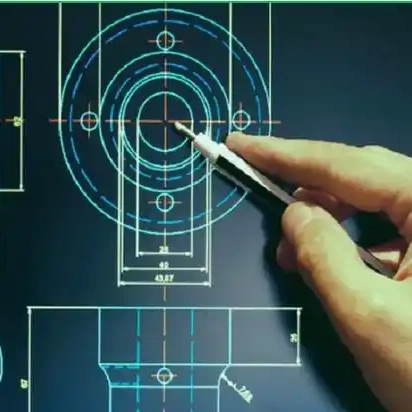
The operator creates a digital design (CAD model). The computer then guides the cutting tool with perfect accuracy to create the bevel or chamfer.
-
This method ensures perfect consistency across thousands of parts. It is very fast for production lines. It can handle very complex angles and shapes that are difficult to do by hand. CNC is the best choice for high-precision and high-volume manufacturing.
Each method has its uses. Manual tools are for low volume and simple jobs. Machining and grinding are versatile for workshops. CNC technology is the best for precision and mass production. The choice always depends on the material and the design requirements.
6. Importance in Products
Beveled and chamfered edges are very important. They affect how well a product works.
In automotive parts, chamfers help in engine assembly. They prevent leaks and wear.
In consumer electronics, bevels make devices safe to touch. They also look modern.
In construction, beveled edges on beams distribute weight evenly. This adds strength.
Without these features, products might fail early. They are small details but have big impacts.
7. Expert Insights
We asked John Doe, a manufacturing expert with 20 years of experience. He said, "Beveled and chamfered edges are critical in hardware design. They improve safety and performance. Many people overlook them, but they can make or break a product. For example, in precision instruments, a small chamfer ensures parts fit perfectly. I always recommend including them in designs."
Another expert, Jane Smith, a mechanical engineer, added, "Using CNC machining for bevels and chamfers is efficient. It reduces errors and costs. In high-stress applications, these edges prevent failures. They are simple to add but offer great benefits."
8. Comparison Table: Beveled vs Chamfered
| Parameter | Beveled Edges | Chamfered Edges |
|---|---|---|
| Angle | Any angle, often 30-60 degrees | Typically 45 degrees |
| Application | Large surfaces, welding, aesthetics | Small edges, deburring, assembly |
| Function | Safety, weight distribution, looks | Easy fitting, stress reduction |
| Manufacturing | Milling, grinding, CNC | Deburring tools, milling, CNC |
| Cost | Can be higher for complex angles | Usually low for standard sizes |
| Common Uses | Metal plates, tools, structural parts | Screws, bolts, shafts, machined parts |
9. Frequently Asked Questions
Q: What is the main difference between beveled and chamfered?
A: Beveled edges can have any angle. Chamfered edges are usually 45 degrees. Bevels are for larger surfaces, and chamfers are for small edges.
Q: Why are these edges important in hardware?
A: They make parts safer, easier to assemble, and more durable. They also improve the product's appearance.
Q: How are beveled and chamfered edges made?
A: They are made using machining, grinding, or CNC methods. The choice depends on the material and precision needed.
Q: Can I add a chamfer to any metal part?
A: Yes, but it is easier with soft materials. Hard materials may require special tools.
Q: Do beveled edges cost more?
A: Sometimes, if the angle is complex. But for standard designs, the cost is low.
Q: Are there standards for bevel and chamfer sizes?
A: Yes, many industries have guidelines. For example, in machining, common chamfer sizes are specified in drawings.
DongGuan YiTai Electronic Technologies Co.,Ltd
DongGuan YiTai Electronic Technologies Co.,Ltd is a manufacturing service provider located in Dongguan, China.
YiTai specialized in CNC turning machining and sheet metal fabrication mainly. As a member of Hung Mou Group, we focus on the overseas marketing development. And based on our parent company’s manufacturing capability and resources, YiTai also expended machining services such as die casting, injection molding, aluminum profile extrusion, 3D printing, which are committed to providing customers with one-stop purchasing services and experience.
CNC MACHINING , CNC MILLING , CNC TURNING , SHEETMETAL , FASTENER , OTHERS




Aluminium Powder Coating: A Complete Guide for the Hardware Industry
Yield Strength vs. Tensile Strength in the Hardware Industry: Key Differences & Uses
Related Article