The Difference Between Anodizing And Conductive Oxidation.
author: YITECH
2024-10-24

Looking for anodizing services near you? Look no further! Whether you need anodizing for industrial or decorative purposes, there are qualified and experienced anodizing companies nearby to help. We are your "anodizing services near me".
Do you know what is the difference between anodizing and conductive oxidation? Read below and you will get the answer.

1. Anodizing is an electrochemical reaction process that is carried out under high voltage conditions, while conductive oxidation (also called chemical oxidation) does not require electricity and can be achieved by immersing it in a liquid. This is a purely chemical reaction.
2. Anodizing takes longer, usually several minutes to tens of minutes, while conductive oxidation only takes a few seconds.
3. The films produced by anodizing are several microns to tens of microns in thickness, and are hard and wear-resistant, while the films produced by conductive oxidation are only 0.01-0.15 microns thick. Although they are not very wear-resistant, they are conductive and resistant to atmospheric corrosion, which is their advantage.
4. Oxide films are not conductive, but the films produced by conductive oxidation are very thin, making them conductive.
2. Anodizing takes longer, usually several minutes to tens of minutes, while conductive oxidation only takes a few seconds.
3. The films produced by anodizing are several microns to tens of microns in thickness, and are hard and wear-resistant, while the films produced by conductive oxidation are only 0.01-0.15 microns thick. Although they are not very wear-resistant, they are conductive and resistant to atmospheric corrosion, which is their advantage.
4. Oxide films are not conductive, but the films produced by conductive oxidation are very thin, making them conductive.
See here I believe you have a simple understanding of anodizing, want to make your parts more practical and look better? Contact us to customize anodized metal parts for you.
Stainless Steel: A Versatile and Durable Material
Flange basic introduction-phase 6
Related Article
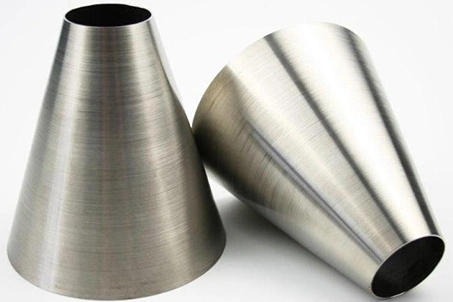
Learn how metal spinning forms rotationally symmetric parts, compare process options, and review materials, applications, cost factors, and RFQ requirements.
Metal Spinning: How the Process Works and When to Use It
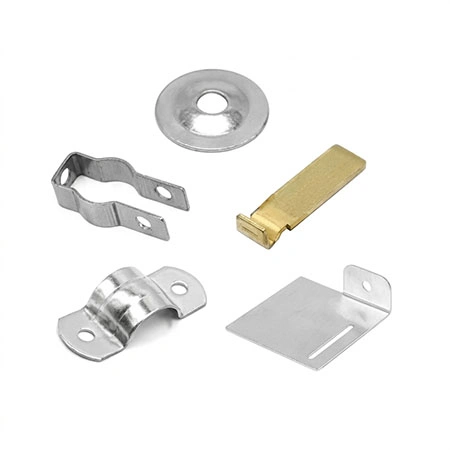
Explore precision metal fabrication processes, tolerance control, inspection, cost factors, and what to include in a custom-part RFQ.
Precision Metal Fabrication: From Drawing Review to Inspection