Aluminum vs Cast Aluminum in CNC Machining: A Full Guide on Definitions, Properties, and Key Differences
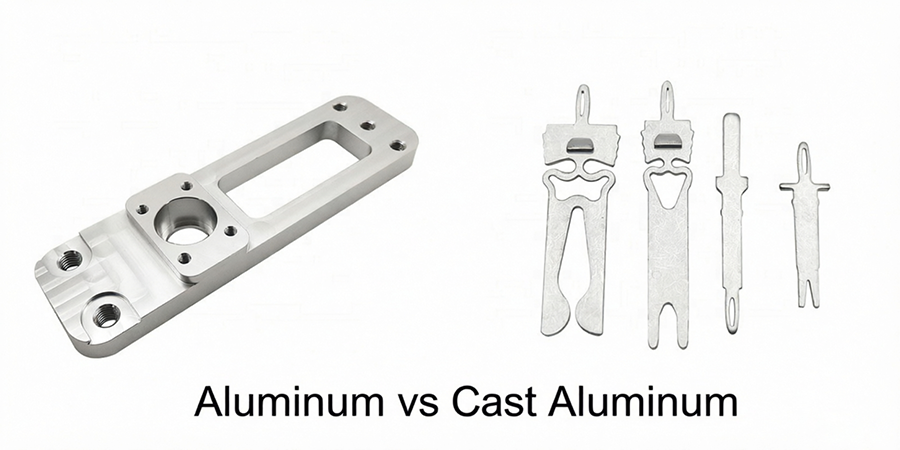
Choosing the right material is a big decision. It changes how a part is made. It changes how long the part lasts. In CNC machining, aluminum and cast aluminum are both common. But they are not the same. One comes from a solid block. The other comes from a mold. Each has its own strengths and limits.
This guide explains the difference. We look at how each one is made. We look at their properties. We also show how to tell them apart. By the end, you will know which one fits your project.
1. What is Wrought Aluminum?
Wrought aluminum is a material that has been worked into shape. It starts as a large solid piece. Then machines roll it, push it, or hammer it into a new shape.

How It Is Made
There are three main ways to make wrought aluminum.
-
Rolling: The metal goes through heavy rollers. This makes sheets and plates.
-
Extrusion: A machine pushes the metal through a die. This makes rods, bars, and complex profiles.
-
Forging: A hammer or press shapes the metal under high force. This makes strong parts like suspension arms.
Common Grades and Their Traits
Wrought aluminum comes in different grades. Each grade has a number.
-
6061: This is a common grade. It is good for general use. It welds well. It machines well.
-
7075: This is a strong grade. It is close to steel in strength. It is used for aircraft parts.
-
5052: This resists rust well. It bends without cracking. It is good for marine parts.
The Microstructure
Wrought aluminum has a uniform grain structure. The grains are small and packed together. There are no empty spaces inside. This makes the material strong and predictable.
2. What is Cast Aluminum?
Cast aluminum starts as a liquid. Workers melt the metal. Then they pour it into a mold. The metal cools and takes the shape of the mold.

How It Is Made
The process is simple in idea but needs control.
-
Melting: The aluminum is heated until it flows like water.
-
Pouring: The liquid metal goes into a metal or sand mold.
-
Cooling: The metal hardens. The part comes out near the final shape.
Common Grades and Their Traits
Cast aluminum also has grade numbers.
-
A356: This grade is strong after heat treatment. It is used for wheels and structural parts.
-
A380: This grade flows well in the mold. It is good for thin walls and complex shapes.
-
ADC12: This is a common grade for die casting. It is used for engine parts and housings.
The Microstructure
Cast aluminum has a different grain structure. As the metal cools, small empty spaces can form. These are called porosity. The grains are often larger. This can affect strength. But good process control can reduce these issues.
3. Key Property Comparison: Aluminum vs Cast Aluminum
The table below shows how the two materials compare.
| Property | Wrought Aluminum (e.g., 6061) | Cast Aluminum (e.g., A380) |
|---|---|---|
| Tensile Strength | Higher (around 310 MPa for 6061-T6) | Lower (around 250 MPa for A380) |
| Yield Strength | Higher (around 275 MPa) | Lower (around 160 MPa) |
| Elongation | Better (12–17%) | Lower (3–5%) |
| Machinability | Good. Produces long, curly chips. | Good. Produces small, broken chips. |
| Tool Wear | Low. Tools last long. | Low to moderate. Silicone content can wear tools. |
| Surface Finish | Smooth. Good for anodizing. | Smooth in die cast parts. Sand cast parts can be rough. |
| Heat Treatment Response | Strong response. T6 treatment boosts strength a lot. | Moderate response. Some grades like A356 respond well. |
| Corrosion Resistance | Good. Natural oxide layer is strong. | Good. But porosity can trap moisture. |
Mechanical Performance
Wrought aluminum is stronger and more flexible. It bends more before breaking. Cast aluminum is harder but more brittle. It does not bend much. It breaks under sudden force.
Machinability
Wrought aluminum cuts smoothly. The chips come off in long, curly strips. Cast aluminum cuts into small, broken chips. This is because of the silicone in the metal. The small chips are easy to clear from the machine.
Heat Treatment
Both materials can get heat treatment. But the result is different. Wrought aluminum like 6061 gets much stronger after T6 treatment. Cast aluminum like A356 also gets stronger. But the gain is smaller. Some casting grades like ADC12 do not get much benefit from heat treatment.
Corrosion Resistance
Both resist rust well. Aluminum makes its own oxide layer. But cast aluminum can have tiny holes inside. These holes can hold water. Over time, this can start rust from the inside.
4. How to Tell Them Apart by Look and Feel
You can often tell the difference without a lab test.
Visual and Touch Differences
Wrought aluminum has a smooth, clean surface. It feels solid. Cast aluminum may have a rougher surface. You might see small dots or lines from the mold. Sand cast parts have a gritty texture.
Chip Shape
This is a clear sign. When you machine wrought aluminum, the chips are long and curly. They wrap around the tool. When you machine cast aluminum, the chips are small and powdery. They fall away from the tool.
5. Expert Insight: Matching Material to Machine
“Many engineers pick a material without thinking about the machining step. But the material changes the whole process. For wrought aluminum like 7075, we use sharp tools and high speeds. The chips come off fast. For cast aluminum like A380, we use tools with polished edges. The silicone in the metal is hard. It can wear tools faster. We also use air blast to clear the small chips. A good machinist knows how to adjust for each one. This keeps the part accurate and the tools sharp.”
— CNC Lead Engineer, DongGuan YiTai Electronic Technologies
6. How We Set the Right Machining Strategy
At 'DongGuan YiTai Electronic Technologies' , we do not treat all aluminum the same. We look at the material first. Then we pick the tools and speeds.
-
For wrought aluminum: We use high spindle speeds. We use sharp carbide tools. We let the chips flow out. We check for built-up edge on the tool.
-
For cast aluminum: We check for silicone content. We use tools with a polished rake face. We clear chips often. We watch for porosity near the surface.
This way, we get good surface finish and long tool life. We also keep the part dimensions right.
7. Frequently Asked Questions (FAQ)
Q: Which is stronger, wrought aluminum or cast aluminum?
A: Wrought aluminum is stronger. Grades like 7075-T6 have strength close to mild steel. Cast aluminum is good for complex shapes but not as strong. If strength is the main need, pick wrought.
Q: Can I weld both types of aluminum?
A: Yes, but it is easier with wrought aluminum. Wrought grades like 6061 weld cleanly. Cast aluminum can have gas bubbles inside. These bubbles can cause problems during welding. It takes more skill to weld cast aluminum.
Q: Which one gives a better surface finish after CNC machining?
A: Wrought aluminum gives a smoother finish. It is better for parts that need anodizing or a polished look. Cast aluminum can still give a good finish. But hidden pores may appear after machining. This is more common in sand cast parts.
Q: Is cast aluminum cheaper than wrought aluminum?
A: Often yes. Casting makes parts close to the final shape. There is less material to remove. But the tooling for casting costs more upfront. For small runs, machining from wrought bar stock is cheaper. For large runs, casting saves money.
Q: How do I know if my part has porosity?
A: You can see it after machining. Small holes may appear on the cut surface. You can also do a density test or use X-ray inspection. At YiTai, we check critical parts with X-ray. This makes sure there are no hidden voids.
DongGuan YiTai Electronic Technologies Co.,Ltd
DongGuan YiTai Electronic Technologies Co.,Ltd is a manufacturing service provider located in Dongguan, China.
YiTai specialized in CNC turning machining and sheet metal fabrication mainly. As a member of Hung Mou Group, we focus on the overseas marketing development. And based on our parent company’s manufacturing capability and resources, YiTai also expended machining services such as die casting, injection molding, aluminum profile extrusion, 3D printing, which are committed to providing customers with one-stop purchasing services and experience.
CNC MACHINING , CNC MILLING , CNC TURNING , SHEETMETAL , FASTENER , OTHERS




5 Key Design (DFM) Strategies to Lower Your Teflon CNC Machining Costs
The Ultimate Guide to Camshaft Machining: How CNC Technology Redefines Precision for the Engine Heart
Related Article