Heat Sink Fabrication

1. Introduction to Heat Sink Manufacturing
Effective thermal management is critical in electronics, and heat sinks are frontline warriors against overheating. Fabrication methods dramatically impact performance, cost, and design flexibility. We explore five key processes transforming raw materials into thermal solutions.
2. Extrusion: The High-Volume Champion
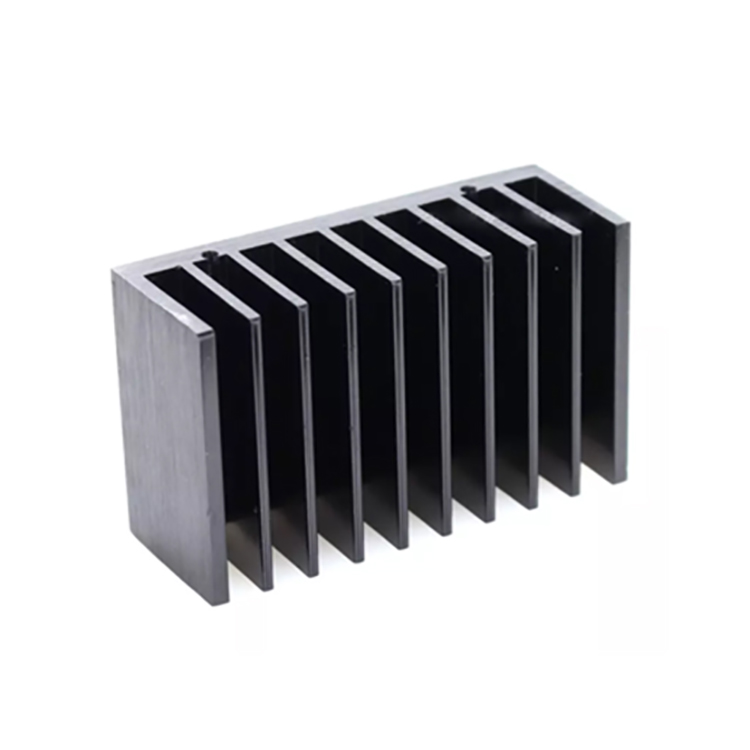
Aluminum extrusion forces heated alloy through a die to create continuous profiles. After cutting to length, secondary operations (milling, tapping, anodizing) finalize the product.
Key Advantages
-
Low cost per unit at high volumes
-
Excellent thermal conductivity with 6063 alloy
-
Rapid production scaling
Limitations
-
Restricted fin aspect ratios (typically <12:1)
-
Limited geometric complexity
Expert Insight: Dr. Elena Rodriguez (MIT Thermal Labs) notes: "Extrusion dominates consumer electronics due to its unbeatable economics at scale. However, advancing power densities demand complementary processes."
? Learn more in our deep dive: What is Aluminum Extrusion Process?
3. Skiving: Precision Fin Technology
How It Works
A specialized machine skives (peels) thin fins from a solid metal block using a precision blade, creating seamless, high-density arrays.
Performance Edge
-
Achieves fin heights up to 15x base thickness
-
Eliminates thermal interface gaps between base/fins
-
Superior structural integrity vs. bonded solutions
Applications
-
Server CPUs
-
Power converters
-
Automotive power modules
4. Fold & Braze: Custom High-Performance Solutions
Process Flow
-
Stamping individual fins
-
Folding into 3D structures
-
Brazing in furnace to create monolithic unit
Why Choose Fold & Braze?
-
Hybrid designs combining copper base/aluminum fins
-
Custom geometries for constrained spaces
-
High fin density with aspect ratios >20:1
Thermal Performance
"Brazed sinks achieve 15-20% better ΔT than extruded equivalents in forced convection," says James Kohler (Boyd Corp Thermal Engineer).
5. Stamping: Economical Sheet Metal Approach
Sheet metal stamping rapidly punches/cuts fins from copper or aluminum coils. Fins attach via:
-
Epoxy bonding
-
Interference fitting
-
Soldering
Strengths
-
Lowest tooling costs
-
Ultra-thin fins (down to 0.2mm)
-
Ideal for low-profile applications
? Explore stamping applications: Stamping: Compact Thermal Solutions Demystified
6. Additive Manufacturing: Design Freedom Frontier
Revolutionary Capabilities
Metal 3D printing (e.g., DMLS, SLM) enables:
-
Conformal cooling channels
-
Topology-optimized structures
-
Integrated heat pipes/vapor chambers
Emerging Applications
-
Aerospace avionics
-
Satellite systems
-
High-performance computing
Cost Consideration
"While AM costs 3-5x vs. extrusion," notes Tesla Thermal Lead Arun Mehta, "it eliminates assembly steps and unlocks unmatchable thermal density."
7. Process Comparison & Selection Guidelines
| Process | Fin Aspect Ratio | Tooling Cost | Best For |
|---|---|---|---|
| Extrusion | < 12:1 | $$$$ | High-volume consumer gear |
| Skiving | Up to 15:1 | $$$$$ | High-performance computing |
| Fold & Braze | > 20:1 | $$$$$$ | Telecom/power electronics |
| Stamping | < 8:1 | $$ | LED lighting/portable devices |
| Additive Mfg. | Unlimited | $$$$$$+ | Prototypes/complex systems |
8. Industry FAQs
Q: Can extrusion handle copper?
A: Rarely—copper's;s high extrusion pressure makes production impractical. Skiving or AM are preferred for copper.
Q: Why choose skiving over bonded fins?
A: Skiving provides continuous thermal paths from base to fin tip, avoiding interfacial resistance that degrades bonded-fin performance.
Q: Is anodizing necessary for aluminum sinks?
A: Yes! Black anodization boosts emissivity by 10x (from 0.1 to >0.9), enhancing radiative heat transfer.
Q: When does AM become cost-effective?
A: For systems where heat sink consolidation reduces: 1) Assembly labor 2) Failure points 3) System volume. ROI improves above ~200 units.
DongGuan YiTai Electronic Technologies Co.,Ltd
DongGuan YiTai Electronic Technologies Co.,Ltd is a manufacturing service provider located in Dongguan, China.
YiTai specialized in CNC turning machining and sheet metal fabrication mainly. As a member of Hung Mou Group, we focus on the overseas marketing development. And based on our parent company’s manufacturing capability and resources, YiTai also expended machining services such as die casting, injection molding, aluminum profile extrusion, 3D printing, which are committed to providing customers with one-stop purchasing services and experience.
CNC MACHINING , CNC MILLING , CNC TURNING , SHEETMETAL , FASTENER , OTHERS




Door & Window Hardware
Mastering Chassis Case Fabrication: Sheet Metal vs. CNC Machining
Related Article