Complete Guide to Aluminum Surface Treatment Processes

Table of Contents
1. Introduction
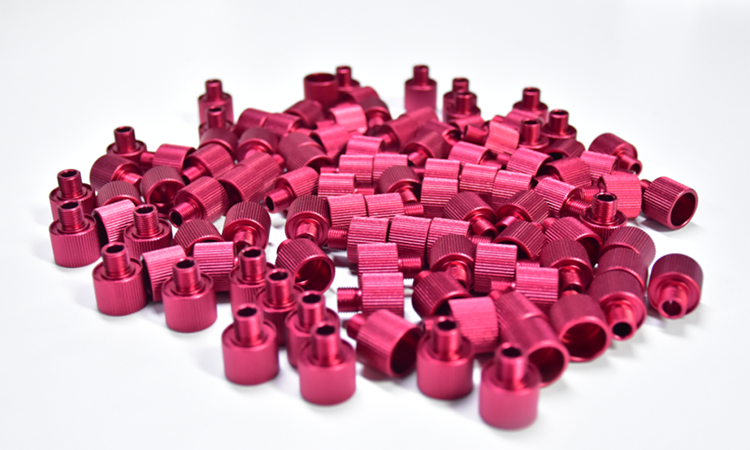
Surface treatment is a process that utilizes mechanical and chemical methods to form a protective layer on a product's surface. This layer achieves a stable state in natural environments, enhancing the product's corrosion resistance and aesthetics, thereby increasing its value. The selection of a surface treatment type primarily considers the service environment, lifespan, and aesthetic appeal, with economic cost being a core factor.
The surface treatment process includes pre-treatment, film formation, and post-film treatment, followed by packaging, storage, and shipping. Pre-treatment involves both mechanical and chemical processes. Mechanical treatments include sandblasting, shot blasting, grinding, polishing, and waxing, aiming to smooth out surface irregularities and remedy other appearance defects. Chemical treatment removes oil, stains, and rust from the product surface, forming a layer that allows for better adhesion of the coating or activates the metal substrate, ensuring a stable foundation and enhancing the adhesion of the protective layer.
Aluminum Surface Treatment
Common chemical treatments for aluminum include chromating, painting, electroplating, anodizing, and electrophoretic painting. Mechanical treatments include brushing, polishing, sandblasting, and grinding.
2. Chromating
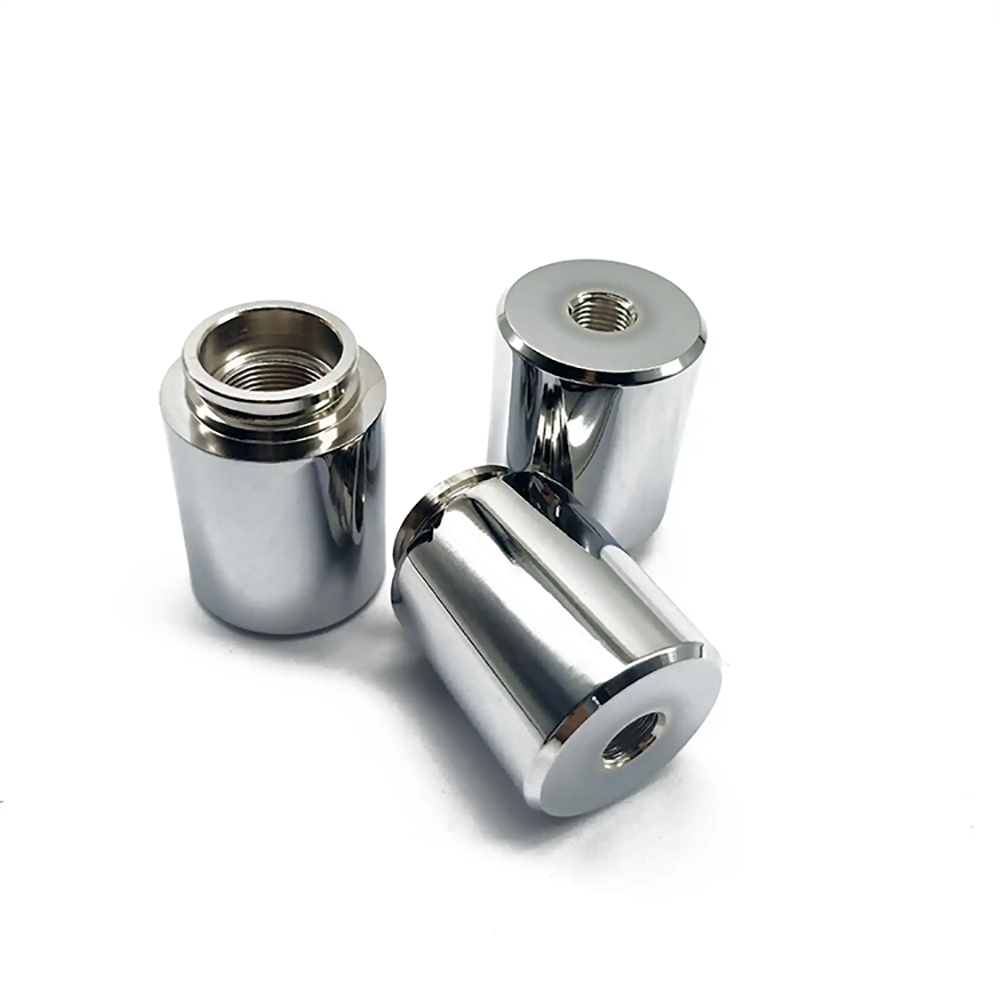
Chromating forms a chemical conversion coating on the product surface, with a thickness of 0.5-4 µm. This conversion film offers excellent adhesion and is primarily used as a base for paint. Appearances include golden yellow, aluminum clear, and green. This conversion coating conducts electricity well, making it ideal for electronic products, such as conductive strips inside mobile phone batteries and electromagnetic devices. It is suitable for all aluminum and aluminum alloy products. However, this conversion film is soft and not wear-resistant, making it unsuitable for use on external components.
Process Flow: Degreasing -> Acid Etching (Deoxidizing) -> Chromating -> Packaging -> Storage
Chromating is suitable for aluminum and aluminum alloys, magnesium and magnesium alloys.
Quality Requirements:
-
Uniform color, fine coating texture. No bumps or scratches. To the touch, it should not feel rough or powdery.
-
Coating thickness: 0.3-4 µm.
3. Anodizing
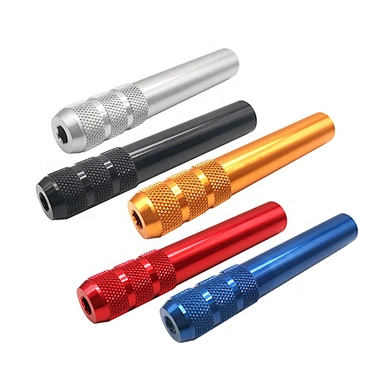
Anodizing can form a uniform, dense oxide layer (Al₂O₃·6H₂O, commonly known as corundum) on the product surface. This coating can achieve a surface hardness of 200-300 HV. For specific products, hard anodizing can be performed, achieving a surface hardness of 400-1200 HV. Thus, hard anodizing is an essential process for cylinders and transmission systems. Furthermore, this process offers excellent wear resistance, making it a necessary treatment for aerospace-related products. The difference between standard anodizing and hard anodizing lies in the ability of standard anodizing to be colored, offering much better decorative appeal.
Key Implementation Points: Anodizing has strict material requirements, as different materials yield different decorative effects. Commonly used materials include 6061, 6063, 7075, and 2024. Among these, 2024 generally yields poorer results. Due to varying copper (Cu) content, 7075 hard anodizing appears yellow, while 6061 and 6063 appear brown. However, for standard anodizing, 6061, 6063, and 7075 show little difference, whereas 2024 easily develops noticeable gold spots.
3.1 Common Processes
Common anodizing processes include: brushed satin natural, brushed bright natural, brushed bright dyed, satin brushed dyed (can be dyed any color); polished bright natural, polished satin natural, polished bright dyed, polished satin dyed; sandblasted bright natural, sandblasted satin natural, sandblasted dyed. All these finishes can be used on lighting equipment.
3.2 Anodizing Process Flow
Degreasing -> Alkaline Etching -> Chemical Polishing -> Neutralizing -> Matte Etching (where applicable) -> Neutralizing -> Anodizing -> Dyeing -> Sealing -> Hot Water Rinse -> Drying
3.3 Common Defects & Solutions
-
A. Surface Mottling: Usually caused by improper metal heat treatment or poor base material quality. Solution: Re-perform heat treatment or change the material.
-
B. Iridescence (Rainbow Effect): Usually caused by anodizing operational errors, such as loose racking leading to poor electrical contact. Solution: Strip the coating and re-anodize.
-
C. Severe Bumps/Scratches: Usually caused by careless handling during transport or processing. Solution: Strip coating, re-grind, and re-anodize.
-
D. White Spots during Dyeing: Usually caused by oil or other impurities in the water during anodizing.
3.4 Quality Standards
-
Film thickness: 5-25 µm, hardness above 200 HV. Sealing test color change rate less than 5%.
-
Salt spray test: over 36 hours, achieving Level 9 or higher per CNS standard.
-
Appearance: No bumps, scratches, or cloudiness. Surface must be free from rack marks, yellowing, etc.
3.5 Notes on Materials
Die-cast aluminum, such as A380, A365, A382, etc., generally cannot be anodized.
4. Electroplating
4.1 Advantages of Aluminum & Aluminum Alloys
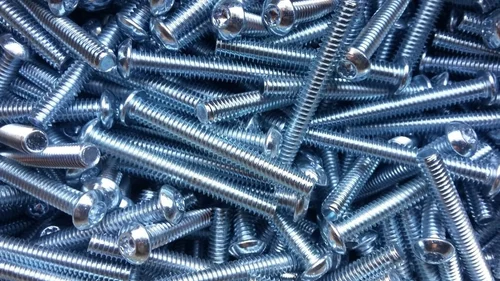
They possess advantages like good electrical conductivity, high thermal conductivity, low density, and good formability. However, aluminum and its alloys have drawbacks such as low hardness, poor wear resistance, susceptibility to intergranular corrosion, and difficulty in welding, which limit their application range. Therefore, electroplating is used to leverage the strengths and mitigate the weaknesses.
4.2 Advantages of Plating on Aluminum
-
Improves decorative appeal.
-
Increases surface hardness and wear resistance.
-
Reduces friction coefficient, improves lubricity.
-
Improves surface electrical conductivity.
-
Enhances corrosion resistance (including when combined with other metals).
-
Improves weldability.
-
Enhances bonding strength with rubber during heat pressing.
-
Increases light reflectivity.
-
Repairs dimensional tolerances.
Since aluminum is relatively reactive and most plating metals are less reactive (nobler) than aluminum, a corresponding chemical conversion, such as zinc immersion, zinc-iron alloy, or zinc-nickel alloy, must be performed before electroplating. This creates an intermediate cyanide copper layer that ensures good adhesion for the zinc or zinc alloy base layer. For die-cast aluminum, due to its porous structure, care must be taken not to grind away the surface skin during polishing; otherwise, issues like pitting, acid seepage, and peeling may occur.
4.3 Electroplating Process Flow for Aluminum
Degreasing -> Alkaline Etching -> Activation -> Zinc Immersion (or alloy) -> Activation -> Electroplating (e.g., nickel, zinc, copper) -> Chromating or Passivation -> Drying.
4.3.1 Common Plating Types for Aluminum
Include nickel plating (satin nickel, bright nickel, black nickel), silver plating, gold plating, zinc plating (yellow chromate, black chromate, blue chromate), copper plating (and its alloys like brass, tin-copper), chromium plating (decorative chromium, hard chromium, black chromium), etc.
4.3.2 Common Plating Types & Uses
-
Black Platings: e.g., black zinc, black nickel, used in optical electronics and medical devices.
-
Gold & Silver: Excellent conductors for electronics, also providing high-end decoration. Generally expensive, used for electrical conduction in electronics, like precision terminals.
-
Copper, Nickel, Chrome: The most widespread combination in modern industry, offering good decoration and corrosion resistance at low cost. Used in sports equipment, lighting, and most electronics.
-
Copper Alloys: White bronze is an environmentally friendly plating developed in the 70s-80s, bright white, preferred in the jewelry industry. Bronze can be used for imitation gold, offering good decoration, but its tendency to tarnish has limited its development.
-
Zinc Plating: Zinc coating is bluish-white and dissolves in acid/alkali. As zinc is less noble than iron, it provides electrochemical protection to steel. Ideal for steel parts used in industrial/marine atmospheres.
-
Hard Chrome: Chromium deposited under specific conditions offers high hardness (HV 900-1200) and wear resistance, the highest among common platings. Used to improve wear resistance and lifespan of tools, molds, gauges, cylinders, hydraulic systems, etc.
4.4 Common Defects & Improvements
-
Peeling:
-
a) Poor zinc immersion (time too long/short). Improvement: Re-optimize immersion time, bath temp, concentration.
-
b) Insufficient activation. Improvement: Change activation method.
-
c) Inadequate pre-treatment (oil residue). Improvement: Enhance pre-treatment.
-
-
Surface Roughness:
-
a) Improper brightener/wetting agent/pitting inhibitor dosage in plating bath. Improvement: Adjust additive amounts.
-
b) Substrate itself is rough. Improvement: Re-grind before plating.
-
-
Yellowing/Burning: Caused by poor low-current-density throwing power. Improvement: Change racking method; add appropriate brightener/leveler.
-
Burrs/Nodules: Plating bath is contaminated. Improvement: Strengthen filtration; perform bath treatment.
4.5 Quality Requirements
-
Appearance: No yellowing, pitting, burrs, blistering, bumps, or scratches.
-
Film thickness: >15 µm. Salt spray test: >48 hours, meeting MIL-STD Level 9 or higher. Potential difference: 130-150 mV.
-
Adhesion: Must pass 60-degree bend test.
-
Adjustments can be made for products in special environments.
4.6 Operational Notes for Aluminum Electroplating
-
Use aluminum alloy racks for aluminum parts.
-
Processes after etching must be rapid to prevent re-oxidation.
-
Second zinc immersion time should not be excessive to avoid over-etching.
-
Rinsing must be thorough.
-
Prevent power interruption during plating.
5. Painting
Painting includes dipping, spraying, flow coating, roller coating, and brushing, with dipping (electrophoresis) and spraying being primary. Electrophoretic painting uses electrochemical methods to deposit organic resin particles onto the workpiece, forming transparent or colored organic coatings. Cathodic electrodeposition, developed in the 1970s, is the main dipping process, known for excellent corrosion resistance, anti-tarnishing properties, and good adhesion. Spraying includes powder coating and liquid coating, with electrostatic spraying being very popular.
Process Range: Due to good corrosion resistance, low cost, and wide color range, painting suits all aluminum materials. However, very porous castings may require filler, resulting in relatively lower quality.
5.1 Electrostatic Painting Principle
Paint is fed into an electric field by a pump, where paint particles become negatively charged. Under atomizing air pressure, the paint becomes finer and uniform. Then, under working air pressure, the paint is evenly sprayed onto the workpiece via a rotating bell or nozzle. As the distance between gun and workpiece is equal on the same vertical plane, and the electric field strength is uniform, opposite charges attract, applying a uniform organic resin coating. Subsequent high-temperature baking causes the resin to flow and cure, firmly adhering to the surface for protection.
5.2 Painting Process Flow for Aluminum
Mechanical Grinding -> Degreasing -> Deoxidizing -> Chromating -> Powder/Liquid Spraying -> Curing -> Unloading -> Inspection -> Packaging -> Storage
6. Electroless Plating
6.1 Principle
Electroless plating is a method of depositing metal ions onto a part's surface via an oxidation-reduction reaction in a solution without external current, using a reducing agent. It's a controlled, autocatalytic chemical reduction process.
6.2 Characteristics
With industrial development, electroless plating has become a promising technology. Compared to other methods, it offers:
-
Can plate metals onto various substrates: metals, semiconductors, non-conductors.
-
Uniform coating thickness even on complex shapes, wherever solution contacts.
-
For autocatalytic processes, thick coatings, even electroforming, are possible.
-
No electricity required.
-
Dense, low-porosity coatings.
-
Coatings often possess special chemical/mechanical properties.
Due to these advantages, its use is rapidly growing in industry and electronics.
Electroless Nickel (Example):
-
Using sodium hypophosphite as a reducer typically yields nickel-phosphorus (Ni-P) alloy. Classified by P content: Low-P (1-4%), Mid-P (4-10%), High-P (10-12%). Different pH baths yield different P contents: pH 4-5 gives mid/high-P; weak alkaline pH 8-10 gives low/mid-P. Ni-P alloy with >8% P is amorphous, offering excellent corrosion resistance due to lack of grain boundaries. After heat treatment (300-400°C), transforming to a mixed amorphous/crystalline state, hardness can reach HV 1150, close to hard chrome, making it an ideal substitute and suitable for all aluminum products. Disadvantage: Brittleness, but heat treatment significantly improves ductility.
6.3 Process Flow for Electroless Nickel on Aluminum
Ultrasonic Degreasing -> Deoxidizing -> First Zinc Immersion -> Neutralization -> Second Zinc Immersion -> Electroless Nickel Plating -> Passivation -> Ultrasonic Cleaning -> Baking -> Inspection -> Packaging
6.4 Stripping Defective Coatings
Electroless nickel on steel, aluminum, copper, plastic can be stripped with concentrated nitric acid. Parts must be dry to prevent base metal corrosion. Temperature below 35°C.
6.5 Quality Requirements
a) Thickness: 5-30 µm.
b) Salt spray test: >24 hours, achieving CNS Level 9 or higher.
c) Pass 60-degree bend test without peeling.
d) Appearance: No bumps, scratches, water spots, etc.
e) Coating uniform, no haze, white spots, or skip plating.
7. Selection Guide for Coatings
From a corrosion protection standpoint, surface treatment design should consider:
-
Noble metals (Au, Pt), stainless steel with >18% Cr, magnetic alloys, Ni-Cu alloys generally don't need additional coatings.
-
Parts made of carbon steel, low-alloy steel, cast iron corrode easily in atmosphere and need protective coatings.
-
Copper/brass parts: Use bright pickling, passivation, plating, or painting based on conditions. Precision parts from phosphor/beryllium bronze may not need treatment.
-
Aluminum/aluminum alloy parts: Use anodizing & sealing. Small parts unsuitable for anodizing can use chemical conversion. Cast aluminum can use paint.
-
Zinc alloy parts: Use phosphating, passivation, plating, or painting.
8. Electrophoretic Painting
Color electrophoretic painting on aluminum is a novel surface treatment. It electrochemically deposits colloidal particles of organic resin onto parts, forming transparent or colored organic coatings. Based on the charge of ionized resin particles, it's classified as anodic (negatively charged) or cathodic (positively charged). Electrophoretic coatings offer excellent corrosion resistance (>400 hrs NSS), strong anti-tarnishing, good adhesion allowing mechanical processing, and vibrant colors. Compared to paint, it offers better application properties and less environmental pollution. Used in automotive bodies/parts, bicycle handles/parts, hardware, furniture, crafts.
Cathodic electrodeposition is more advanced. It's a complex process involving four simultaneous mechanisms:
-
Electrophoresis: Positively charged resin particles and adsorbed pigments move toward the cathode.
-
Electrodeposition: Particles discharge at the cathode, forming an insoluble deposit that cures into film upon baking.
-
Electro-osmosis: Water is squeezed out of the deposit.
-
Electrolysis: Water decomposes into H₂ and O₂, which should be minimized.
Electrophoresis Process Flow: Degreasing -> Deoxidizing -> Chromating -> Electrophoresis -> Curing -> Packaging
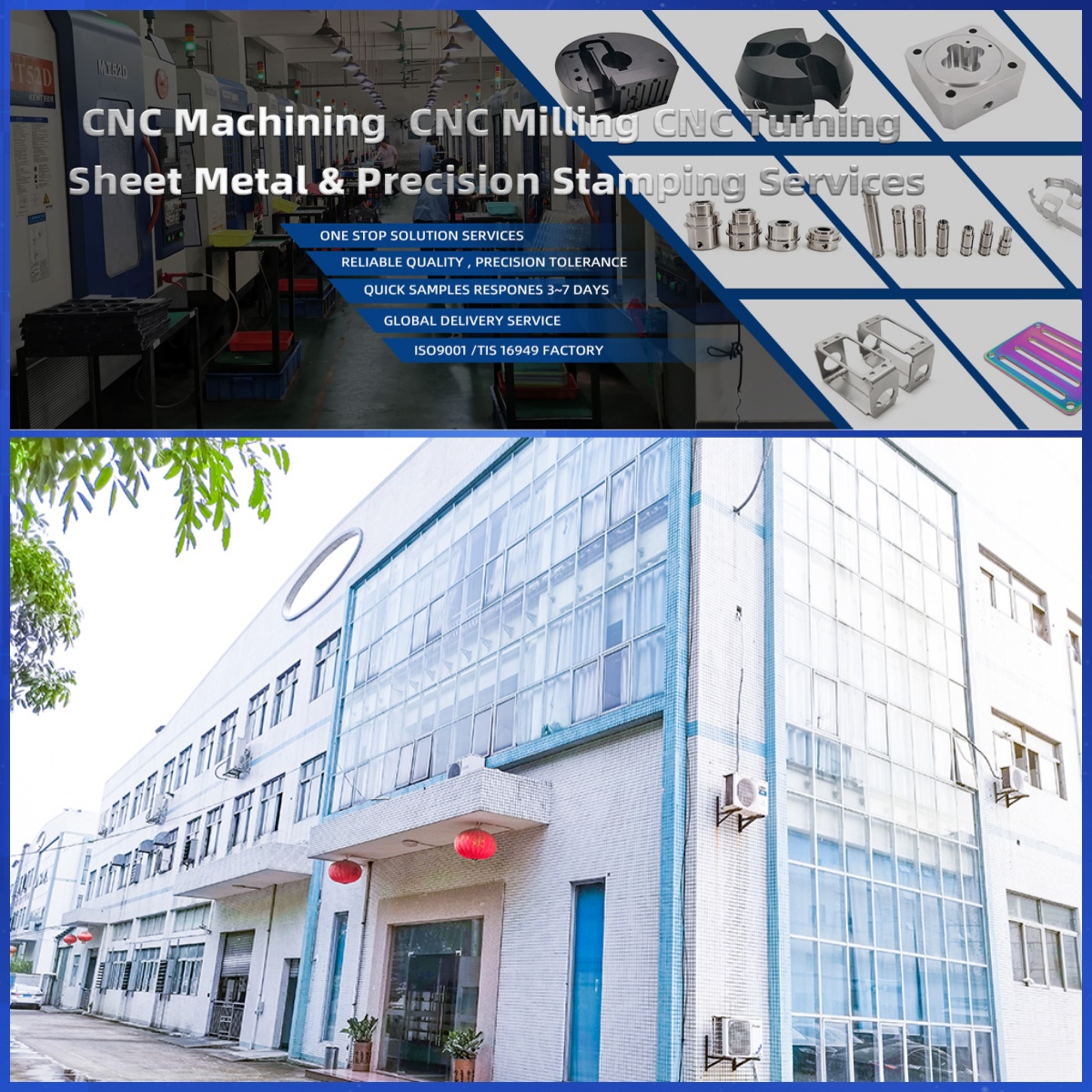
DongGuan YiTai Electronic Technologies Co.,Ltd
DongGuan YiTai Electronic Technologies Co.,Ltd is a manufacturing service provider located in Dongguan, China.
YiTai specialized in CNC turning machining and sheet metal fabrication mainly. As a member of Hung Mou Group, we focus on the overseas marketing development. And based on our parent company’s manufacturing capability and resources, YiTai also expended machining services such as die casting, injection molding, aluminum profile extrusion, 3D printing, which are committed to providing customers with one-stop purchasing services and experience.
CNC MACHINING , CNC MILLING , CNC TURNING , SHEETMETAL , FASTENER , OTHERS




How to Manufacture Copper Nuts & Bolts: Processes, Uses & Our Production Capacity
Mill Finish Aluminum: The Comprehensive Guide
Related Article