Mastering CNC Machining for 1mm Thick High Precision Thin Wall Shells

Thin wall shells only 1mm thick need high precision. They bend and change shape easily during CNC work. The main goals stay the same: reduce cutting force, control deformation, and ensure precision.
A five-step process goes from three-axis to five-axis machines. It solves these problems step by step. This guide shares the exact steps, tips, and real methods. It comes from shop practice and a detailed video on thin wall parts.
Table of Contents
- Challenges in machining thin wall shells
- The five-step process
- Key cutting techniques
- Parameter comparison table
- Expert views
- FAQ
1. Challenges in machining thin wall shells

Thin walls lose rigidity fast. Big cutting force makes them warp. Heat and vibration add more problems. Clamping can crush the part. Old ways often fail to hold size and shape.
The process fixes this with low force cuts, stress relief, and support. It works for single parts and complex shells.
2. The five-step process
2.1 First step: three-axis rough inner cavity and process table
Start with a three-axis machine. Clamp the raw blank directly. Rough out the inner cavity. Make a process table at the same time.
This step removes most extra material fast. It builds a base cavity. The process table gives a solid base for later five-axis work. It stops bad clamping that bends the wall.
Leave extra stock for finish cuts. Make the table size and position exact. This sets up good location later.
2.2 Second step: five-axis rough plus aging treatment with low force cuts
Move the part to a five-axis machine. Use the process table holes and pins for clamp. Add screws to lock it.
Do layer rough cuts. Follow light cut and fast feed. Finish the main body rough. Then do aging treatment on the part.
Five-axis fits the complex shape. Pin clamp cuts squeeze on the thin wall. Layer cuts spread force so the wall does not warp. Aging removes inner stress from rough cuts. This stops size change in later steps.
Keep each layer cut small. Light cut and fast feed means low depth and high speed. This cuts force from the start.
2.3 Third step: fill support mud then five-axis base finish
After aging, clamp back on five-axis. Fill the inside with support mud. Then do first finish on inner cavity and body.
Support mud gives inside hold for the 1mm wall. It stops vibration and bend in finish cuts. The mud fills easy and comes out easy. It fits single parts well.
Fill the mud tight against the cavity. No gaps. Leave a little stock after this finish for final thin wall work.
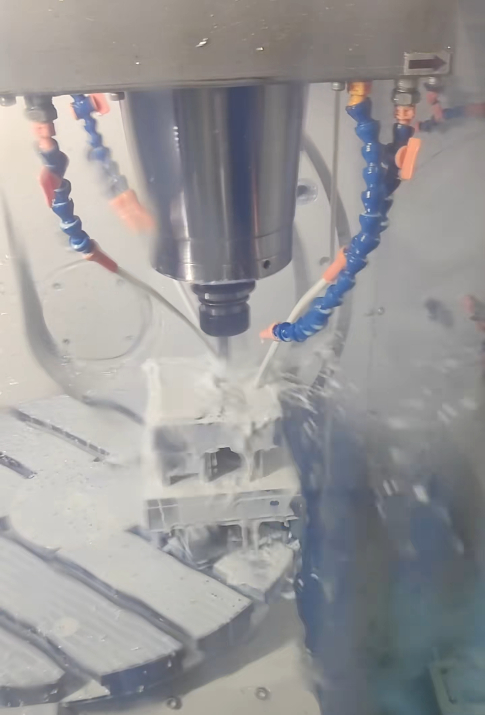
2.4 Fourth step: thin wall final finish with low speed and slow feed plus sharp tools
Focus on the 1mm thin wall now. Use low speed and slow feed every time. For the bottom area, use a new or sharpened tool.
The thin wall sets the final accuracy. Low speed and slow feed cut force and heat. This stops small bends and scratches. Sharp tools cut smooth. They stop rub and "bite" marks from dull edges.
Keep depth very small at 0.1mm or less. Make sure the tool edge has no wear. Do not rub the bottom many times.
2.5 Fifth step: remove process table and final precision work with copy clamp
Use copy clamp plates that match the outer shape. Clamp again. Cut off the process table first. Then finish the key high precision areas.
Copy plates hold steady and touch the part without push. This stops move when you cut the table. Final work on fit areas makes sure sizes and tolerances meet the spec.
Control force when you remove the table. It must not affect nearby thin walls. Check sizes with tools after the last cuts.
3. Key cutting techniques
Small corners need care. Drill a hole first that matches the corner radius. Then use the mill like a reamer to clean the corner. This stops over-cut from big tool radius.
Tool paths matter most. Change paths when wall rigidity changes. Never jump in or out sudden on thin areas. This stops local stress build-up.
4. Parameter comparison table
| Step | Spindle Speed | Feed Rate | Depth of Cut | Main Control Method |
|---|---|---|---|---|
| First step rough | High | Fast | Large | Leave stock, make table |
| Second step five-axis rough | High | Fast | Small per layer | Light cut fast feed, aging |
| Third step base finish | Medium | Medium | Medium | Support mud fill |
| Fourth step thin wall finish | Low | Slow | 0.1mm or less | Sharp tool, low force |
| Fifth step final precision | Medium | Slow | Very small | Copy clamp, check sizes |
The table shows how parameters drop force as steps move to finish. Rough steps take material fast. Finish steps protect the wall.
5. Expert views
John Lee runs a CNC shop for 20 years. He says low force cuts and good clamp stop 90% of thin wall bends. He adds that aging after rough always gives stable sizes later.
Sarah Chen teaches CNC at a tech school. She notes sharp tools in thin wall finish cut surface quality by half. She tells students to never use dull edges on 1mm walls.
Mike Tan has 15 years on five-axis work. He says copy clamp in last step keeps parts in tolerance every time. He tells teams to test clamp force first on samples.
These views match the process. They come from daily shop work.
6. FAQ
What makes thin wall parts bend most? Big cutting force and bad clamp. Heat from fast cuts adds to it too.
Why use support mud in step three? It gives inside hold without damage. It cuts vibration fast and comes out clean.
Can I skip aging after rough? No. Stress stays and changes sizes in finish. Aging keeps parts stable.
What tool works best for thin wall bottom? New or sharpened end mill. It cuts clean and stops rub marks.
How do I check final precision? Use CMM or dial gauges on key areas after last step.
Does this process work only for one part? Yes. It fits low volume high precision work best.
This guide gives clear steps to machine 1mm thin wall shells right. Follow the order and tips. You get good parts every time.
DongGuan YiTai Electronic Technologies Co.,Ltd
DongGuan YiTai Electronic Technologies Co.,Ltd is a manufacturing service provider located in Dongguan, China.
YiTai specialized in CNC turning machining and sheet metal fabrication mainly. As a member of Hung Mou Group, we focus on the overseas marketing development. And based on our parent company’s manufacturing capability and resources, YiTai also expended machining services such as die casting, injection molding, aluminum profile extrusion, 3D printing, which are committed to providing customers with one-stop purchasing services and experience.
CNC MACHINING , CNC MILLING , CNC TURNING , SHEETMETAL , FASTENER , OTHERS




The Complete Guide to Sheet Metal Surface Treatment: Carbon Steel, Stainless Steel, and Aluminum
1008 vs 1018 Steel: Which Low-Carbon Alloy Is Right for Your Project?
Related Article