CNC Machining vs. 3D Printing: Choosing the Right Process for Your Metal Prototypes and Final Parts

-
Introduction: How Process Choice Affects Quality, Performance, and Time-to-Market
-
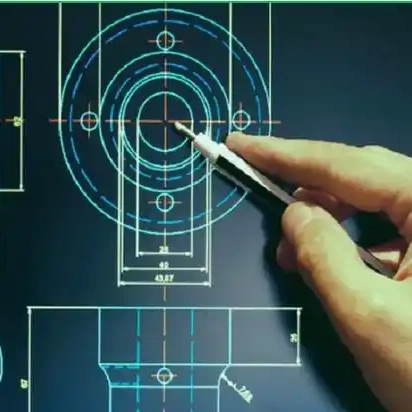
Get Professional Advice? Submit Your Drawing for a Free Report
1. Introduction: How Process Choice Directly Affects Prototype Quality, Performance, and Time-to-Market

2. In-Depth Comparison: Analysis Across Six Core Dimensions
Let's look at the key differences between CNC machining and metal 3D Printing (using Laser Powder Bed Fusion - LPBF as the main example).
| Dimension | CNC Machining | Metal 3D Printing (LPBF) |
|---|---|---|
| Materials & Availability | Very wide range. Common & exotic alloys. | Smaller but growing range. Best for weldable metals like Ti, Al, stainless steel. |
| Precision & Surface Finish | Excellent. High dimensional accuracy and very smooth surfaces directly. | Good accuracy. Naturally rough, porous surface needing post-processing. |
| Strength & Durability | Isotropic. Strength equals the bulk material properties. | Can be anisotropic. May have internal stresses. Heat treatment is often needed. |
| Cost Structure | High initial setup cost. Lower cost per part at higher volumes. | Lower setup cost. High, constant cost per part. Best for low volumes/complexity. |
| Production Speed & Lead Time | Faster for simple parts & batches. Programming/setup takes time. | Faster first part. No tooling needed. But slow build speed and need post-processing. |
| Design Complexity | Limited by tool access. Internal channels and undercuts are hard. | Very high freedom. Complex geometries, lattices, and integrated assemblies are possible. |
2.1 Material Performance and Availability: Who Offers a Wider Range of Engineering-Grade Choices?
CNC machining wins in material availability. You can use almost any available metal stock: common aluminum and steel alloys, brass, copper, and even difficult-to-process metals like Inconel or titanium. The mechanical properties are predictable and match the standard material data sheets.
Metal 3D printing uses a smaller set of specially formulated, weldable metal powders. The selection is growing but is still limited compared to CNC. Common options include titanium alloys (like Ti6Al4V), stainless steels (316L), aluminum alloys (AlSi10Mg), and nickel-based superalloys. "The choice here depends heavily on the alloy's weldability and thermal properties," notes a materials engineer atYITECH.
2.2 Accuracy and Surface Finish: The Key to Meeting Assembly Requirements
For high precision and smooth surfaces right away, CNC machining is the leader. It can hold extremely tight tolerances (±0.025 mm or better) and produce mirror-like finishes directly from the machine. This is vital for parts that must fit precisely into assemblies.
Metal 3D printed parts have a naturally rough, textured surface from the sintered powder layers. Dimensional accuracy is good but typically not as high as CNC (±0.1 mm is common). Achieving a smooth finish requires mandatory post-processing, like CNC machining or polishing. So, you often combine both processes.
2.3 Strength and Durability: Meeting Real-World Testing Conditions
CNC parts are isotropic, meaning their strength is consistent in all directions. They come from a solid block of material with a known, uniform structure. This makes them highly reliable for critical, load-bearing components.
The strength of 3D printed metal parts can be anisotropic; they might be stronger in one direction than another due to the layer-by-layer build process. Internal stresses and potential porosity can also affect durability. Because of this, heat treatment is usually a required step to relieve stress and improve mechanical properties for end-use parts.

2.4 Cost Structure Analysis: From One Part to One Hundred, When Does the Cost Cross Over?
This is a crucial difference. CNC machining has high initial costs for programming and setup. But once running, the cost per part drops significantly. For larger batches, CNC becomes very cost-effective.
Metal 3D printing has low setup costs—you mainly prepare a digital file. But, the cost per part remains high and constant. The cost comes from machine time, material (powder), and necessary post-processing. It is most economical for very complex, low-volume parts where CNC would be too expensive or impossible.
2.5 Production Speed and Lead Time: How to Plan Your Project Timeline
For simple geometries and batches of 10-100 parts, CNC can often be faster overall. Even with setup time, the material removal is quick. For highly complex parts or a single prototype, 3D printing gets the first part faster because it needs no tooling. But remember, the total lead time must include post-processing, which for 3D printing can be lengthy.
2.6 Design Complexity and Post-Processing Needs
CNC has design limits. Cutting tools must reach all surfaces. This makes internal features, undercuts, and complex organic shapes very challenging or too expensive.
3D printing excels with complex designs. It can create internal cooling channels, lightweight lattice structures, and topology-optimized shapes that are impossible with CNC. But, this freedom comes with a trade-off: all 3D printed metal parts need significant post-processing, including support removal, stress relief, and often surface machining.
3. Decision Flowchart: Choose Based on Your Project Needs
Ask yourself these questions:
-
Is your part very complex with internal features? YES -> Lean toward 3D Printing.
-
Do you need a very smooth finish or ultra-tight tolerances directly? YES -> Lean toward CNC Machining.
-
Is your production volume more than 50-100 units? YES -> Lean toward CNC Machining.
-
Is your chosen material a standard bar/block alloy? YES -> Lean toward CNC Machining.
-
Is your part for a one-off prototype or a small batch of a complex design? YES -> Lean toward 3D Printing.
4. Hybrid Manufacturing Strategy: Combining Both Strengths
You don't always have to choose just one. Smart engineers use a hybrid approach. A common strategy is to 3D print the near-net-shape part with its complex internal geometry. Then, use CNC machining on critical interfaces (like mounting holes or sealing surfaces) to achieve the required precision and finish. This combines the design freedom of 3D printing with the precision of CNC.
5. Case Study: How YiTai Helped a Client Optimize Process Choice and Save 30%
A client needed a high-performance aerospace bracket. The initial design was for CNC machining from solid titanium, leading to 80% material waste and high cost.
YiTai's engineers proposed a redesign for metal 3D printing. They optimized the shape using topology optimization, reducing weight by 40% while maintaining strength. For the final part, they used Ti6Al4V titanium 3D printing, followed by precise CNC machining on the critical bearing surfaces.
Result: The hybrid approach cut total costs by 30%, reduced lead time for the prototype, and delivered a lighter, better-performing part. "The key was not forcing one technology," the project lead stated. "It was about letting the design guide us to the right combination of processes."
6. Need Professional Advice? Submit Your Part Drawing for a Free Process Analysis Report
Still unsure which process is right for your specific part? Our experts are here to help. Submit your 2D or 3D drawing today. You will receive a free, detailed report analyzing the best manufacturing process, estimated cost, and lead time for your project.
7. Frequently Asked Questions (FAQs)
1. Which process is stronger, CNC or 3D printed metal?
Generally, a CNC machined part from solid stock has more consistent, isotropic strength. A properly processed 3D printed part (with heat treatment) can meet or exceed the strength of its base material, but its properties might differ with direction.
2. Is 3D printing always cheaper than CNC machining?
No. For simple parts or production runs over 50-100 units, CNC is usually cheaper. 3D printing is cost-effective for complex, lightweight, or low-volume parts where CNC would require expensive machining or result in huge material waste.
3. Can I get a smooth finish directly from a metal 3D printer?
No. Parts come out with a grainy, rough surface. Post-processing like machining or polishing is always needed for a smooth finish.
4. How do I choose between them for a functional prototype?
Consider the prototype's purpose. If testing form, fit, and basic function, 3D printing might be faster. If testing exact mechanical performance under stress, a CNC-machined prototype from the final material is better.
5. Can you combine CNC and 3D printing in one part?
Yes. This is called hybrid manufacturing. It is a very powerful strategy. You can 3D print a complex part and then use CNC to machine precise features on it.
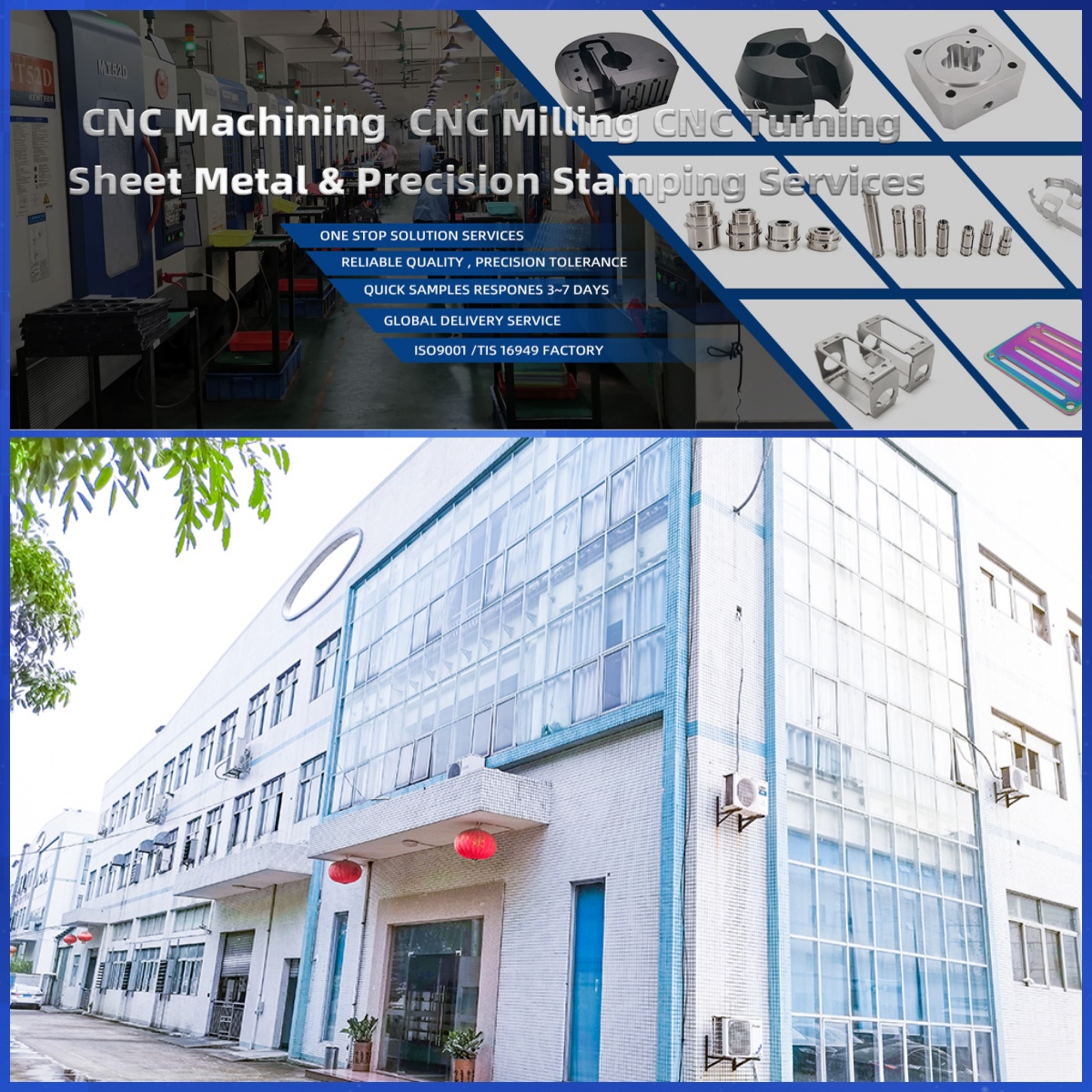
DongGuan YiTai Electronic Technologies Co.,Ltd
DongGuan YiTai Electronic Technologies Co.,Ltd is a manufacturing service provider located in Dongguan, China.
YiTai specialized in CNC turning machining and sheet metal fabrication mainly. As a member of Hung Mou Group, we focus on the overseas marketing development. And based on our parent company’s manufacturing capability and resources, YiTai also expended machining services such as die casting, injection molding, aluminum profile extrusion, 3D printing, which are committed to providing customers with one-stop purchasing services and experience.
CNC MACHINING , CNC MILLING , CNC TURNING , SHEETMETAL , FASTENER , OTHERS




Ensuring Zero Defects: The Complete Quality Control System for Smart Electronics Metal Parts
Decoding Mold Costs: What Are You Paying For?
Related Article