
What is Galvanizing Surface Treatment?
2024-06-22

Want to know details of What is Galvanizing Surface Treatment? Click the link to get more information.
Galvanizing is a surface treatment method that is applied to a variety of metals, including steel, iron, and copper alloys, to prevent corrosion and rust. In this process, a protective zinc coating is applied to the metal surface through a process called electroplating.
The zinc coating forms a sacrificial layer that protects the underlying metal from corrosion, as zinc is more reactive than the metal it is protecting, so it corrodes first. The galvanized coating also provides excellent paint adhesion, making it a good primer for many industries.
Galvanizing can be done through different methods, such as hot-dip galvanizing, electroplating, and mechanical galvanizing. Different methods provide different thicknesses and durability of the zinc coating.
Due to its anti-corrosion properties, galvanized surfaces are widely used in architectural, automotive, and industrial applications. Galvanizing provides a cost-effective method for enhancing the durability and longevity of metal surfaces.
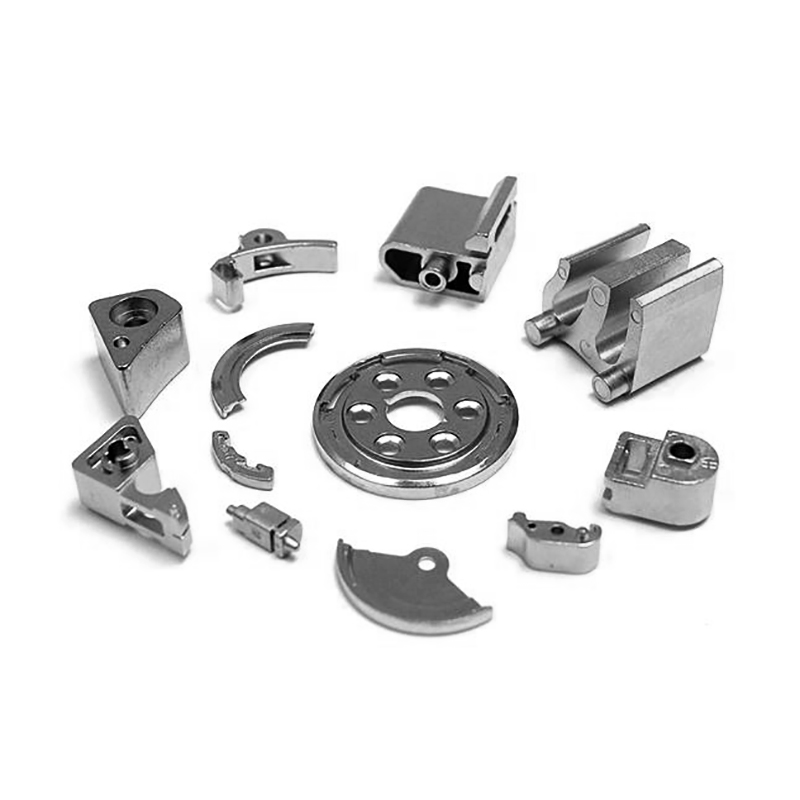
Here are some common applications of galvanized parts
1. Construction industry: Due to its excellent durability and corrosion resistance, galvanized steel is often used to construct the skeleton, roof, welded pipes and pipelines of buildings.
2. Power industry: Because electrical equipment and wires need to resist corrosion, and require good conductivity and reliability, many power parts use galvanizing technology. For example, terminals, clips, etc.
3. Automobile industry: Auto parts need to be protected from corrosion. Galvanizing technology can be applied to transmission systems, exhaust pipes and other components to extend their service life.
4. Metal utensils: Galvanized iron utensils such as iron barrels, household items, mechanical parts, etc. have a good protective effect.
Advantages of galvanized surface treatment
1. Good corrosion resistance: Galvanizing can protect metals from corrosion by chemical substances such as water vapor, oxygen and carbon dioxide, extending the service life of parts.
2. Excellent adhesion: Zinc coating forms a tight structure on the metal surface with good adhesion.
3. Significant cost-effectiveness: Compared with other surface treatment technologies, galvanizing is an economical and effective method, reducing the maintenance and replacement costs of parts.
4. Easy to make: Galvanizing technology has wide applicability and can be easily applied to various types, shapes and sizes of parts.
Disadvantages of galvanized surface treatment
1. Toxic: Zinc and other chemicals used in the galvanizing process may cause harm to the environment and human health.
2. Low heat resistance: In high-temperature environments, the stability of zinc coatings will decrease and may not be suitable for some high-temperature applications.
What is electrochemical polishing(EP)?
Nickel Plating
Related Article

Discover the benefits of CNC machining and how it can save costs in manufacturing processes.
How Much Cost Can CNC Machining Save?
Learn how CNC machining can create precise and complex custom parts, and how it benefits the development of custom parts manufacturing.
How CNC Machining Boosts Custom Parts Manufacturing

Looking for a cheap 3D printing service? Look no further! We offer affordable 3D printing solutions without compromising on quality. Our team uses state-of-the-art technology and high-quality materials to bring your designs to life. Whether you need prototypes, models, or production parts, we have you covered.
Something you may do not know about 3D printing
