
Type of Spring
author: YITECH
2024-07-20

Want to know details of Type of Spring ? Click the link to get more information
Torsion spring
A torsion spring is a special spring that, when subjected to an external force, generates a torsion force around its axis, causing it to wind or unwind. This type of spring is divided into single torsion springs and double torsion springs, of which double torsion springs are further divided into external double torsion and internal double torsion springs. The ends of a torsion spring are usually fixed to other components, and when the other components rotate around the center of the spring, the spring pulls them back to their original position, generating torque or rotational force. This type of spring can store and release angular energy, or statically fix a device by rotating the force arm around the central axis of the spring body.
A torsion spring is a special spring that, when subjected to an external force, generates a torsion force around its axis, causing it to wind or unwind. This type of spring is divided into single torsion springs and double torsion springs, of which double torsion springs are further divided into external double torsion and internal double torsion springs. The ends of a torsion spring are usually fixed to other components, and when the other components rotate around the center of the spring, the spring pulls them back to their original position, generating torque or rotational force. This type of spring can store and release angular energy, or statically fix a device by rotating the force arm around the central axis of the spring body.
Disc spring
Disc springs, also known as disc springs, have the characteristics of small size, large load and convenient combination. This type of spring is widely used in the mechanical industry, especially in the design of new products that require miniaturization and multifunctionality. Compared with traditional cylindrical springs, disc springs can carry larger loads at smaller deformations and have a compact axial space. Its deformation energy per unit volume is large, so it has excellent cushioning and shock absorption capabilities. In particular, when a laminated combination is adopted, its effect of absorbing shock and dissipating energy is particularly significant due to the surface friction damping effect. Disc springs also comply with DIN2093 and GB/T1972-2005 standards and can be treated with a variety of surface treatments.
Disc springs, also known as disc springs, have the characteristics of small size, large load and convenient combination. This type of spring is widely used in the mechanical industry, especially in the design of new products that require miniaturization and multifunctionality. Compared with traditional cylindrical springs, disc springs can carry larger loads at smaller deformations and have a compact axial space. Its deformation energy per unit volume is large, so it has excellent cushioning and shock absorption capabilities. In particular, when a laminated combination is adopted, its effect of absorbing shock and dissipating energy is particularly significant due to the surface friction damping effect. Disc springs also comply with DIN2093 and GB/T1972-2005 standards and can be treated with a variety of surface treatments.
Extension springs
Extension springs are a type of helical spring that is subject to axial tension. The coils are tightly wound and extend outward when subjected to external forces, maintaining a force to contract toward the center. The hooks of this type of spring are divided into British hooks, German hooks, side ear hooks and fishtail hooks. The material used to make extension springs is usually a round cross-section, and its design can range from a straight cylinder to various variations, including various shapes of hooks. Compared with compression springs, the operation control of extension springs is more advanced.
Extension springs are a type of helical spring that is subject to axial tension. The coils are tightly wound and extend outward when subjected to external forces, maintaining a force to contract toward the center. The hooks of this type of spring are divided into British hooks, German hooks, side ear hooks and fishtail hooks. The material used to make extension springs is usually a round cross-section, and its design can range from a straight cylinder to various variations, including various shapes of hooks. Compared with compression springs, the operation control of extension springs is more advanced.
Compression springs
Compression springs are a widely used type of spring, mainly used to withstand axial pressure. During the manufacturing process, it is wound into separate helical coils, ensuring that there are gaps (pitch) between the coils so that when subjected to external forces, the spring can contract and store deformation energy. To ensure the durability of the spring, these gaps must be retained when subjected to maximum load to avoid fatigue damage caused by friction or other material embedding. In addition, to increase the contact surface, the ends of the spring can be ground flat to achieve a contact surface of 60-80%. Compression springs have a variety of end shapes and designs, such as straight barrel, tapered, etc., and are widely used in many industries.
Compression springs are a widely used type of spring, mainly used to withstand axial pressure. During the manufacturing process, it is wound into separate helical coils, ensuring that there are gaps (pitch) between the coils so that when subjected to external forces, the spring can contract and store deformation energy. To ensure the durability of the spring, these gaps must be retained when subjected to maximum load to avoid fatigue damage caused by friction or other material embedding. In addition, to increase the contact surface, the ends of the spring can be ground flat to achieve a contact surface of 60-80%. Compression springs have a variety of end shapes and designs, such as straight barrel, tapered, etc., and are widely used in many industries.
Coil springs
Coil springs are commonly used elastic elements in modern automobiles and vibrating machinery. They have excellent shock absorption capabilities and provide good ride comfort. However, their large length and large space occupation result in a non-compact suspension system layout. In addition, cylindrical coil springs with round cross-sections are easy to manufacture, have low internal friction, low energy consumption, and long service life, but they are large in size, low in stiffness, and are more susceptible to damage. Variable diameter coil springs are used in special occasions and usually bear compression loads.
Coil springs are commonly used elastic elements in modern automobiles and vibrating machinery. They have excellent shock absorption capabilities and provide good ride comfort. However, their large length and large space occupation result in a non-compact suspension system layout. In addition, cylindrical coil springs with round cross-sections are easy to manufacture, have low internal friction, low energy consumption, and long service life, but they are large in size, low in stiffness, and are more susceptible to damage. Variable diameter coil springs are used in special occasions and usually bear compression loads.
Jiging
Titanium Plating
Related Article

Discover the benefits of CNC machining and how it can save costs in manufacturing processes.
How Much Cost Can CNC Machining Save?
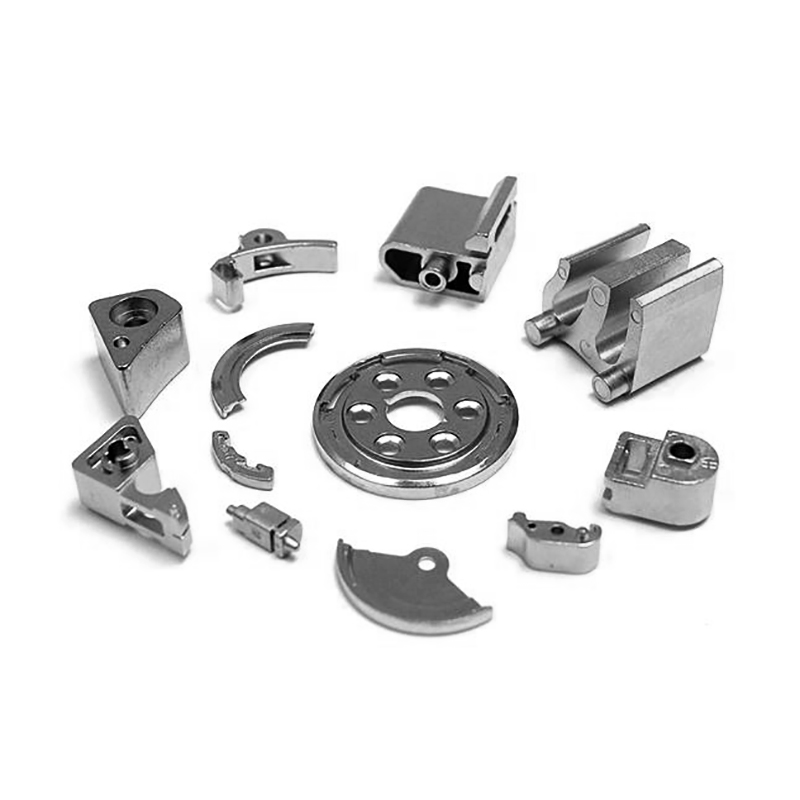
Learn how CNC machining can create precise and complex custom parts, and how it benefits the development of custom parts manufacturing.
How CNC Machining Boosts Custom Parts Manufacturing

Looking for a cheap 3D printing service? Look no further! We offer affordable 3D printing solutions without compromising on quality. Our team uses state-of-the-art technology and high-quality materials to bring your designs to life. Whether you need prototypes, models, or production parts, we have you covered.
Something you may do not know about 3D printing
