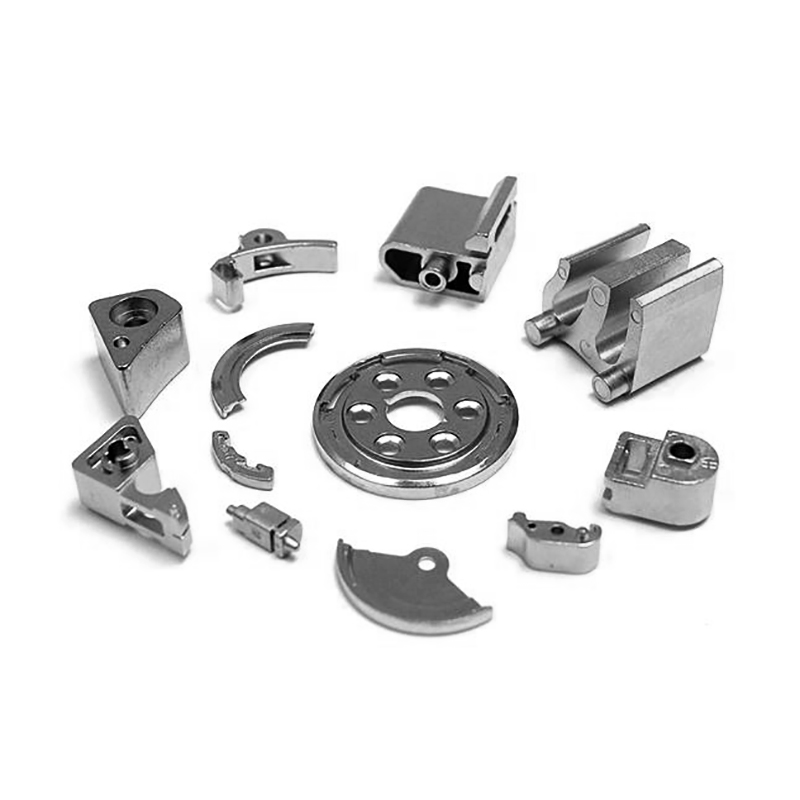
Common used plastic--PBT

PBT resin is a high-performance thermoplastic material that offers excellent strength, stiffness, and dimensional stability. It has excellent resistance to heat, chemicals, and moisture, making it ideal for use in various industries, including automotive, electronics, and consumer goods. The material is easy to process and can be molded into complex shapes with tight tolerances. Looking for any cooperation please contact us.
1.PBT performance:
PBT is one of the toughest engineering thermoplastic materials, it is a semi-crystalline material, has very good chemical stability, mechanical strength, electrical insulation properties and thermal stability. These materials have good stability under a wide range of environmental conditions, and the PBT moisture absorption characteristics are very weak. The tensile strength of the non-enhanced PBT is 50MPa, and the tensile strength of the glass additive PBT is 170MPa. Too much glass additive will cause the material to become brittle.
PBT's crystallization is rapid, which will result in bending deformation due to uneven cooling. For materials with glass additive types, the shrinkage rate in the process direction can be reduced, but the shrinkage rate in the vertical direction of the process is basically no different from that of ordinary materials.
The shrinkage rate of general materials is between 1.5% and 2.8%. Materials containing 30% glass additives shrink between 0.3% and 1.6%. Melting point (225%℃) and high temperature deformation temperature are lower than PET material. The softening temperature of Vica is about 170℃. The glass transition temperature (glass trasitiotemperature) is between 22℃ and 43℃.
Due to the high crystallization rate of PBT, its viscosity is very low, and the cycle time of plastic processing is generally low.
2.PBT process characteristics:
Drying treatment: This material is easily hydrolyzed at high temperatures, so drying before processing is very important. The recommended drying condition in the air is 120C for 6 to 8 hours, or 150 C for 2 to 4 hours.
The humidity must be less than 0.03%. If you use a moisture absorbent dryer to dry, the recommended condition is 150 ° C for 2.5 hours. Processing temperature 225~275℃, recommended temperature 250℃. The mold temperature for the unreinforced material is 40~60℃. It is necessary to design the cooling cavity of the mold well to reduce the bending of the plastic parts. The heat must be lost quickly and evenly.
It is recommended that the diameter of the mold cooling cavity is 12mm. The injection pressure is moderate (up to 1500bar), and the injection speed should be used as fast as possible (because PBT solidifies quickly). Runner and gate: It is recommended to use a circular runner to increase the transfer of pressure (empirical formula: runner diameter = thickness of plastic parts +1.5mm).
Various types of gate can be used. Hot runner can also be used, but care should be taken to prevent leakage and degradation of the material. The gate diameter should be between 0.8 and 1.0*t, where t is the thickness of the plastic parts. If it is a submerged gate, the recommended minimum diameter is 0.75mm.
3. Typical application range:
Household appliances (food processing blades, vacuum cleaner components, electric fans, hair dryer housings, coffee utensils, etc.), electrical components (switches, motor housings, fuse boxes, computer keyboard keys, etc.), automotive industry (radiator grates, body panels, wheel covers, door and window components, etc.
Our company provide many kinds of plastic parts, if you are interested in PBT parts or other plastic parts, please feel free to contact us.
Common use plastic--PE
Common Use Plastic--PP
Related Article