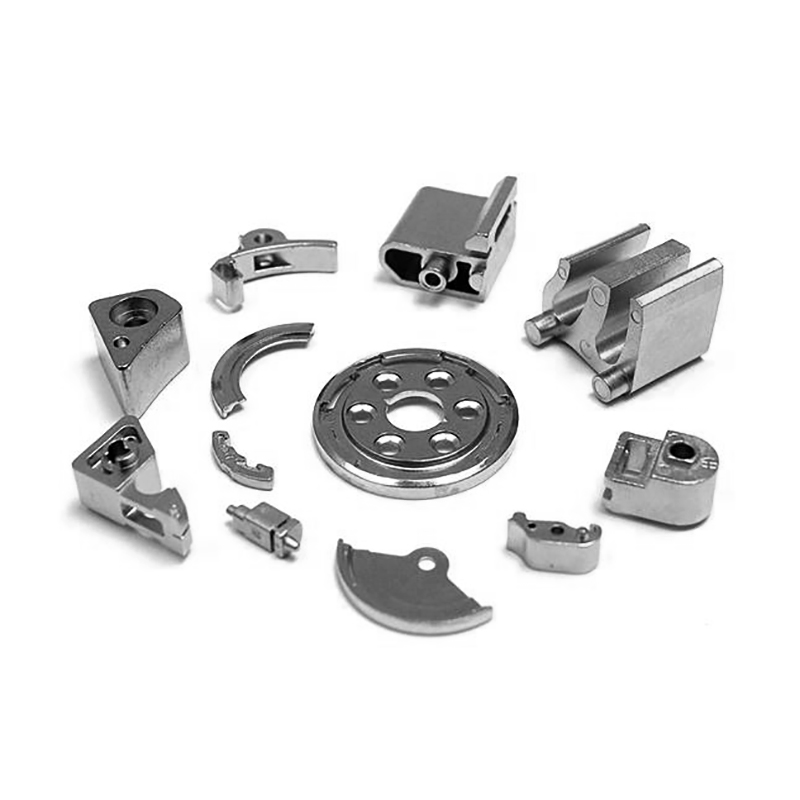
Yitai's Small Science Popularization--Shaft

Shaft 1 is a critical component in many machines and engines, transmitting rotational power and torque from one point to another. Overall, shaft 1 plays a crucial role in many mechanical systems and is essential for proper functioning and efficiency.
What is shaft
A shaft is basically a rotating part of any machine with a circular cross-section that is used to transfer power from one part to another or from a power generator to a power absorber. To transmit power, one end of the shaft is connected to the power source and the other end is connected to the machine. Shafts can be solid or hollow as needed, and hollow shafts help reduce weight and provide advantages.
General description of shaft
The shaft is one of the most important components used in the machine. They are used to support rotating parts, such as pulleys and gears, which are supported by bearings located in rigid machine housings. A gear and pulley located on the shaft help transmit motion. Many other rotating elements are mounted on the shaft by keys. They are subjected to bending moments and torques due to the reaction forces and the torque generated by the power transmission of the members supported by the shaft. The shaft always has a circular cross-section and can be hollow or solid.
Shafts can be classified as crank shafts, straight shafts, articulated shafts, or flexible shafts, but straight shafts are usually used to transmit power. Shafts are usually designed as steep cylindrical rods, so they have different diameters throughout their length, although shafts with constant diameters are easy to produce. The amount of stress in the step shaft varies with its length. Shafts with uniform diameters are not suitable for disassembly, assembly, maintenance, and these shafts create complexity when fastening parts mounted on them, especially bearings.

Type of shaft:
These shafts are stepped shafts that are used to transfer power between one source to another machine that absorbs power. Mounted on a stepped part of a shaft gear, hub or pulley for conveying motion. Examples: overhead shafts, bobbins, subshafts, and all factory shafts.

These shafts are located inside the components and are an integral part of the machine. Example: The crankshaft in a car engine is a machine shaft.

These shafts support rotating elements, such as wheels, which can be mounted in a housing with bearings, but the shafts are non-rotating elements. These are mainly used for vehicles. Example: An axle in a car.

These are the rotating parts of the machine; It houses tools or workspace. They're short axes, they're used in machines, they're short axes used in machines. Example: Spindle in a lathe.

Shaft material
Usually mild steel is the material used for shafts. If high strength is required, alloy steels such as nickel-chromium, nickel, chromium-vanadium steels are used. They are usually formed by hot rolling and cold drawing and grinding.
The materials commonly used for conventional shafts are carbon steel of grades 50 C12, 50 C4, 45 C8, and 40 C8.
The material used for the shaft should have the following characteristics:
- The material should have high strength
- The material should have high wear resistance
- The material should have heat treatment characteristics
- The material should have good mechanical properties
- The material must have a low notch sensitivity coefficient
Standard size of shaft:
25 mm to 60 mm - 5 mm step size
60 mm to 100 mm - 10 mm step size
110 mm to 140 mm - 15 mm step size
140 mm to 500 mm - 20 mm step size
The standard size of the machine shaft is up to 25 mm and the step size is 5 mm. For shafts, the standard lengths are 5m, 6m and 7m, but generally 1m to 2m.
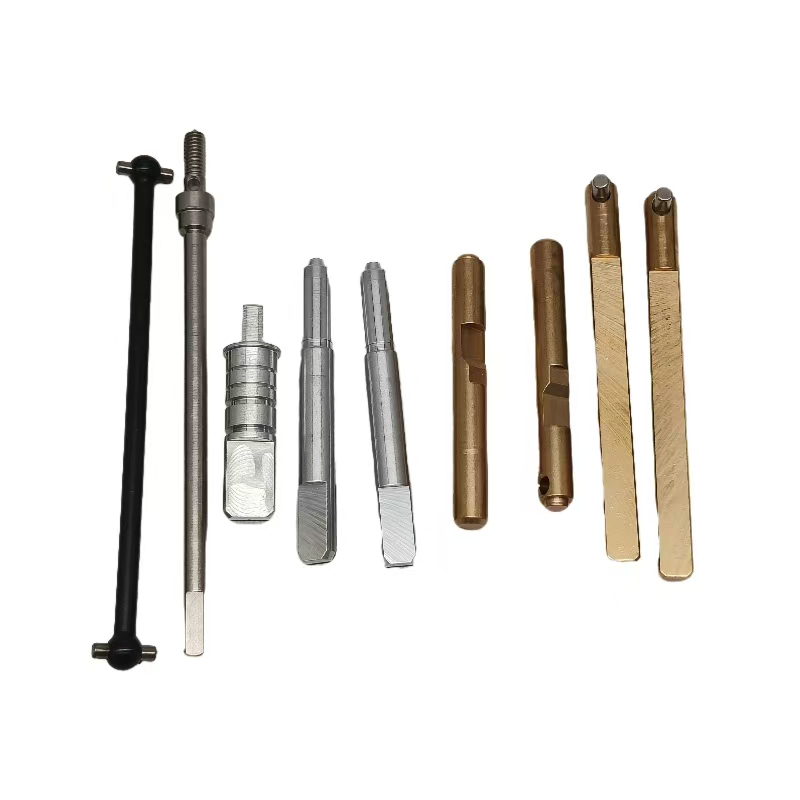
Shaft manufacturing:
The shaft is manufactured by hot rolling process. Compared to hot rolling, the strength of the shaft is higher during cold rolling, but cold rolling causes high residual stress, which causes the shaft to deform during machining. The forging process is used to make shafts with larger diameters. After the completion of rolling, the end of the shaft is processed, one end of the shaft is installed on the inspection, and the other end of the shaft is supported by the turret of the lathe. In order to finish the shaft, the tool fixes the tool holder, and when the power is turned on, the chuck starts rotating the shaft.
The dial gauge is used to check the concentricity of the shaft before machining, and perform various operations such as turning, end facing, grooving, taper turning according to the purpose.
High volume, CNC and other applications are best suited for final processing. Machining can also be done with a CNC double-ended machine with a shaft sandwiched between the tool rotation and the fixture. In order to achieve concentricity and roundness, the rotating tools should be opposite each other at the center line. Drive shafts and motors are usually manufactured using this process.
Contact for needs
Our company can provide price concessions, high precision machining, durable shaft, if you are interested in shaft products and have demand, please feel free to contact us for a quote
CNC Lathe & Turning Milling Compound Center
Double Ninth Festival: A Time to Honor Elders and Embrace Tradition
Related Article