
CNC MILLING
A transform your designs into high-quality precision parts through a meticulous and controlled CNC milling process. Here’s how we ensure excellence at every stage:
● Design & DFM Analysis
● Material Selection
● CAM Programming
● Precision Machining
● Quality Inspection
● Surface Finishing
● Final Audit & Packaging
Process
Design & DFM Analysis
For the 2D part drawings or 3D models you provide, we focus on verifying CNC milling manufacturability, including:
● Accessibility of milling contours (avoiding deep cavities/narrow slots that cannot be processed with milling cutters);
● Design of clamping positions (ensuring workpiece stability during milling);
● Matching between fillets/chamfers and milling cutter diameters.
We also provide milling-specific DFM recommendations (e.g., optimizing cutting allowances, reducing milling cycles) to balance processing costs, milling efficiency, and part precision.

Material Selection
We use certified raw materials from trusted suppliers. You can specify a material, or we can recommend the optimal one (e.g., Aluminum, Stainless Steel, Titanium, Plastics) based on your application requirements.
We use certified milling-compatible raw materials (all from compliant suppliers):
● You can specify materials as needed;
● Or we recommend optimal materials based on milling process characteristics and application scenarios (e.g., aluminum alloys 6061/7075 for high-speed milling with smooth surfaces; stainless steels 304/316 requiring carbide milling cutters; titanium alloy TC4 suitable for low-speed, high-feed milling; engineering plastics POM/PEEK to avoid thermal deformation during milling). This ensures the material’s millability matches the part’s functional requirements.

CAM Programming
Our programmers use milling-specific software to generate efficient milling toolpaths:
● Plan specialized toolpaths for part features (e.g., face milling, pocket milling, contour milling, surface milling);
● Set cutting parameters (feed rate, spindle speed, depth of cut) matching milling cutter types (end mills, ball nose mills, face mills, etc.);
● Conduct full simulations of milling conditions (including tool interference checks, chip formation simulation, spindle load testing) to eliminate toolpath errors and ensure no process omissions before milling starts.

Precision Machining
Programmed instructions are transmitted to 3-axis/4-axis/5-axis CNC milling centers for precise milling:
● Select multi-axis linkage modes based on part complexity (e.g., 5-axis milling for complex surfaces, 4-axis milling for eccentric features);
● Use specialized cutters for different milling processes (e.g., corrugated mills for roughing to remove excess material, high-speed steel mills for finishing to ensure precision);
●Starting from metal/plastic blanks, achieve accurate part dimensioning and shaping through layered milling and switching between climb milling/conventional milling.
Quality Inspection
Milling precision control is integrated throughout the process:
● First Article Inspection (FAI): Use Coordinate Measuring Machines (CMMs) to focus on verifying key milling dimensions (e.g., milling flatness, hole coaxiality, contour tolerance) and surface roughness (Ra value);
● In-process sampling inspection: Extract parts from each batch to check milling depth consistency and step height deviation, preventing precision drift caused by milling cutter wear and ensuring batch milling stability.
Surface Finishing
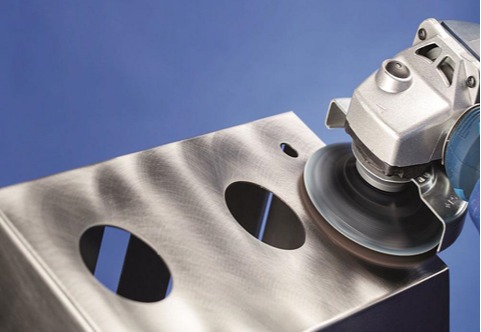
Targeting the surface condition of CNC-machined parts (which may have residual milling marks or micro-burrs), we provide customized post-processing:
● Functional finishing: Anodizing (enhancing wear resistance of aluminum alloy milled parts), plating (improving rust resistance of milled parts);
● Aesthetic finishing: Sandblasting (eliminating milling textures), polishing (achieving a mirror finish on milled surfaces), powder coating (covering milling marks and enhancing appearance) to meet diverse scenario needs.
Final Audit & Packaging
●Final inspection: Conduct a comprehensive review of each batch of milled parts, focusing on checking the integrity of milled edges/corners (no chipping) and the adhesion between surface finishing and the milled substrate;
●Packaging: First clean cutting chips from the milled part surface, then individually wrap parts with anti-static film/bubble wrap (to avoid scratches on milled surfaces), and finally fix and box them in batches. This ensures no collision deformation during transportation and that parts arrive at your facility in perfect condition.